
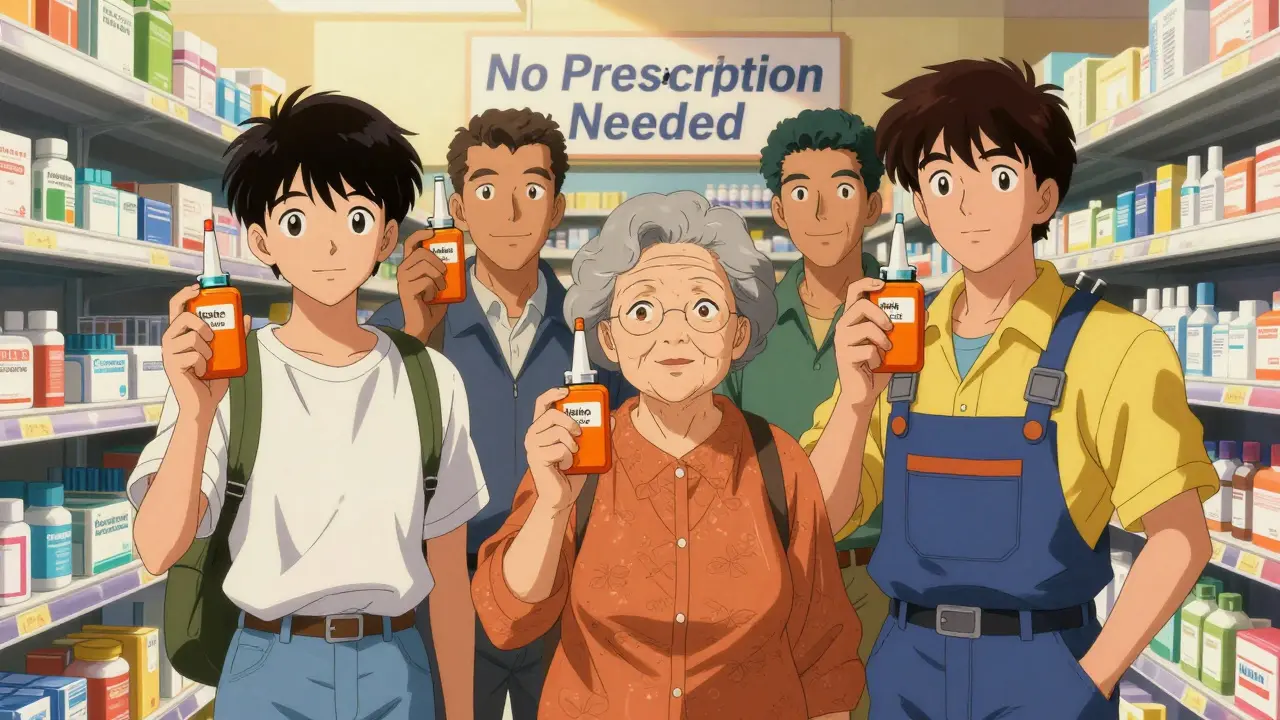
Every year, more than 100,000 people in the U.S. die from drug overdoses. Most of those deaths involve opioids-heroin, oxycodone, fentanyl, and other prescription painkillers. The scary part? Naloxone can reverse nearly all of them. But only if it’s nearby, ready to use, and someone knows how.
Many people still think naloxone is only for hospitals or first responders. That’s outdated. Today, it’s as common as an EpiPen. You can buy it over the counter at pharmacies. Community groups hand it out for free. Families keep it in their medicine cabinets. And every time it’s used, it gives someone a second chance.
How Naloxone Works-And Why It’s So Simple
Naloxone isn’t a miracle drug. It doesn’t cure addiction. It doesn’t treat pain. It does one thing, and it does it fast: it kicks opioids off the brain’s receptors.
When someone overdoses, opioids lock onto those receptors and slow or stop breathing. Naloxone slips in faster than the opioids can hold on. It grabs the spot, pushes them out, and lets the person breathe again. Within 3 to 5 minutes, if given correctly, breathing returns.
It’s not magic-it’s chemistry. Naloxone has a high affinity for opioid receptors. That means it sticks better than heroin or fentanyl. And because it doesn’t activate those receptors, it doesn’t cause any high. It doesn’t affect people who haven’t taken opioids. That’s why it’s so safe. Even if you give it to someone who’s just passed out from a seizure or a heart attack, it won’t hurt them.
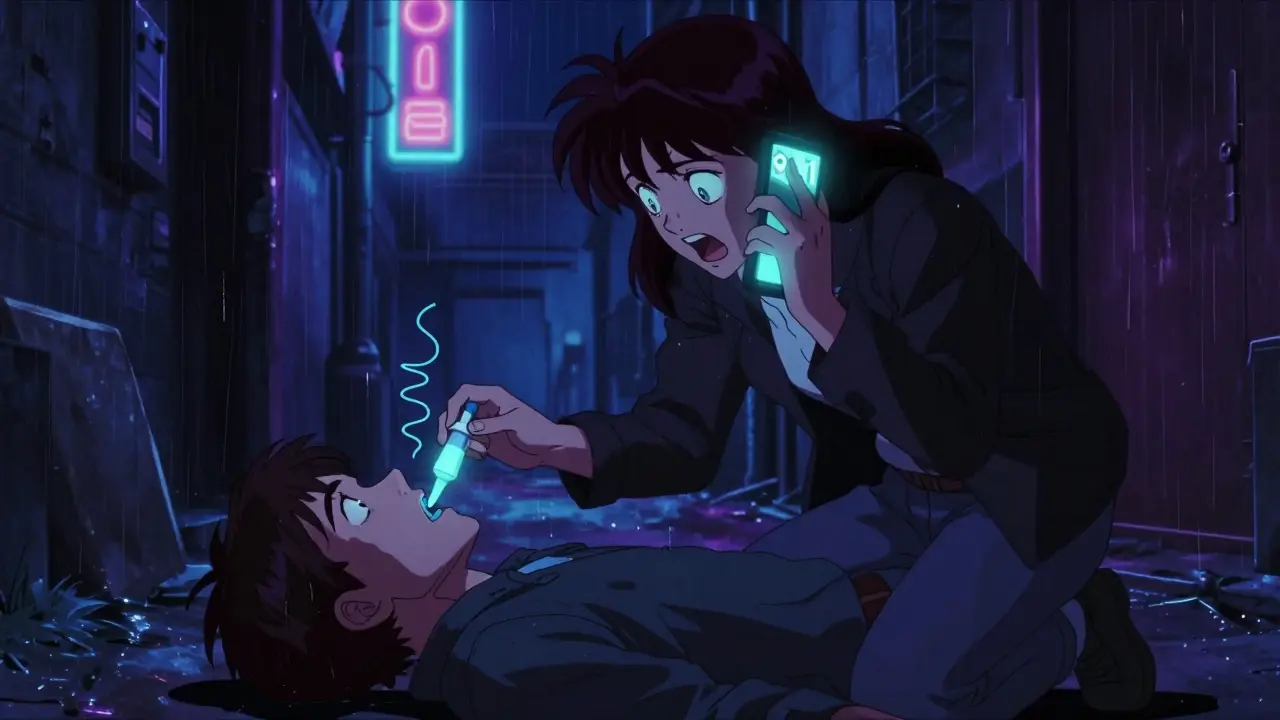
There are two main forms: nasal spray and injection. The nasal spray (like Narcan) is the most common now. It’s easy. No needles. No training needed. Just tilt the head back, spray one dose into one nostril, and call 911. The CDC says 85% of laypeople successfully reverse overdoses using nasal spray. That’s higher than injections, which require muscle access and can be harder during panic.
Recognizing an Opioid Overdose-Don’t Wait
Time is everything. The longer you wait, the lower the chance of survival. A 2022 study in Addiction found that if naloxone is given within 2 minutes, survival rates hit 95%. After 5 minutes? It drops to 65%.
Here’s what to look for:
- Unresponsive to shaking or shouting
- Slow, shallow, or no breathing
- Lips or fingernails turning blue or purple
- Pinpoint pupils (very small dots in the center of the eyes)
- Gurgling or snoring sounds-this is the body struggling to breathe
Don’t confuse this with drunkenness. People who’ve had too much alcohol can be loud, clumsy, or vomiting. Someone overdosing on opioids is often silent, limp, and still. If you’re unsure-give naloxone anyway. It won’t hurt. And if they’re overdosing, it could save their life.
Also, don’t assume one dose is enough. Fentanyl is 50 to 100 times stronger than morphine. Many overdoses need two or three doses of naloxone. The CDC reports that 40% of fentanyl reversals required more than one dose in 2022. Keep the second spray handy. Wait 2 to 3 minutes after the first dose. If there’s no change, give another.
Why Naloxone Isn’t a Cure-And What Happens After
Once naloxone works, the person wakes up. Breathing returns. They might be confused. They might be angry. They might even fight you.
That’s because naloxone doesn’t just reverse the overdose-it triggers withdrawal. For people who use opioids regularly, this is brutal. Symptoms include:
- Severe nausea and vomiting (30% of cases)
- Agitation and sweating (45%)
- Shaking, muscle aches, and rapid heartbeat
It’s not dangerous, but it’s intense. And here’s the risk: someone in withdrawal might run away from medical help. Dr. Lewis Nelson of NYU Langone Health warned that over-antagonism can cause patients to flee before they’re fully stable. That’s why calling 911 is non-negotiable. Even if they seem fine after naloxone, they need monitoring. Naloxone wears off in 30 to 90 minutes. Fentanyl can stay in the system for hours. If the naloxone wears off first, the person can slip back into overdose.
That’s called re-narcotization. It’s why the CDC recommends observing someone for at least 2 hours after naloxone is given. Hospitals have equipment to manage this. You don’t. So always get them to emergency care.
Safe Storage: Keep It Accessible, Not Hidden
Storing naloxone wrong can be as dangerous as not having it at all.
Some people keep it tucked away in a medicine cabinet, buried under painkillers or antacids. Others lock it in a drawer because they’re afraid of kids finding it. That’s the wrong move.
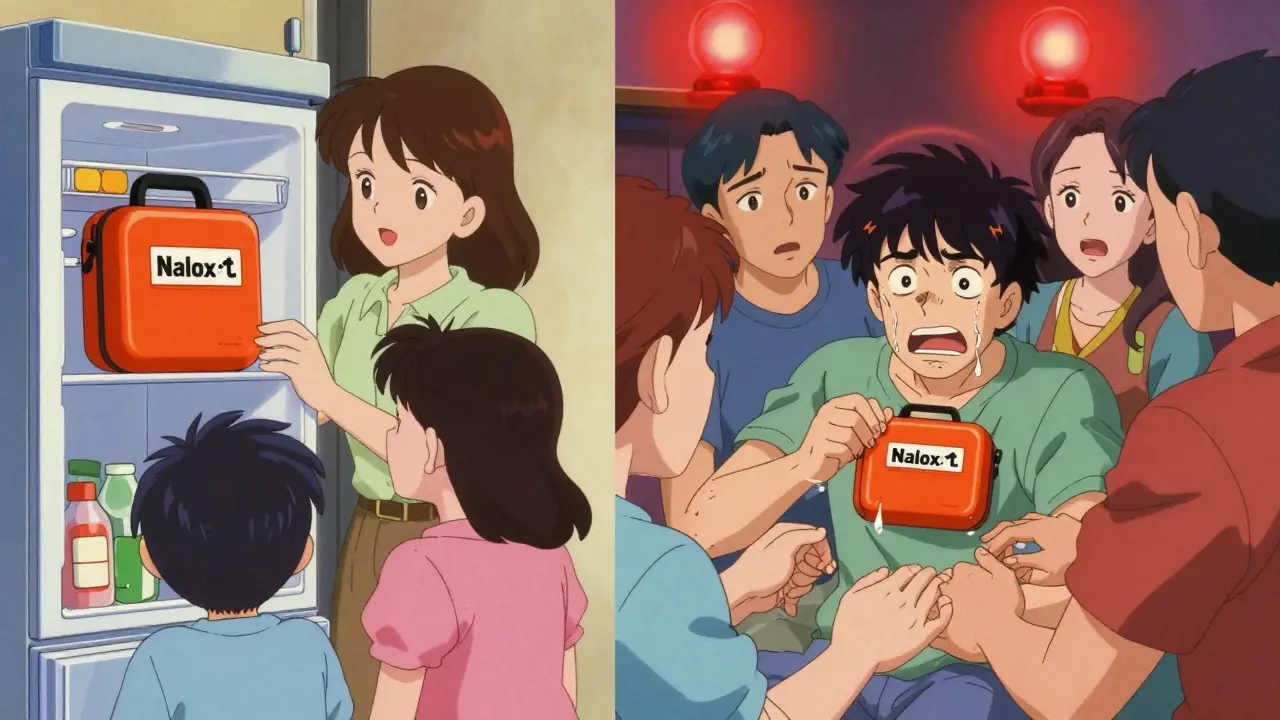
Naloxone works best when it’s easy to reach. Keep it:
- At room temperature (not in the fridge or car)
- In a clearly labeled container
- With the instructions attached
- Where multiple people can find it-home, car, work, backpack
The FDA-approved nasal spray lasts 2 years. Check the expiration date. Replace it if it’s expired. Expired naloxone isn’t harmful-it’s just less effective. If you’re unsure whether it still works, use it anyway. Better to try than wait.
Also, don’t store it with other medications. If someone’s panicking during an overdose, they need to grab the right thing fast. A separate pouch, keychain case, or even a sticker on the fridge helps. Many community programs give out naloxone kits with a bright orange case. Use that visibility.
Who Should Have Naloxone?
You don’t need to be a doctor, a nurse, or a first responder to carry it. If you know someone who uses opioids-even if they’re in recovery-you should have naloxone. If you live with someone who takes prescription painkillers, keep it nearby. If you work in a shelter, a clinic, or even a coffee shop-you should have it.
Here’s who should definitely have it:
- People using opioids (prescription or illicit)
- Family members, partners, or friends of opioid users
- People in recovery who are at risk of relapse
- People who use other drugs (like benzodiazepines or alcohol) with opioids
- Anyone who works with high-risk populations (homeless services, harm reduction centers, correctional facilities)
And here’s the truth: you don’t need a reason. If you’ve ever seen someone pass out after using drugs-even once-you now know what to do. Naloxone is like a fire extinguisher. You hope you never need it. But if you do, you’re glad it’s there.
What About Other Drugs? Can Naloxone Help With Cocaine or Alcohol?
No. And that’s important to understand.
Naloxone only works on opioids. It won’t reverse an overdose from cocaine, meth, alcohol, or benzodiazepines like Xanax or Valium. Mixing opioids with those drugs is common-and deadly. Someone might take fentanyl with alcohol or Xanax to “take the edge off.” But naloxone won’t fix the alcohol or Xanax part. It’ll fix the opioid part, but the person still needs emergency care.
The National Institute on Drug Abuse (NIDA) is clear: naloxone has no effect on non-opioid substances. So if someone overdoses after mixing drugs, give naloxone anyway. It might save them. But call 911. Always.
Cost and Access: Free Is Better Than Expensive
At pharmacies, a nasal spray kit costs $130 to $150. That’s too high for many people. But here’s the good news: you don’t have to pay.
Community programs, health departments, and nonprofits give out naloxone for free. In 2022, over 1.2 million kits were distributed through these programs. Many offer training at the same time. You can find them through:
- Your local health department
- Harm reduction centers
- Pharmacies with naloxone access programs
- Online directories like naloxonefinder.org
Some insurance plans cover it with $0 copay. Medicaid and Medicare Part D often include it. If you’re paying full price, ask for a discount card. Many manufacturers offer them.
And if you’re ever in doubt, call 1-800-222-1222-the Poison Help hotline. They’ll connect you to a local program in under 5 minutes.
Training Isn’t Hard-And You Don’t Need a Certificate
You don’t need a 2-hour course. You don’t need to be certified. Most state programs offer 15-minute training sessions. And 92% of people get it right the first time.
Here’s the bare minimum you need to know:
- Call 911 first. Always. Even if you give naloxone, the person still needs medical help.
- Check for breathing. If they’re not breathing or breathing very shallowly, start CPR if you know how.
- Administer one spray into one nostril. Push the plunger all the way in.
- Wait 2 to 3 minutes. If no response, give a second dose in the other nostril.
- Put them on their side in the recovery position. This stops choking if they vomit.
- Stay with them until help arrives.
That’s it. There are videos on the NIDA website. Free training modules are available online. Watch one. Practice with a dummy spray. You’ll remember it when it matters.
What’s Next? New Tools on the Horizon
Naloxone isn’t perfect. It’s short-acting. It doesn’t work on all opioids equally. And it’s still not everywhere.
But change is coming. In April 2024, the FDA approved an 8 mg nasal spray-twice the dose of the standard version. It’s designed for fentanyl and other super-strong opioids. The Biden administration is funding $200 million to distribute 2 million kits per year. Research is underway for longer-lasting versions like NX-201 and NX-301, which could last 4 to 6 hours instead of 90 minutes.
Dr. Rahul Gupta of the White House Office of National Drug Control Policy says naloxone will remain essential for at least the next decade. But he also says: “It must be part of a broader strategy.” That means treatment, housing, mental health care, and reducing stigma.
For now, though, the most powerful tool you have is simple: know the signs. Keep naloxone ready. Act fast. And never hesitate to help.
Can naloxone be used on children or pregnant women?
Yes. Naloxone is safe for children, pregnant women, and older adults. It doesn’t cross the placenta in harmful amounts and doesn’t affect developing fetuses. If a pregnant person overdoses on opioids, giving naloxone is critical-it saves both lives. The same goes for kids. There’s no age limit. If someone is not breathing due to opioids, give naloxone immediately.
Does naloxone work on fentanyl?
Yes, but it often takes more than one dose. Fentanyl is 50 to 100 times stronger than morphine, so it binds tightly to opioid receptors. One standard dose of naloxone (2 mg) may not be enough. The CDC says 40% of fentanyl overdoses require two or more doses. Always have a second spray ready. The new 8 mg nasal spray, approved in 2024, is specifically designed for this.
Can I get naloxone without a prescription?
Yes. Since March 2023, the FDA approved the first over-the-counter naloxone nasal spray (Narcan). You can buy it at pharmacies like CVS, Walgreens, and Walmart without a prescription. Many states also allow pharmacists to distribute it directly. Community programs offer it for free. You don’t need to prove you’re at risk.
What if I give naloxone to someone who didn’t overdose?
Nothing bad happens. Naloxone only works if opioids are in the system. If someone is unconscious from a stroke, heart attack, or alcohol poisoning, naloxone won’t affect them. It won’t wake them up, but it also won’t hurt them. That’s why experts say: “When in doubt, give it.”
How long does naloxone last, and do I need to replace it?
Most nasal sprays last 2 years. Check the expiration date on the box. If it expires, replace it. Expired naloxone isn’t dangerous-it just might not work as well. If you’re unsure, use it anyway. Better to use an expired spray than wait. Store it at room temperature. Don’t leave it in a hot car or freezing garage.
Is naloxone the same as nalmefene?
They’re similar, but not the same. Nalmefene is a newer drug with a longer duration-up to 11 hours compared to naloxone’s 1 to 1.5 hours. It’s being studied for opioid overdose, especially with fentanyl. But it’s not yet FDA-approved for that use. Naloxone remains the gold standard. If you have naloxone, use it. Don’t wait for nalmefene.
Can I carry naloxone on a plane?
Yes. The TSA allows naloxone in carry-on and checked luggage. You don’t need a prescription. Keep it in its original packaging with the label visible. If asked, you can say it’s for emergency opioid overdose reversal. Many travelers now carry it, especially those who live with or work with people at risk.
Why do some people say naloxone encourages drug use?
That’s a myth. Multiple studies have looked at this. One 2022 review in JAMA Network Open found no increase in drug use after communities started distributing naloxone. In fact, where naloxone was widely available, overdose deaths dropped by 14%. People don’t use drugs because they think they’ll be saved. They use them because of pain, trauma, or addiction. Naloxone doesn’t fix that-but it gives them time to get help.


Just got my first Narcan kit today 🙌 Honestly didn’t think I’d need it… until my cousin went quiet after using something last week. I didn’t even know what to do until I read this. Now it’s taped to my fridge next to the coffee. Thank you for making it feel normal to carry this. We’re all just trying to keep each other alive.
my mom keeps hers in the glovebox of her car lol she says if someone passes out in the backseat she wants it right there not buried in a drawer. also she calls it the 'wake up spray' and i love that
I work in a pub in Manchester and we’ve got two kits behind the bar now. Staff trained in 15 mins. One guy used it last month on a bloke who collapsed after smoking something. Took two sprays. Guy woke up, yelled at us, then cried. We didn’t judge. Just called an ambulance. That’s all that matters.
So many people think naloxone is only for addicts. But what about the person who got prescribed oxycodone after surgery and accidentally took too much? Or the teenager who found a pill in their sibling’s room? Or the elderly person mixing meds? Naloxone isn’t about judgment. It’s about being ready. I keep one in my purse. Always.
I teach health in rural India and we don’t have naloxone here but I shared this with my students. We talked about how simple it is to save a life. One girl said she’ll ask her uncle who uses painkillers for his back to get it. Small steps. We can all do something
Why are we giving out free narcan like it’s candy? This is enabling. If people didn’t do drugs we wouldn’t need this. Why not just lock up dealers and stop the flow? Why waste money on this? It’s just a bandaid on a bullet wound.
Oh sweet mercy, here we go again with the ‘naloxone is magic’ fairy tale. Let me guess - next you’ll tell me we should hand out parachutes to skydivers who forget to check their gear. Look, I’m all for saving lives. But if we’re gonna play doctor, at least acknowledge that fentanyl’s not some villainous dragon - it’s a chemical weapon designed by psychopaths in China. And no, spraying someone with a nasal decongestant isn’t fixing the system. Just saying.
My brother was in recovery for six years. Relapsed last winter. We had naloxone. We used it. He lived. He’s back in treatment now. This isn’t about enabling. It’s about not letting someone die before they’re ready to get help. I’ve seen people die waiting for someone to ‘do the right thing.’ Don’t wait. Have it. Know how. Act.
Did you know the government funds naloxone distribution through the same agencies that push mental health screening in schools? Coincidence? Or is this part of a larger social engineering plan to normalize drug use under the guise of harm reduction? I’ve read reports about hidden tracking in some kits. Who’s really behind this?
It is, without a shadow of a doubt, one of the most profoundly compassionate, scientifically grounded, and ethically imperative public health interventions of the 21st century. The fact that we must argue for the right to save a human life - with a device that has zero potential for abuse, zero side effects in non-opioid users, and a 95% success rate when administered within two minutes - is not just a policy failure; it is a moral catastrophe. We must expand access. We must eliminate stigma. We must act. Immediately. Without hesitation. With urgency. With love.