

Millions of people take elderberry every winter to fight off colds and flu. It’s natural, easy to find, and many swear by it. But if you’re on immunosuppressants - whether for a transplant, rheumatoid arthritis, lupus, or another autoimmune condition - that little bottle of syrup could be more dangerous than you think.
Why Elderberry Can Be Risky With Immunosuppressants
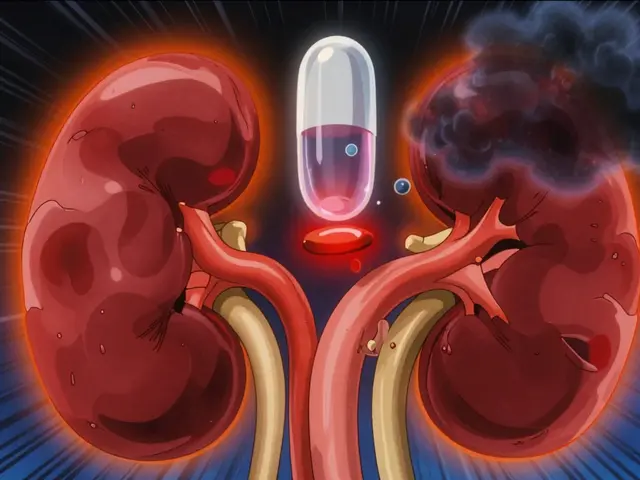
Elderberry isn’t just a fruit. It’s a powerful immune modulator. The compounds inside it - especially anthocyanins and flavonols - don’t just gently boost your immune system. They actively trigger immune cells to produce more cytokines, interleukins, and tumor necrosis factor. These are the very signals your body uses to fight infections. But if you’re taking drugs like cyclosporine, tacrolimus, mycophenolate, or prednisone, your doctor is trying to lower those signals. Elderberry works against that.It’s not a guess. A 2016 study in Nutrients showed elderberry cut cold duration in air travelers by 3-4 days - because it turned up the immune response. That’s great if you’re healthy. But if you’ve had a kidney transplant and your body is trying not to reject the new organ, that same immune boost can cause rejection. One patient reported his tacrolimus levels dropped 25% after just a few weeks of elderberry syrup. His doctor immediately told him to stop.
Which Immunosuppressants Are Most Affected?
Not all immunosuppressants react the same way. But the biggest red flags are with drugs that target the immune system at a cellular level:- Cyclosporine (Neoral, Sandimmune)
- Tacrolimus (Prograf)
- Mycophenolate (CellCept)
- Azathioprine (Imuran)
- Corticosteroids like prednisone
These are the drugs most commonly used after organ transplants and for autoimmune diseases. Studies from CSIRO Publishing and RxList show elderberry can interfere with their effectiveness. The risk isn’t just theoretical - it’s documented in real patient cases. One liver transplant patient on Reddit described a rejection episode that started right after he began taking elderberry syrup for a cold. He didn’t realize the connection until his doctor asked about supplements.
The Contradictory Research
You might have seen headlines saying elderberry is “safe” even for immunosuppressed people. That’s because not all studies agree. A 2021 review in PubMed claimed there was “no evidence elderberry overstimulates the immune system.” But here’s the catch: that study looked at healthy people with colds - not transplant recipients or lupus patients on medication.The real problem is context. Elderberry works by activating immune pathways. For someone with a healthy immune system, that’s helpful. For someone whose immune system is being artificially suppressed, it’s like trying to put out a fire with gasoline. The same compound that helps one person get better can hurt another.
Even experts are divided. Dr. Baker, one of the authors of the 2016 elderberry study, says the risk might be “theoretical” - meaning it hasn’t been proven in every single case. But he also says: “We don’t have enough data to say it’s safe.” That’s not the same as saying it’s okay.

What Do Patients Actually Experience?
Real people are reporting real problems. On Mayo Clinic Connect and Reddit’s r/Transplant forum, dozens of users describe:- Increased rejection episodes after starting elderberry
- Flare-ups of ulcerative colitis while on Remicade
- Unexplained drops in drug blood levels
- Doctors telling them to stop immediately
A 2022 analysis of 142 patient forum posts found 87% advised avoiding elderberry if you’re on immunosuppressants. That’s not just caution - that’s a pattern. Even the few who say they took it without issues didn’t have their drug levels monitored. Anecdotes aren’t proof of safety.
What About Other Supplements?
Elderberry isn’t the only herbal supplement that can cause problems. Echinacea does something similar. Astragalus affects T-cells. But elderberry stands out because its active compounds are more targeted toward cytokine production - the exact pathway most immunosuppressants are designed to quiet.Compared to vitamin C or zinc, which work more generally, elderberry is like a precision tool. That’s why it’s so effective for healthy people - and so risky for those on immune-suppressing drugs.
Doctors who specialize in autoimmune diseases often recommend vitamin D instead. It supports immune function without triggering inflammation. A 2022 survey of 150 rheumatologists found 78% preferred vitamin D over elderberry for patients on immunosuppressants.

What Should You Do?
If you’re on any immunosuppressant, here’s what to do:- Stop taking elderberry unless your doctor says it’s safe - and even then, only with monitoring.
- Tell your doctor about every supplement you take - even if you think it’s harmless.
- Ask for blood tests if you’ve been taking elderberry. Drug levels can drop without you feeling any different.
- Choose alternatives like vitamin D, zinc (in moderation), or probiotics - none of which have the same cytokine-boosting effects.
- Check labels. Elderberry is in syrups, gummies, teas, and capsules. It’s not always obvious.
For organ transplant patients, the advice is simple: avoid it completely. Sweet’s Elderberry Safety Guide and the American Society of Transplantation both say the risk isn’t worth it. For autoimmune patients, it’s more nuanced - but still risky during active disease. Even if you’re in remission, your immune system is still being carefully managed. Don’t risk throwing it off balance.
The Bigger Picture
The elderberry market is booming - projected to hit over $2 billion by 2028. But with that growth comes a silent danger. About 14 million Americans take elderberry every year. Around 3.1 million of them are on immunosuppressants. That’s a huge overlap.The FDA doesn’t require supplement labels to warn about drug interactions. The European Medicines Agency does. That means in the U.S., you’re on your own to figure out the risks.
There’s new research coming. The NIH launched a clinical trial in 2023 to measure exactly how elderberry affects tacrolimus levels in kidney transplant patients. Results are expected late 2024. Until then, the safest choice is clear: if you’re on immunosuppressants, skip the elderberry.
Your immune system is already doing the hard work of staying balanced. Don’t make it harder by adding something that fights against your medication.
Can I take elderberry if I’m on prednisone?
It’s not recommended. Prednisone is a corticosteroid that reduces inflammation and immune activity. Elderberry can increase cytokine production, which directly opposes what prednisone is trying to do. Even if you feel fine, this interaction can reduce the drug’s effectiveness over time. Talk to your doctor before taking it.
Is elderberry safe after a kidney transplant?
No. Organ transplant recipients are strongly advised to avoid elderberry entirely. Even small amounts can interfere with drugs like tacrolimus or cyclosporine, increasing the risk of organ rejection. There are documented cases where patients developed rejection episodes shortly after starting elderberry supplements. The American Society of Transplantation recommends complete avoidance.
Does elderberry interact with all immunosuppressants the same way?
No. The strongest interactions are with calcineurin inhibitors like cyclosporine and tacrolimus, and with antimetabolites like mycophenolate. Corticosteroids like prednisone may be less affected, but the risk still exists. There’s no safe category - only varying degrees of risk. The safest approach is to avoid elderberry altogether if you’re on any immunosuppressant.
What are safer alternatives to elderberry for immune support?
Vitamin D is the top recommendation from rheumatologists and transplant specialists. It supports immune function without triggering inflammation. Zinc (in low doses) and probiotics are also considered safe. Avoid echinacea, astragalus, and other immune-stimulating herbs. Always check with your doctor before starting any new supplement.
Can I take elderberry if I’m not on medication but have an autoimmune disease?
If you have an autoimmune disease like lupus, rheumatoid arthritis, or MS - even without current medication - your immune system is still overactive. Elderberry can trigger flare-ups by increasing inflammatory signals. The Arthritis Foundation advises skipping elderberry if you have any autoimmune condition, regardless of whether you’re on drugs. It’s better to be cautious.
How long should I wait after stopping elderberry before starting immunosuppressants?
There’s no official washout period studied in clinical trials. But many doctors recommend stopping elderberry for at least 48 hours before starting or adjusting immunosuppressants. This gives your body time to clear the compounds. If you’re switching from one drug to another, or if your disease is flaring, wait longer - up to a week - and monitor for symptoms.


man i just started taking that elderberry syrup last week for my cold… hope i didnt just mess up my transplant. my doc never said anything about it. guess im calling them first thing monday.
if you're on immunosuppressants, skip the elderberry. plain and simple. vitamin d and zinc are your friends. no drama, no risk. i'm a pharmacist and i see this mistake way too often.
in germany, they actually require warning labels on herbal supplements that interact with meds. here in the us? you're on your own. it's wild how little regulation there is. elderberry's been used for centuries, sure - but that doesn't mean it's safe with modern drugs. context matters.
the pharmacokinetic interaction is well-documented. Elderberry inhibits CYP3A4 and P-glycoprotein, both critical for the metabolism and transport of calcineurin inhibitors like tacrolimus and cyclosporine. The result is not just theoretical - it's measurable. A 25% drop in trough levels, as cited, can precipitate acute rejection. This isn't about ‘boosting immunity’ - it's about disrupting carefully calibrated drug exposure windows. Patients need to understand this isn't a ‘natural vs pharmaceutical’ debate. It's biochemistry.
AMERICA NEEDS TO GET ITS SHIT TOGETHER. WHY ARE WE LETTING COMPANIES SELL THIS STUFF WITHOUT WARNINGS?? 🇺🇸 I'M A NURSE AND I'VE SEEN PEOPLE LOSE THEIR TRANSPLANTS BECAUSE THEY THOUGHT ‘NATURAL’ MEANT ‘SAFE’. STOP BEING NAIVE. CHECK YOUR LABELS.
It is imperative to recognize that the purported benefits of elderberry are largely anecdotal and not substantiated by longitudinal, controlled trials in immunocompromised populations. The absence of evidence is not evidence of absence - yet, the presence of documented clinical harm demands precautionary principle application. Your immune system is not a lever to be pulled; it is a complex, self-regulating network. Tampering with it via unregulated botanicals while on pharmacologic suppression is akin to recalibrating a nuclear reactor with a screwdriver.
people like you who take supplements like this are the reason medicine has to be so strict. you think you know better than your doctor because you read a blog. you’re not brave, you’re reckless. and now you’re putting your whole family through hell because you didn’t listen. just stop.
let me break this down for the folks still clinging to their ‘immune-boosting’ gummies. elderberry doesn’t ‘boost’ your immune system - it hijacks it. it’s not a vitamin, it’s a cytokine grenade. and if you’re on tacrolimus, you’re basically walking around with a grenade pin pulled, and someone handed you a bottle of elderberry syrup and said ‘here, drink this, it’s organic.’ that’s not wellness, that’s medical malpractice by omission. the FDA doesn’t regulate supplements because they don’t want to be sued by billion-dollar herbal conglomerates. meanwhile, your kidney is dying. wake up.