

When it comes to losing weight, few diets have sparked as much debate as the keto diet and the Atkins diet. Both promise quick results by cutting carbs, but they’re not the same. One locks you into a strict fat-burning state. The other lets you ease into it. If you’re trying to shed pounds and don’t know which path to take, here’s the real difference - not the marketing, not the influencers, but what actually happens in your body and your life.
How Keto Works: Staying in Fat-Burning Mode
The ketogenic diet was originally created in the 1920s to treat epilepsy, not weight loss. But doctors noticed something strange: patients lost weight - fast. That’s because keto forces your body to burn fat instead of sugar. To do that, you have to eat almost no carbs. Most people stay under 50 grams of net carbs per day. That’s less than one banana. Your fat intake jumps to 75-90% of your calories. Protein stays moderate - too much can turn into glucose and kick you out of ketosis. This isn’t just about eating less bread. It’s a metabolic shift. When carbs disappear, your liver starts making ketones from fat. These become your brain’s new fuel. That’s why people on keto often report clearer thinking and fewer cravings. But getting there? That’s where things get rough. The first two to four weeks are brutal for most. Around 70-80% of new keto dieters get what’s called the “keto flu.” Headaches, fatigue, irritability, muscle cramps - it’s real. Your body is literally rewiring its energy system. You’re not sick. You’re adapting. And if you give up during this phase, you’ll never know what keto can do.How Atkins Works: Phases That Grow With You
The Atkins diet, launched in 1972, was built for long-term use. It doesn’t ask you to stay in one mode forever. It gives you four phases. Phase 1, called Induction, is the strictest: only 20-25 grams of net carbs per day for two weeks. Sounds like keto, right? But here’s the twist: Atkins lets you eat more protein. You don’t need to count fat. You just avoid sugar, grains, and starchy veggies. After two weeks, you move to Phase 2. Now you add 5 grams of carbs per week - nuts, berries, more veggies - until you find the level where you still lose weight. Phase 3 slows weight loss and prepares you for maintenance. Phase 4? You can eat up to 100 grams of carbs daily and stay lean. That’s the big difference. Atkins doesn’t want you to be on a diet forever. It wants you to find your personal carb tolerance. You might end up eating more carbs than someone on keto - but you’re still losing weight because you’ve learned what your body can handle.What the Science Says About Weight Loss
Short-term? Both diets crush it. In a 12-month study, people on a low-calorie keto diet lost an average of 44 pounds. That’s more than double what people lost on standard low-fat diets. Another study on obese adults with type 2 diabetes showed Atkins helped lower blood sugar and reduce diabetes meds. But here’s what no one tells you: after six months, the difference fades. A 24-month study published in the American Journal of Clinical Nutrition found that while keto led to more weight loss at six months (12.1 lbs vs. 6.2 lbs), by two years, the gap narrowed to just 1.7 pounds. Both groups ended up losing about the same amount. Why? Because adherence drops. Keto’s strictness makes it hard to stick to. People get tired of measuring every bite. Atkins gives you room to breathe. That’s why long-term adherence rates are higher for Atkins - 48% after 12 months versus 35% for keto.
What You’ll Actually Eat
Keto demands whole foods. Eggs, meat, fish, leafy greens, avocados, olive oil, nuts. Processed “keto” snacks? They’re a trap. Many are loaded with artificial sweeteners and fillers that spike insulin and stall fat loss. The best keto meals are simple: grilled chicken with broccoli and butter. Salmon with asparagus. Hard-boiled eggs and cheese. Atkins? It’s more flexible. Yes, Phase 1 is clean. But Phase 2 and beyond? Atkins-branded bars, shakes, and frozen meals are part of the plan. The company sells over 350 products. Some people love the convenience. Others hate the processed ingredients. A Trustpilot review of Atkins products shows a 3.8/5 rating - praise for ease, criticism for chemicals. If you hate cooking, Atkins gives you a lifeline. If you want to eat real food, keto fits better.Who It Works For - And Who It Doesn’t
Keto is great if you:- Want fast results in the first 3 months
- Have insulin resistance or prediabetes
- Enjoy cooking and measuring food
- Can handle the initial discomfort
- Dislike tracking macros
- Have a history of disordered eating
- Want to eat fruit, beans, or whole grains regularly
- Are an athlete needing quick energy for high-intensity workouts
- Want a gradual transition out of strict dieting
- Prefer structure with flexibility
- Like having ready-made meal options
- Plan to keep the weight off for years
- Don’t want to read labels or track carbs
- Are allergic to artificial sweeteners (common in Atkins products)
- Want to avoid processed foods entirely
Cost, Tools, and Daily Life
Keto requires tools. Blood ketone meters cost $40-60 a month. Apps like Carb Manager or KetoDiet help track macros. You’ll need a kitchen scale. Grocery trips become more expensive - grass-fed beef, wild salmon, organic butter. Atkins is cheaper to start. You can buy their bars and shakes at Walmart or Amazon. Their website has free carb counters and phase guides. But over time, you’ll spend more on branded products if you rely on them. For daily life: keto is harder in restaurants. Ask for “no bread, no rice, no sauce” and you’re left with grilled meat and steamed greens. Atkins? Phase 4 lets you eat a slice of whole grain bread or a small apple without derailing progress.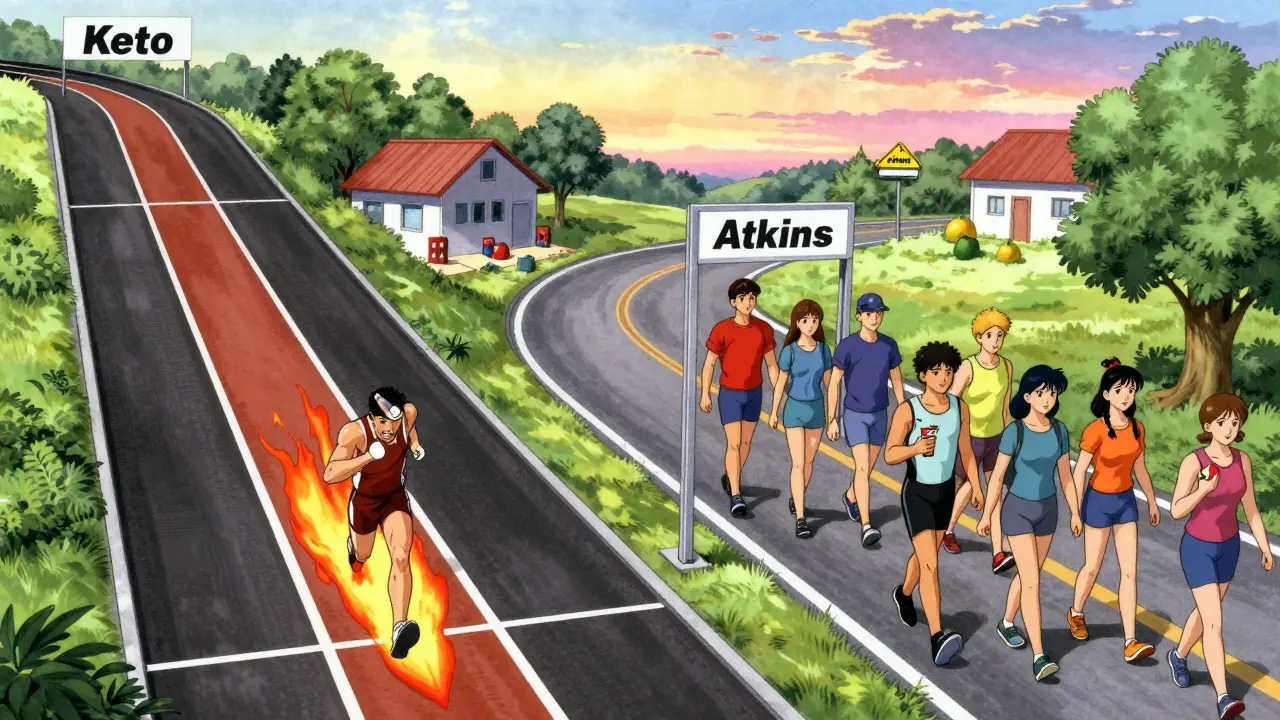
Long-Term Health: Risks and Realities
Critics say both diets are too high in saturated fat. The American Heart Association warns about increased LDL cholesterol in some people. Dr. Neal Barnard from the Physicians Committee for Responsible Medicine calls keto a “heart attack on a plate.” But here’s the nuance: not all fats are equal. If you eat keto with olive oil, avocado, and fatty fish - not bacon and butter every meal - your cholesterol may improve. Studies show triglycerides drop and HDL rises on both diets. The bigger risk? Nutrient gaps. Cutting out whole food groups means you might miss fiber, magnesium, potassium, and B vitamins. That’s why many keto dieters take supplements. Atkins users often get more variety as they add back foods in later phases. The American Diabetes Association says low-carb diets work for short-term blood sugar control - but long-term safety data is still limited.Which One Should You Choose?
If you’re 30 pounds overweight, have insulin resistance, and want to see results in 60 days - start with keto. Push through the first two weeks. Use a blood ketone meter to confirm you’re in ketosis. Eat whole foods. Don’t buy the snacks. If you’ve tried diets before and quit because they felt too extreme - try Atkins 40. Start at 40 grams of net carbs. Eat protein, healthy fats, and veggies. Don’t rush through phases. Let your body adjust. You might find you can eat more carbs than you thought and still lose weight. Neither diet is magic. Neither is forever. Both work best when they’re part of a lifestyle change - not a quick fix.Real weight loss isn’t about being perfect. It’s about finding a way to eat that you can live with for the rest of your life. Keto gives you speed. Atkins gives you sustainability. Pick the one that matches your personality - not the one that sounds sexiest on Instagram.
Can I switch from keto to Atkins?
Yes, many people do. If you’ve lost weight on keto but feel burned out, you can move into Atkins Phase 2 or 3. Gradually add back carbs - 5 grams per week - until you find your personal maintenance level. The key is to avoid going back to old eating habits. Don’t jump straight to pasta and bread.
Will I gain the weight back after stopping either diet?
Yes - if you return to your old diet. Weight loss isn’t about the diet you’re on. It’s about what you do after. Keto and Atkins both teach you to avoid sugar and refined carbs. If you keep eating those after losing weight, you’ll gain it back. The real goal is learning how to eat sustainably, whether that’s 30 grams or 80 grams of carbs per day.
Is the keto flu real, and how do I deal with it?
Yes, it’s real - and it’s not a virus. It’s your body adjusting to low carbs. Symptoms include headaches, fatigue, dizziness, and muscle cramps. To ease it: drink more water, add salt to your food (1/2 tsp sea salt daily), and eat more potassium-rich foods like spinach, avocado, and salmon. Most people feel better within 10-14 days.
Can I do keto or Atkins as a vegetarian?
Yes, but it’s harder. Keto vegetarians rely on eggs, cheese, tofu, tempeh, nuts, seeds, and low-carb dairy. Atkins vegetarians have more flexibility in later phases with beans and lentils. Both require careful planning to get enough protein and avoid processed soy products. Supplements like B12 and iron are often needed.
Do I need to count calories on keto or Atkins?
Technically, no - but you should. Both diets reduce hunger naturally, so most people eat fewer calories without trying. But if you’re not losing weight, you’re likely eating too much fat or too many hidden carbs. Track your intake for two weeks. You might be surprised how many calories are in cheese, nuts, or Atkins bars.
Which diet is better for type 2 diabetes?
Both can help. Studies show keto and Atkins lower blood sugar and reduce medication needs in the short term. Keto tends to work faster, but Atkins is easier to stick with long-term. The key is working with your doctor. Never stop diabetes meds without medical supervision.
Are keto and Atkins safe for long-term use?
For most healthy adults, yes - if done right. Long-term safety data is still limited, but no major studies show harm when nutrient-dense foods are prioritized. The biggest risk is nutritional gaps, not the fat or protein. Focus on vegetables, healthy fats, and lean proteins. Avoid processed keto snacks and Atkins bars as your main food source.





Look, if you're not tracking ketones with a blood meter and eating grass-fed beef exclusively, you're not doing keto-you're just eating low-carb and lying to yourself. Atkins? That's what you call it when you can't commit to real biohacking. I've seen 300+ people try this and 98% fail because they think a Keto bar from Walmart is a meal. Wake up.
Metabolic flexibility isn't about rigid rules-it's about listening. Keto isn't 'better'-it's just louder. Atkins teaches adaptation; keto demands obedience. One builds resilience. The other builds dependency.
Okay so let me get this straight-you're telling me I have to eat butter on everything and count every single gram of net carbs like I'm some kind of biochem nerd just to lose weight? And then you say Atkins is the 'chill' version? Bro, I tried keto for 11 days and I cried into a bowl of cheddar cheese because I missed pizza so bad. I'm not a lab rat. I'm a human who likes tacos. Why does everything have to be this extreme? I just wanna eat and not feel like I'm on a cult retreat. Also, why are all the keto influencers hot? Is that part of the protocol? Did they get a free facelift with their ketone meter?
How quaint. You’ve presented two diets as if they’re philosophical choices-when in reality, both are corporate marketing constructs dressed in pseudoscientific robes. Keto? A 1920s epilepsy protocol repackaged by Instagram influencers with $200 coconut oil subscriptions. Atkins? A 1970s scam that sold you processed protein bars under the guise of 'freedom.' Neither is sustainable. Both are profit engines. The real question isn’t which diet works-it’s why we’ve allowed our health to be commodified into a binary choice between starvation and sugar-laced 'low-carb' snacks. You’re not choosing a diet-you’re choosing a brand.
Oh my god, I’m from Indonesia and we have ketupat and gado-gado-both low-carb if you skip the rice and peanut sauce! I tried keto for a month and my grandma thought I was possessed because I refused nasi goreng. Then I tried Atkins Phase 2 and started eating tempeh with chili and lime-no supplements, no scales, just real food. My cousin said I looked like a new person. I didn’t need a meter-I just listened to my body. And yes, I still eat fruit. 🍍
So if both diets lead to the same weight loss after two years… why do we still treat keto like the holy grail and Atkins like the lazy cousin? Is it because keto sounds more 'scientific'? Or because people enjoy the drama of suffering? I’m not saying one’s better-I’m saying we’re obsessed with the myth of the 'hardcore' diet. Maybe the real win is not being able to stick to a diet at all-but learning to eat without one.
Let’s cut through the noise: keto is for people who want to feel like they’re in a sci-fi movie where their body is a fuel cell. Atkins is for people who want to lose weight but still have a social life. The science? Identical after 6 months. The adherence? Atkins wins because it doesn’t demand you become a monk. You don’t need a blood ketone meter-you need a fridge, a scale, and the will to not eat donuts every Sunday. Stop glorifying suffering. Progress isn’t measured in ketones-it’s measured in consistency. And if you’re still buying Atkins bars? You’re still doing it wrong. But at least you’re trying.
I’ve been on both. Keto gave me brain fog for 3 weeks. Atkins let me eat avocado toast. I didn’t lose more weight on keto-I just felt worse. I don’t need to be in ketosis to be healthy. I just need to stop eating sugar. Maybe the real answer isn’t in the carb count-it’s in the intention.
Y’all are overthinking this 😤 I did keto for 3 months, lost 42 lbs, then switched to Atkins Phase 3 and now I eat a slice of sourdough on weekends and I’m still 35 lbs down. No meters. No guilt. Just real life. 🙌 If you’re not losing weight, you’re not eating less-you’re just counting carbs like it’s a religion. Eat real food. Move your body. Sleep. That’s the real hack. 🍳🥑 #NoDietJustLifestyle