
Counterfeit Medication Checker
Check Your Medication Authenticity
Enter details from your medication packaging or verify against FDA databases to detect potential counterfeits.
Verification Results
Enter your medication details to begin verification...
Every year, millions of people around the world take medications that don’t contain what they’re supposed to. Some have no active ingredient at all. Others are laced with toxic chemicals, rat poison, or even fentanyl. These aren’t mistakes-they’re deliberate scams. Counterfeit medications are a growing global crisis, and the danger isn’t just theoretical. People are dying because they trusted a website, a too-good-to-be-true price, or a package that looked real.
What Exactly Is a Counterfeit Medication?
A counterfeit medication is any drug that’s been intentionally falsified. That means someone changed the label, the contents, or both to trick you into thinking it’s real. The World Health Organization (WHO) breaks this down clearly: falsified drugs are fake by design, meant to deceive for profit. substandard ones are poorly made, not necessarily fake, but still dangerous because they don’t meet quality standards. These aren’t just weak versions of real drugs. They can contain:- Nothing but sugar or chalk
- Wrong ingredients-like rat poison or industrial dyes
- Too little of the active drug, making it useless
- Too much of the active drug, causing overdose
- Deadly contaminants like fentanyl, especially in fake painkillers
Where Are These Fake Drugs Coming From?
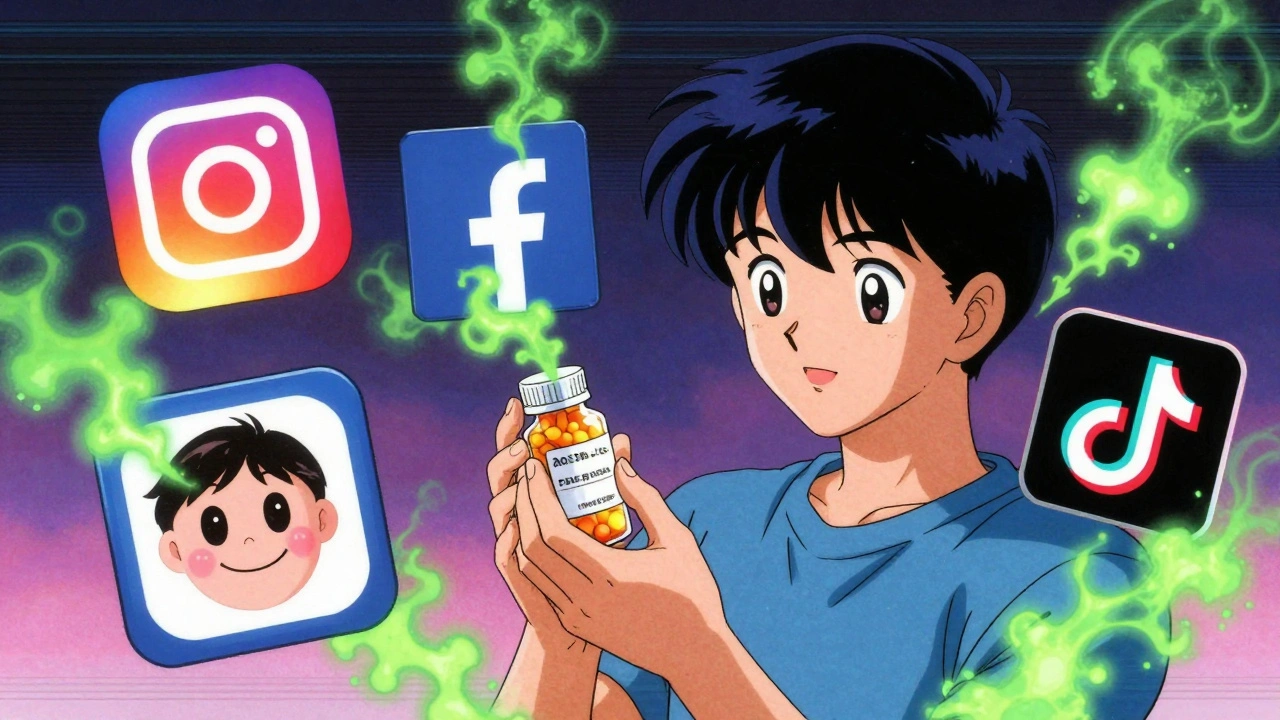
The internet is the main highway for counterfeit medications. Over 97% of online pharmacies selling prescription drugs are illegal. Many of them claim to be based in Canada or the U.S., but the FDA says 85% of drugs sold from so-called "Canadian" pharmacies actually come from unregulated sources in Asia, Africa, or Eastern Europe. Social media platforms are now major distribution channels. You’ll find fake pills advertised on Instagram, Facebook, and TikTok as "discounted Xanax," "free shipping on Viagra," or "miracle weight loss pills." These aren’t shady back-alley deals-they’re polished ads with fake testimonials and logos that look professional. Criminal networks are getting smarter. They now copy holograms, serial numbers, and tamper-proof seals. In 2025, Interpol’s Operation Pangea XVI shut down 13,000 websites and seized over 50 million fake doses. But for every site taken down, ten more pop up. The rise of 3D printing is making things worse. There are now reports of counterfeiters using desktop printers to create convincing packaging that matches real brands down to the font and color. In some cases, the only way to tell the difference is by testing the actual drug inside.How to Spot a Fake Medicine
You can’t always tell by looking-but you can look for warning signs. Here’s what to check:- Packaging: Look for spelling errors, blurry printing, mismatched colors, or missing lot numbers. Real pharmaceutical packaging is precise. Fake packaging often has tiny flaws.
- Pills or tablets: Compare the color, shape, size, and markings to images on the manufacturer’s official website. If your pills are a different shade or have no imprint, they’re likely fake.
- Smell and texture: Real medications have a consistent smell and feel. If your insulin vial feels lighter than usual, or your antibiotic pills taste metallic, stop using them.
- Price: If it’s way cheaper than your pharmacy charges, it’s probably fake. Insulin, for example, costs hundreds of dollars legitimately. A $20 bottle online is a trap.
- Prescription requirement: Legitimate pharmacies always require a valid prescription. If a website sells controlled substances without one, it’s illegal and dangerous.
Real Stories, Real Consequences
One Reddit user, "MedTech_RN," shared how their family member nearly died after taking counterfeit insulin. The packaging looked perfect. The label was correct. But the vial was lighter. That’s the only clue. The insulin had almost no active ingredient. The patient went into diabetic ketoacidosis and ended up in intensive care. In Africa, counterfeit antimalarial drugs kill over 120,000 people every year. A study in The American Journal of Tropical Medicine and Hygiene found that more than half of all fake medicines in the legal supply chain contained too little of the active drug. That doesn’t just mean you don’t get better-it means your body learns to resist the drug, fueling the rise of antimicrobial resistance. In the U.S., the FDA documented 1,247 adverse events linked to suspected counterfeit drugs in 2025. Eighty-seven percent happened to people who bought from unverified online sources. And the DEA says 7 out of 10 fake pills seized in 2025 contained a lethal dose of fentanyl. That’s not a mistake. That’s murder by proxy.How to Buy Medications Safely
The safest place to get your medicine is still your local, licensed pharmacy. But if you need to buy online, follow these steps:- Check for VIPPS: Only use online pharmacies with the Verified Internet Pharmacy Practice Sites (VIPPS) seal. This is a certification from the National Association of Boards of Pharmacy (NABP). You can verify the seal at nabp.pharmacy.
- Verify the pharmacy’s license: Every legitimate pharmacy in the U.S. must be licensed by its state board. Use the NABP’s database to confirm the license is active and matches the website’s address.
- Use the FDA’s BeSafeRx tool: The FDA’s website has a simple checker to confirm if a pharmacy is safe. Never buy from a site that doesn’t list a physical address and phone number.
- Check the National Drug Code (NDC): Every real medication has a unique 10-digit NDC number. You can search it in the FDA’s database to confirm the product is approved and matches the description.
- Avoid social media sellers: No matter how convincing the post looks, don’t buy from Instagram, Facebook, or WhatsApp. These are not pharmacies. They’re scams.
What to Do If You Find a Fake
If you suspect a medication is counterfeit:- Stop taking it immediately.
- Keep the packaging and pills-even if you’ve used some.
- Call your doctor or pharmacist to report it.
- Report it to the FDA through their MedWatch program.
- File a complaint with the FTC or your local consumer protection agency.
The Bigger Picture: Why This Matters
Counterfeit drugs don’t just hurt individuals. They break the entire healthcare system. Legitimate drug companies lose $200 billion a year. That money could fund real research, better treatments, and lower prices. Instead, it fuels organized crime. In low- and middle-income countries, up to 40% of medicines are fake. That means people with diabetes, HIV, or cancer are dying not because treatment doesn’t exist-but because they can’t trust what they’re given. New technology is helping. Portable spectroscopy devices can now detect fake drugs in seconds. The U.S. Drug Supply Chain Security Act now requires full electronic tracking of every prescription drug by November 2025. The EU has similar rules with unique identifiers and anti-tamper seals. But technology alone won’t fix this. Only informed, cautious consumers can stop the flow of fake drugs. The next time you see a deal that seems too good to be true-believe it. It is.How can I tell if my medication is fake if the packaging looks perfect?
Even if the packaging looks real, check the pills themselves. Compare the color, shape, size, and imprint to images on the manufacturer’s official website. If your insulin vial feels lighter than usual, or your pills have a strange taste or smell, stop using them. The only foolproof way to confirm authenticity is through lab testing or verifying the NDC number in the FDA’s database.
Are all online pharmacies dangerous?
No, but most are. Over 97% of websites selling prescription drugs operate illegally. Only use pharmacies with the VIPPS seal from the National Association of Boards of Pharmacy. Legitimate online pharmacies require a prescription, provide a physical address, and are licensed in the U.S. or your country. If a site doesn’t meet these standards, it’s not safe.
Can counterfeit drugs cause long-term damage even if I don’t feel sick right away?
Yes. Fake antibiotics with too little active ingredient can lead to drug-resistant infections. Fake insulin can cause chronic high blood sugar, leading to nerve damage, kidney failure, or blindness over time. Fake cancer drugs may delay real treatment, allowing tumors to grow unchecked. The harm isn’t always immediate-but it’s often irreversible.
Why are fake pills so often laced with fentanyl?
Fentanyl is cheap, powerful, and easy to mix into powder or press into pills. Criminals use it because it makes fake painkillers feel stronger, keeping users hooked. But even a tiny amount can be deadly. The DEA found that 7 out of 10 fake pills seized in 2025 contained a lethal dose. You can’t see, smell, or taste it. There’s no safe way to test them at home.
Is it safe to buy medicine from a pharmacy in another country?
It’s risky. Even if a pharmacy is licensed in its own country, it may not meet U.S. or EU safety standards. The FDA doesn’t regulate foreign pharmacies. Many claim to be Canadian, but 85% of those drugs come from unregulated sources. The safest option is to buy from a U.S.-based, VIPPS-certified pharmacy-even if it costs more.
What should I do if I’ve already taken a fake medication?
Contact your doctor immediately. Don’t wait for symptoms. If you took fake insulin, antibiotics, or heart medication, you may need urgent testing or treatment. Save the packaging and any remaining pills. Report the incident to the FDA’s MedWatch program and your local health department. Your report could help prevent others from being harmed.


Wow, this is terrifying. I had no idea how sophisticated these fakes have become-3D-printed packaging? That’s next-level fraud. I always check for the VIPPS seal now, but honestly, I’ve never even heard of NABP until this post. Thanks for the clarity.
Of course the FDA can't keep up. America's healthcare system is a joke. You think they care about your insulin? They care about lawsuits and stock prices. Buy from Canada if you want real medicine-stop being a sheep and get smart.
So many people just don't get it. If it's cheap online it's poison. End of story. Stop being lazy and walk to the pharmacy.
Counterfeit drugs aren't just a public health issue-they're a systemic failure of trust in institutions. When people turn to shady online vendors, it's not because they're reckless, it's because the cost of real medicine has become a moral crisis. We've commodified survival. And now we blame the victims for seeking relief.
The real solution isn't just better verification tools-it's universal access to affordable, regulated pharmaceuticals. Until then, we're just rearranging deck chairs on the Titanic.
Y’all need to stop buying pills off Instagram. I’ve seen friends almost die over this. Just go to CVS. It’s not that hard. You got this.
Let’s be real: the FDA, WHO, and Big Pharma are all complicit. They profit from the fear they create. Why else would they push expensive, patented drugs while suppressing cheaper generics? The ‘fake drug’ narrative distracts from the real issue: controlled scarcity. You think fentanyl in pills is an accident? It’s a market strategy. They want you addicted-to their system.
And don’t even get me started on the NDC database-it’s a black box. I’ve searched 12 different insulin brands. Half the results are outdated or missing. This isn’t safety. It’s theater.
They’re lying. All of them. The ‘verified’ pharmacies? Controlled by the same corporations that make the real drugs. The ‘FDA database’? A front. They let a few fakes slip through to keep you scared-and buying more expensive ‘safe’ versions. I know someone who got real insulin from a guy in a van in Ohio. It worked better than the $600 bottle from Walgreens. Coincidence? I think not.
OMG I just checked my last prescription and the pill color is kinda off?? I’m so scared. I’m calling my pharmacist right now. Thanks for the heads up!!
Medication safety is a global responsibility. In India, we face similar challenges. Many patients rely on local clinics with limited oversight. Education and community awareness are the most powerful tools. Always verify, always question, and never assume.
I’ve been reading up on this for months now, and what strikes me most is how the psychological manipulation behind these scams mirrors the tactics used in predatory marketing and cult recruitment. The packaging isn’t just fake-it’s engineered to trigger trust cues: familiar logos, professional typography, even the weight of the box is calibrated to feel legitimate. We’re not just being sold bad medicine; we’re being conditioned to believe in illusions. And the more we rely on convenience, the more vulnerable we become. It’s not about being careful-it’s about relearning how to trust in a world designed to exploit trust.
weird how the usa has all these 'verified' sites but still so many people get scammed... maybe the system is broken? i mean, if you gotta check 5 different databases just to buy aspirin, something's wrong.
It is, quite frankly, an affront to public intelligence that citizens must engage in pharmaceutical forensics just to obtain life-sustaining medication. The onus should not be placed upon the layperson to discern authenticity via NDC codes and VIPPS seals-these are professional, regulatory responsibilities. The failure lies not with the consumer, but with the institutional decay of pharmaceutical governance.