
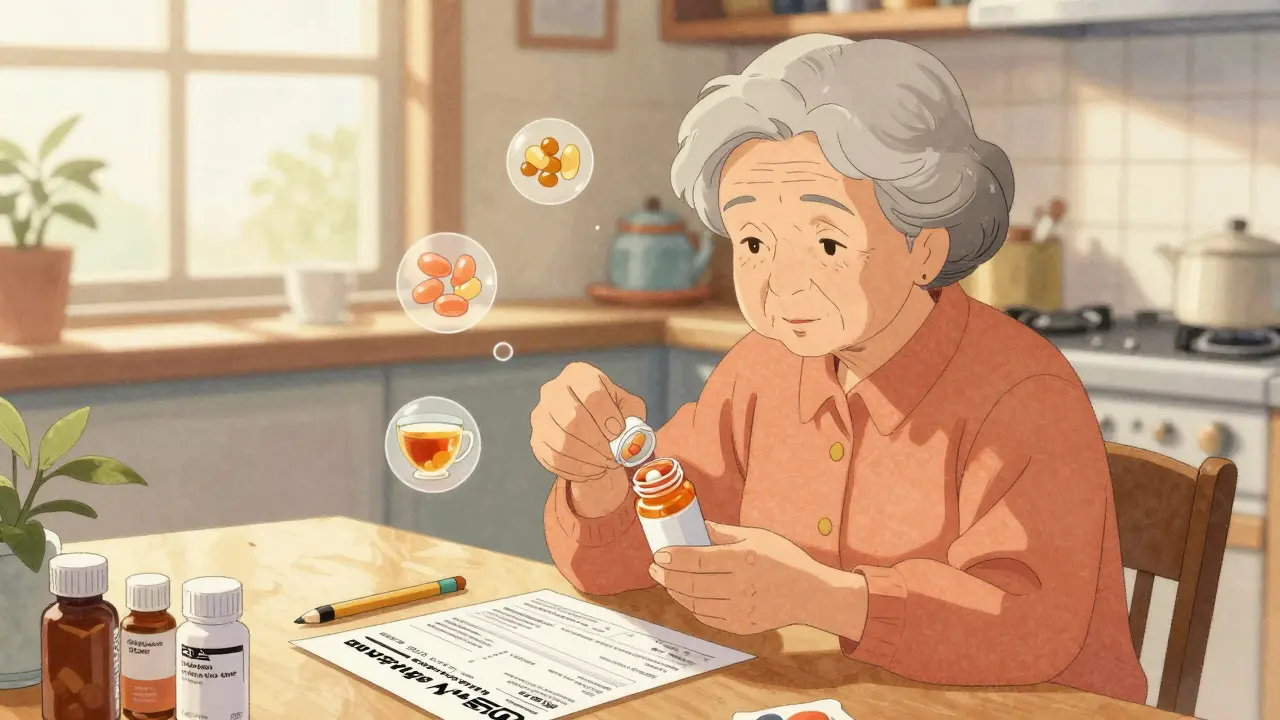
Every year, thousands of people in the U.S. are hospitalized or worse because someone didn’t know what medications they were taking. It’s not always a doctor’s mistake. Often, it’s because the patient’s medication list was outdated, incomplete, or never made at all. The good news? Keeping a simple, accurate list of everything you take - prescriptions, over-the-counter pills, vitamins, supplements, even herbal teas - can cut your risk of dangerous drug interactions by more than half.
Why Your Medication List Matters More Than You Think
You might think, ‘I remember what I take.’ But how many times have you forgotten a supplement you started last month? Or the painkiller your cousin recommended? Or the blood pressure pill you stopped because it made you dizzy? Studies show that nearly 60% of patients can’t accurately list all their medications when asked - even if they’ve been taking them for years.
Medication errors are one of the leading causes of preventable harm in healthcare. The FDA estimates around 7,000 deaths each year in the U.S. alone come from mistakes involving drugs. Most of these happen during transitions - when you’re discharged from the hospital, switch doctors, or start seeing a new specialist. That’s why the Joint Commission now requires hospitals to reconcile your medications every time you move between care settings. But you don’t have to wait for them to catch up. You can start today.
What to Include on Your Medication List
A good medication list isn’t just a scribble on a napkin. It needs details. Here’s what to write down for every single item:
- Drug name - both brand and generic (e.g., Lisinopril, also sold as Zestril)
- Dose - how much you take (e.g., 10 mg, 500 mg)
- Frequency - how often (e.g., once daily, twice a week)
- Route - how you take it (e.g., by mouth, injection, patch)
- Purpose - why you’re taking it (e.g., ‘for high blood pressure,’ ‘for joint pain’)
- Last time taken - especially important if you’ve missed a dose
- Prescribing provider - who wrote the prescription (doctor’s name or clinic)
- Allergies and reactions - not just ‘penicillin,’ but what happened (e.g., ‘rash after amoxicillin,’ ‘swelling after sulfa’)
Don’t forget the stuff you think doesn’t count. Aspirin. Ibuprofen. Fish oil. Melatonin. Turmeric capsules. Even if your doctor didn’t prescribe it, it can still interact with your other meds. The ECRI Institute says the most accurate lists include everything - prescription, OTC, vitamins, supplements, and herbal remedies. If you’re unsure, include it. Better safe than sorry.
Choosing the Right Format: Paper, App, or EHR
You’ve got options. Each has pros and cons.
Paper lists - like the FDA’s free ‘My Medicines’ template - are simple, don’t need batteries, and work in emergencies. But they’re easy to lose or forget to update. A 2022 study found that 43% of paper lists were outdated by the time they got to the hospital.
Smartphone apps - like Medisafe, MyTherapy, or CareZone - remind you when to take pills, track refills, and even let you share your list with family or doctors. They cut missed doses by nearly 30%. But only about 35% of people over 65 use them regularly. If you’re not tech-savvy, this might feel overwhelming.
EHR-integrated lists - like those in MyChart or Epic - are the gold standard if your doctor uses them. They update automatically when prescriptions are filled or changed. But you can’t access them unless you’re logged in, and not all providers share data. Only 58% of primary care offices have full integration.
The best approach? Use both. Keep a printed copy in your wallet or purse. Use an app to set reminders and track changes. When you visit your doctor, bring your phone with the app open - or your printed list - and compare.
How to Keep It Updated (And Why Most People Fail)
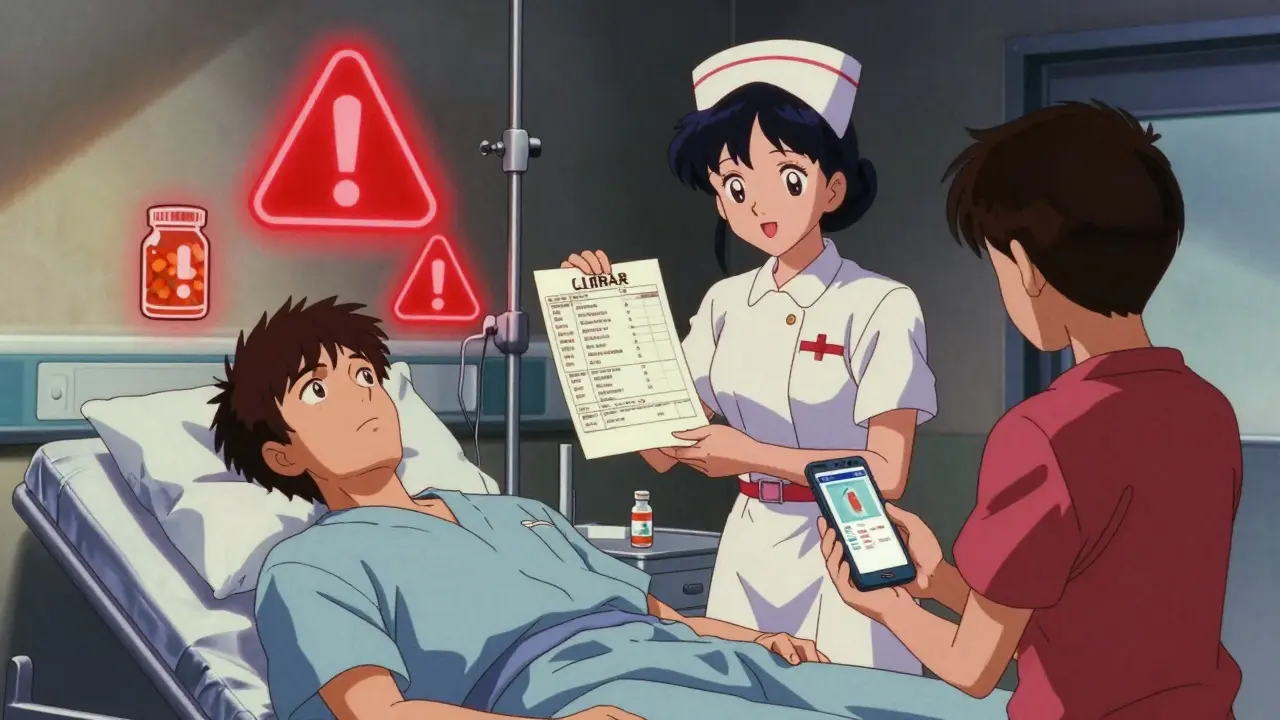
Here’s the hard truth: 68% of patients don’t update their list after leaving the hospital. That’s a dangerous gap. A single new prescription - or one you stopped - can lead to a life-threatening interaction.
Set up a system that sticks. Try this:
- Do a monthly ‘med check’ - every first Sunday, lay out your pills and compare them to your list.
- Use the ‘brown bag method’ - once a year, bring every bottle you take to your doctor. They’ll sort out what’s active, what’s expired, and what’s missing.
- Take a photo of each new pill bottle when you pick it up. Store them in a folder on your phone labeled ‘Current Meds.’
- Update your list right after a change - don’t wait. If your doctor says, ‘Stop the naproxen,’ write it down before you leave the office.
- Make it part of a habit - update it when you pay bills, organize your medicine cabinet, or refill your prescriptions.
Geriatric pharmacists say 82% of seniors find photo storage of pill bottles helpful. It’s visual, quick, and doesn’t require typing. If you forget to update your list, your photos are a backup.
When to Share Your List
You shouldn’t wait for an emergency to show your list. Bring it to every medical appointment - even if you’re seeing a new dentist or physical therapist. Some medications affect dental work. Others interfere with physical therapy or anesthesia.
At the hospital, ask: ‘Can you check my list against your records?’ Don’t assume they’ve got it right. One patient in a 2023 ECRI report died from a warfarin overdose because the ER didn’t know he’d stopped taking his blood thinner six months earlier.
Also, give a copy to a trusted family member or friend. If you can’t speak during an emergency, they can. Keep one in your car, one in your purse, and one on your phone.
What to Do If Your Doctor Doesn’t Use Digital Records
Not all doctors use electronic systems. That doesn’t mean you’re out of luck. Print your list. Bring it. Hand it to the nurse or receptionist when you check in. Say: ‘I’ve updated my medications - can you make sure this goes into my chart?’
Many pharmacies now offer free Medication Therapy Management (MTM) services under Medicare Part D. A pharmacist will review all your meds, spot interactions, and help you build a clean list. It’s free. It takes 20-30 minutes. And it’s often overlooked.
Real Results: What Happens When People Do This Right
Kaiser Permanente reduced medication-related readmissions by 22% in just 18 months by making medication reconciliation part of every discharge process. Patients who used updated lists were less likely to end up back in the hospital.
One nurse in New York told Reddit she caught three potentially fatal drug interactions in one month - all because she asked patients to show their list. ‘It’s not fancy,’ she wrote. ‘It’s just asking.’
And it’s not just about avoiding mistakes. People who keep accurate lists report better communication with doctors, fewer surprises, and more control over their health.
Common Mistakes to Avoid
- Only listing prescriptions - forgetting OTC, vitamins, or supplements
- Writing ‘as needed’ without specifying when - e.g., ‘ibuprofen for pain’ - instead of ‘400 mg every 6 hours as needed for back pain’
- Not noting why you take a drug - if you can’t explain it, neither can your doctor
- Using nicknames - ‘my blood pressure pill’ instead of ‘Lisinopril 10 mg’
- Waiting until you’re sick to update it - updates need to happen after every change, not before an appointment
Dr. Scott Gottlieb, former FDA commissioner, called accurate medication lists ‘the single most important tool for preventing adverse drug events in polypharmacy patients.’ That’s not hype. That’s data.
Start Today - No Excuses
You don’t need a fancy app. You don’t need to be tech-savvy. You just need five minutes.
Go to the FDA’s website. Download the ‘My Medicines’ template. Print it. Grab your pill bottles. Write everything down. Include the supplements you’ve been taking since last Christmas. Write down your allergies - even the mild ones.
Then, carry it with you. Update it every time something changes. Show it to your doctor. Let your family know where to find it.
Medication safety isn’t about technology. It’s about attention. It’s about ownership. And it’s about not letting your health get lost in the shuffle.
You’re the only one who knows exactly what’s in your body. Make sure everyone else does too.
What should I do if I forget to update my medication list?
If you miss an update, don’t panic - just act the next time you see a doctor or pharmacist. Bring all your pill bottles with you and ask them to help you rebuild your list. Many pharmacies offer free medication reviews under Medicare Part D. You can also take photos of your bottles as a backup. The goal isn’t perfection - it’s progress. Even a mostly accurate list is better than none.
Do I need to list vitamins and supplements?
Yes. Vitamins, herbal remedies, and supplements can interact with prescription drugs. For example, St. John’s Wort can reduce the effectiveness of blood thinners and birth control pills. Fish oil can increase bleeding risk when taken with aspirin or warfarin. The ECRI Institute says accurate lists must include everything - even if your doctor didn’t prescribe it. If you’re unsure, include it.
Can I use a smartphone app instead of paper?
Apps like Medisafe or MyTherapy are excellent for reminders and tracking, and they make sharing easy. But don’t rely on them alone. Phones can die, get lost, or be locked. Always carry a printed copy too - especially in emergencies. The best system combines both: use the app for daily tracking, and keep a printed version in your wallet or purse.
How often should I review my medication list?
Review it every time you get a new prescription, stop a medication, or change doses. At a minimum, do a full check once a year - ideally during your annual physical. Many people find it helpful to do a quick monthly check, especially if they take five or more medications. The American Medical Association recommends synchronized refills for chronic conditions to reduce confusion and missed updates.
What if my doctor doesn’t believe I need a medication list?
You don’t need their permission to protect yourself. Bring your list anyway. Say, ‘I’ve had issues with medication changes before, so I keep this updated for safety.’ If they’re dismissive, ask to speak with a pharmacist or nurse. Many clinics now have medication therapy management services built in. Your health is your responsibility - and having a clear list gives you power in every conversation.





Yo, this is legit life-saving info. I used to just rely on my memory-big mistake. Last year I ended up in the ER because I forgot I was still taking that turmeric supplement my cousin swore would cure my back pain. Turns out it was thinning my blood like crazy with my warfarin. Now I use Medisafe + a printed list in my wallet. Pro tip: take pics of every bottle when you pick it up. Visual memory > brain memory. 🙌
Simple. Keep a list. Tell your doc. Done. Why make it complicated? We’ve had this in the NHS for decades. Americans overthink everything.
While I appreciate the sentiment, this article is dangerously oversimplified. The Joint Commission’s reconciliation protocols are woefully under-resourced, and the FDA’s ‘My Medicines’ template is a relic from 2008-no barcode scanning, no HL7 integration, no API compatibility with Epic or Cerner. If you’re not leveraging FHIR-based EHR interoperability, you’re not just at risk-you’re participating in a systemic failure of clinical informatics. Also, ‘brown bag method’? That’s a 1990s workaround, not a solution. Get with the times.
OMG YES!! 🙏 I gave my mom her med list on a sticky note and she cried. Said she felt ‘seen’ for the first time. I print 3 copies-one in her purse, one in her pillbox, one with me. Also, I take pics of all her bottles when she gets new ones. She’s 78 and hates apps. Photos = her hack. 💖
Let’s be real-this whole ‘med list’ thing is just another way for Big Pharma and the medical industrial complex to control you. Most of these ‘interactions’ are made up to sell more drugs. I’ve been taking 17 supplements since 2012 and I’ve never been sick. Your doctor doesn’t know what’s best for you. Trust your gut. And stop letting them scare you with stats.
One thing this post doesn’t emphasize enough: the emotional weight of carrying a medication list. For elderly patients, it’s not just about safety-it’s about dignity. When you can clearly articulate what you’re taking and why, you reclaim agency in a system that often treats you as a collection of symptoms. I’ve seen patients light up when a nurse says, ‘You’re right, you stopped that last month.’ That moment? Priceless.
Forgive me for being blunt, but if you’re relying on a paper list or a smartphone app to prevent lethal drug interactions, you’ve already lost the battle. The real solution is mandatory pharmacogenomic testing at age 50, coupled with centralized, blockchain-secured medication registries accessible to all providers. Until then, you’re just rearranging deck chairs on the Titanic. And yes, I’ve published peer-reviewed papers on this.
Wow. Another feel-good, middle-class, suburban, white-picket-fence article. What about the 40% of Americans who can’t afford to fill prescriptions? Or the ones who take half-doses because they can’t afford the full bottle? Or the homeless who don’t even have a purse to carry a list? You’re preaching to the choir-and ignoring the real crisis: healthcare inequality. This list is a Band-Aid on a severed artery.
Bro. I just started a new med last week and I forgot to update my list. So I took a pic of the bottle and sent it to my sister with the text: ‘DONT LET ME DIE.’ She’s now my med-list guardian. Best thing I’ve ever done. Also, I use the ‘every first Sunday’ thing now. It’s chill. No stress. Just check and update. Life’s too short to forget your own pills.
Medication reconciliation is not merely a logistical exercise-it is an existential act of self-preservation in a medical landscape that commodifies human bodies. To list one’s pharmaceutical regimen is to assert ontological sovereignty over one’s physiology against the tide of institutional negligence. The act of writing, of naming each compound, each dosage, each intention, becomes a ritual of resistance against the erasure of personal agency. This is not about safety. It is about metaphysical clarity. You are not a patient. You are the curator of your own biological narrative. And narratives, when articulated with precision, cannot be ignored.