
Heartburn Risk Calculator
How to Use
This calculator estimates your heartburn risk based on your spicy food consumption and medications. Enter your details below to see your personalized risk level.
Heartburn isn’t just a bad meal afterthought-it’s a signal. If you’ve ever felt that burning climb up your chest after eating tacos or taking ibuprofen, you’re not alone. About 20% of American adults deal with heartburn at least once a week. And while many blame spicy food, the real issue is often a mix of what you eat and what you take-especially when they team up to weaken your body’s natural defense against stomach acid.
Why Spicy Food Makes Heartburn Worse
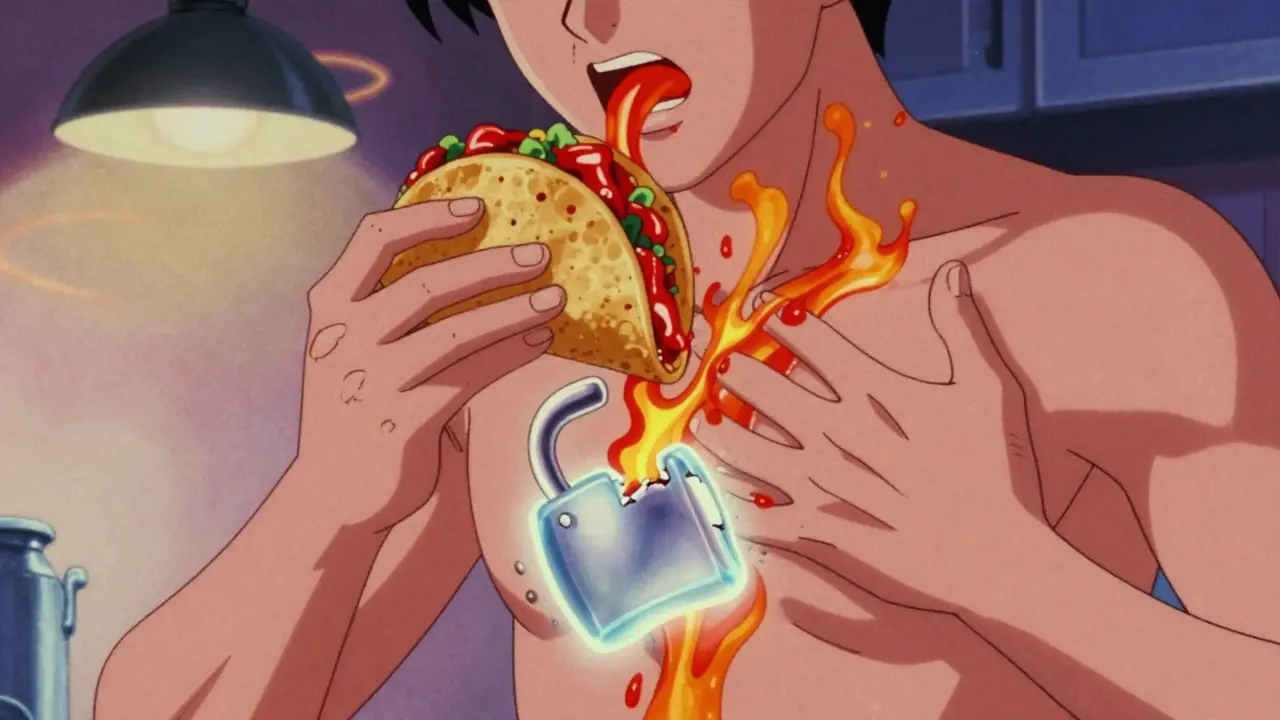
It’s not just about heat. The compound that makes chili peppers spicy-capsaicin-is the real culprit. Capsaicin doesn’t burn your tongue because it’s hot; it tricks your nerves into thinking it is. But here’s the problem: it also relaxes the lower esophageal sphincter (LES), the muscle that normally keeps stomach acid where it belongs.
Studies show that in sensitive people, capsaicin can drop LES pressure by 30-40% within 30 minutes of eating. That’s like turning off a lock on a door that’s supposed to keep acid from backing up into your esophagus. Once that seal loosens, acid slips up, and boom-you’ve got heartburn.
But here’s the twist: not everyone reacts the same way. Some people can eat ghost peppers without a single twinge. Others feel it after a single jalapeño. The NIH found that sensitivity to capsaicin varies wildly-from 10 mg to 100 mg per meal. That’s why blanket advice like “never eat spicy food” doesn’t work. It’s personal.
Medications That Make Heartburn Worse
It’s not just food. A surprising number of common medications open the door for acid reflux.
- Aspirin and ibuprofen (NSAIDs): These painkillers can irritate the lining of your esophagus and stomach. Regular use increases GERD risk by 40-60%.
- Beta blockers: Used for high blood pressure, they relax the LES, raising GERD risk by 22% according to the Framingham Heart Study.
- Anticholinergics: Found in motion sickness pills and some bladder medications, they cut LES pressure by 25% in two-thirds of users.
- Nitrates: Prescribed for chest pain, they drop LES pressure by 35-45%.
- Bisphosphonates: For osteoporosis, these pills can cause actual chemical burns in the esophagus if not taken with enough water and upright posture.
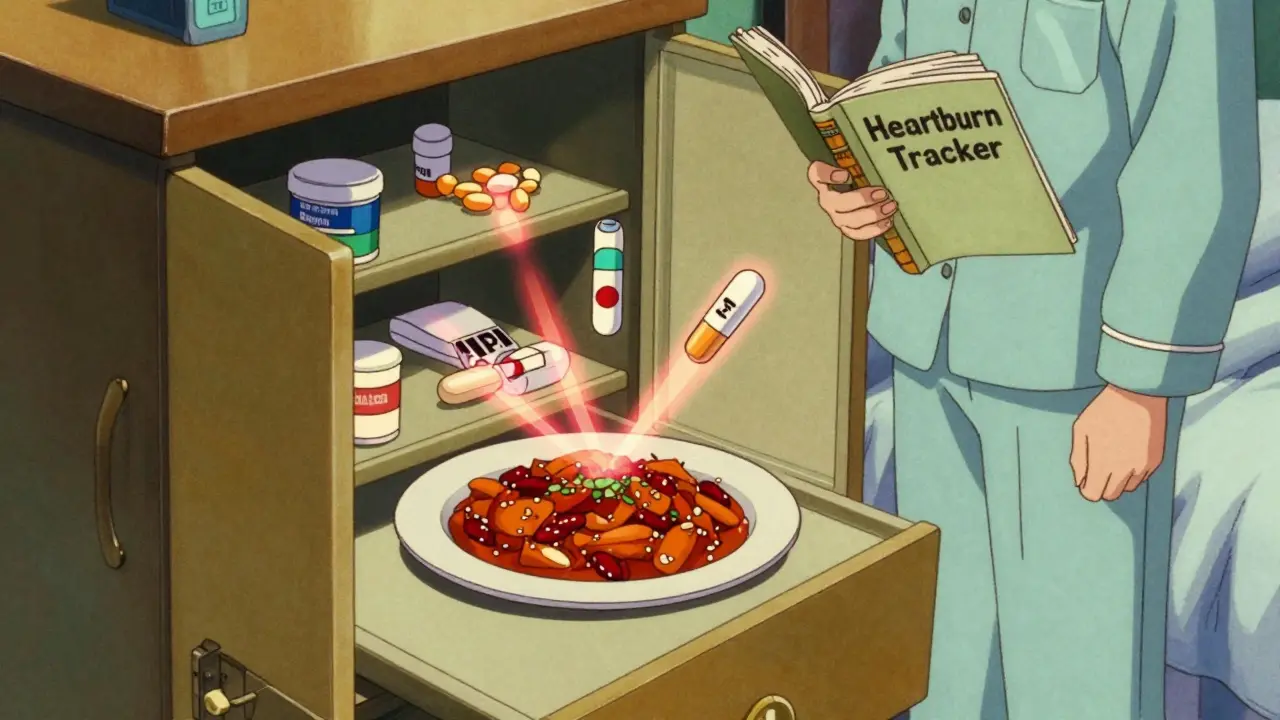
And if you’re taking pantoprazole-a common proton pump inhibitor (PPI)-you might be surprised to learn that spicy food, fatty meals, coffee, chocolate, and alcohol can reduce its absorption by 18-23%. That means your medication isn’t working as well as it should.
How Antacids Work (and Why They’re Not a Long-Term Fix)
When heartburn hits, most people reach for Tums or Rolaids. And they work-fast. Antacids like calcium carbonate and magnesium hydroxide neutralize acid in minutes. Relief? Usually within 2-5 minutes.
But here’s the catch: they last less than an hour. And if you’re eating spicy food every night, you’re just playing whack-a-mole with your stomach acid. Worse, overusing antacids can cause side effects: aluminum-based ones interfere with antibiotics like tetracycline, cutting their absorption by 50%. Fluoroquinolones? Down by 30-90%.
The Cleveland Clinic recommends taking antacids either one hour before or four hours after other meds. Most people don’t know this. They pop a Tums with their pill-and then wonder why their blood pressure med isn’t working.
PPIs: The Double-Edged Sword
Pantoprazole, omeprazole, esomeprazole-these PPIs are the go-to for chronic heartburn. They shut down acid production at the source. But they don’t work instantly. It takes 2-3 days to reach full effect. And they’re not magic.
When you take a PPI and then eat a spicy burrito, you’re asking your body to fight acid with one hand tied behind its back. Studies show patients report 34% reduced effectiveness when eating trigger foods regularly. That’s why some people feel like their PPI “stopped working”-it’s not the drug. It’s the diet.
And long-term use? The FDA has flagged risks: lower magnesium, vitamin B12 deficiency, increased kidney disease risk, and even a possible link to heart attack. That’s why doctors now push for the lowest effective dose for the shortest time.
The Real Solution: Personalized Management
Forget the one-size-fits-all diet. The American Gastroenterological Association’s 2023 guidelines say it clearly: precision nutrition beats blanket bans.
Here’s how to do it:
- Track for two weeks: Write down everything you eat and drink, plus when you take meds, and note heartburn episodes. Use a simple notebook or free app.
- Eliminate suspected triggers: Cut out spicy food, caffeine, alcohol, chocolate, and acidic foods for 3-7 days. Keep your meds the same.
- Reintroduce one at a time: Add back one food every 3 days. Did heartburn return after adding hot sauce? That’s your trigger. Did it stay gone after salsa? You’re fine.
- Time your meds: Take PPIs 30-60 minutes before breakfast. Take antacids at least 4 hours after other pills.
- Don’t lie down: Wait 3 hours after eating before lying down. No late-night snacks. No bedtime pizza.
- Elevate your head: Put 6-8 inch blocks under the head of your bed. Gravity helps keep acid down.
Patients who follow this personalized approach see 78% success in controlling symptoms-compared to just 42% who rely on meds alone.
What’s New in Heartburn Treatment
There’s progress beyond pills and diets. In August 2023, the FDA approved Vonoprazan (Voquezna), a new type of acid blocker that works faster and more consistently than PPIs, even in people whose bodies metabolize drugs slowly.
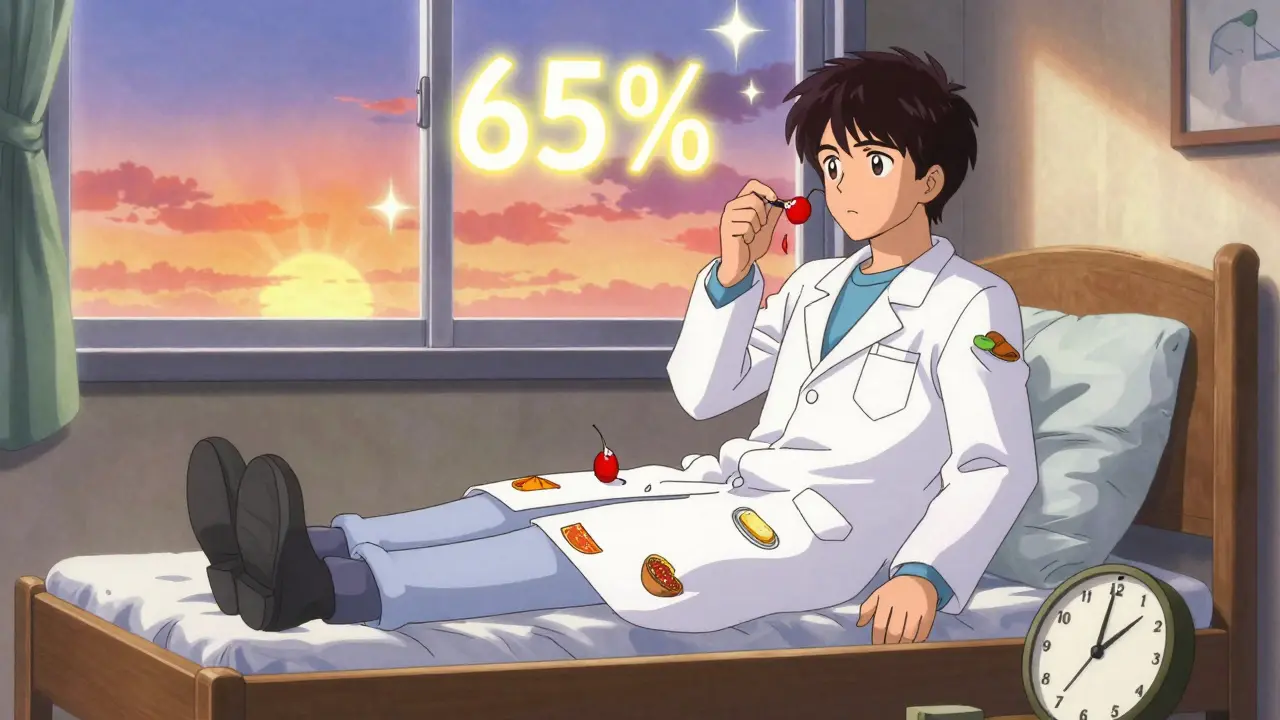
At Johns Hopkins, researchers tested a “capsaicin desensitization” method: giving people tiny, gradually increasing amounts of capsaicin over 12 weeks. 65% of participants ended up tolerating spicy food without symptoms. It’s like building a tolerance, similar to how allergy shots work.
And the market is shifting. Hospitals are now hiring dietitians to run GERD programs. Those programs cut medication costs by 27% and improved patient outcomes by 33%. The future isn’t just more pills-it’s smarter eating, better timing, and personalized care.
When to See a Doctor
Heartburn that lasts more than two weeks, gets worse, or comes with trouble swallowing, vomiting blood, or unexplained weight loss? That’s not just spicy food. That could be Barrett’s esophagus, a hiatal hernia, or even early signs of cancer.
Antacids might make you feel better-but they can also hide serious problems. Don’t use them as a crutch. If you’re relying on them more than twice a week, talk to your doctor. You might need an endoscopy or a different treatment plan.
Bottom Line
Spicy food doesn’t cause heartburn for everyone. But when it’s paired with certain meds, it’s a recipe for trouble. The key isn’t avoiding spice forever-it’s finding your own trigger point. Track your meals. Time your meds. Don’t lie down after eating. And if your PPI isn’t working, it might not be broken-it’s just being sabotaged by your dinner.
Heartburn is manageable. But it needs more than a pill. It needs awareness, patience, and a little personal detective work.




So I just realized I’ve been taking ibuprofen with my spicy ramen every night and wondering why I feel like my chest is on fire. Oops. Thanks for the wake-up call.
the part about capsaicin relaxing the les was a game changer for me i always thought it was just the heat but no its the chemical trickery wow
Love this breakdown. So many people think PPIs are magic bullets, but they’re only as good as your habits. Timing meds correctly and avoiding trigger foods together? That’s the real win. Also, elevating your head? Such a simple fix that no one talks about.
Of course, the FDA approves Vonoprazan, but did anyone consider that Big Pharma pushed this because PPIs are too profitable? The real solution is fasting, not new pills. You’re being manipulated.
My Nigerian grandma would’ve laughed at this whole post. She said, 'If your stomach burns, don’t eat fire-eat plantain.' And she was right. Spicy food? No problem. But she’d never take ibuprofen with it. Wisdom ain’t in pills, my friend.
OMG I JUST REALIZED I’VE BEEN TAKING MY PPI WITH COFFEE AND CHOCOLATE FOR A YEAR 😭 MY MEDS WERE NEVER WORKING BECAUSE I’M A MONSTER
I’ve been tracking my meals for three weeks now. Cut out chocolate and spicy food on nights I take NSAIDs. My heartburn dropped from daily to once a week. It’s not perfect, but it’s progress. Small changes matter.
This entire article reads like a pharmaceutical marketing pamphlet. Who funded this? Who benefits from you buying new drugs, tracking apps, and dietitians? The real cause is chronic stress and gut dysbiosis. They never mention that.
The 78% success rate with personalized management is compelling, but I’d like to see the study’s sample size and control group. Also, the claim that PPIs reduce absorption by 18–23% with trigger foods-what was the methodology? Correlation isn’t causation.
For anyone struggling: start with the head elevation. It’s free, easy, and works better than half the meds. I did it for two weeks and my nighttime heartburn vanished. No pills. Just blocks under my bed. 🙌
wait so you’re saying i dont have to give up my midnight tacos forever?? like… i can just time my meds right??
Y’all are missing the point. This isn’t about food or pills. It’s about control. We live in a world that tells us to numb pain instead of listen to it. Heartburn isn’t your stomach’s fault-it’s your soul screaming that you’re running too fast. Slow down. Breathe. Stop treating your body like a machine that needs a reset button. You’re not broken. You’re just tired.
This is the most helpful thing I’ve read all year. Thank you for writing it so clearly. I’m printing this out and giving it to my mom.