
Key Takeaways
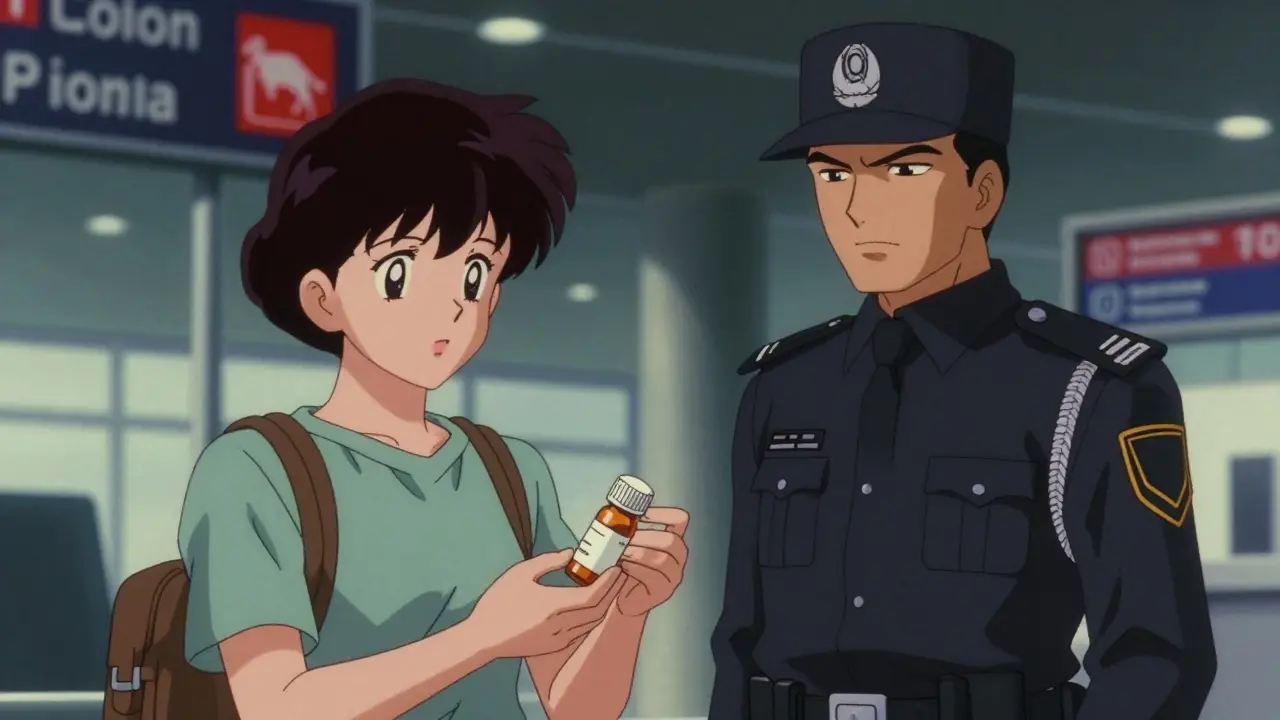
Traveling with prescription meds carries real legal risks if you aren't prepared. Some common drugs like Adderall or Codeine are criminal offenses in major destinations. Proper documentation can save you from detention or confiscation.
- Check Local Laws: Up to 16 countries have strict bans on standard meds found in pharmacies globally.
- Know Your Meds: ADHD stimulants, painkillers, and sleep aids are frequently flagged by customs.
- Prepare Early: Start gathering approval letters 8-12 weeks before your trip date.
- Carry Original Packaging: Pharmacy labels alone often aren't enough; doctors' notes help.
Why Common Medicines Become Contraband Overseas
Imagine flying into Dubai airport with a bottle of cough syrup containing codeine. In the United Kingdom, this is routine. In the United Arab Emirates, it could land you facing jail time. This isn't paranoia; it is the reality of international drug control. The rules governing what you can bring across borders differ wildly from your home laws. Many travelers assume their pharmacy prescription holds weight everywhere. It does not.
The system relies on treaties like the Single Convention on Narcotic Drugs isa 1961 international treaty that controls substances to prevent abuse. While designed to stop trafficking, it creates a patchwork of enforcement. For example, the International Narcotics Control Board isthe monitoring arm of UN conventions managing global drug regulations. They track restricted substances. However, national governments add their own layers of restriction. The United States alone regulates 562 banned drugs, while Germany controls 464.
This complexity hits the estimated 1.4 billion travelers moving annually. The result? A spike in incidents where innocent tourists get caught. Between 2019 and 2023, reports show a 4% increase in medication confiscations worldwide. You might think your blood pressure pills are harmless. To a customs agent in Singapore or Thailand, they might look like raw materials for illegal labs.
High-Risk Medication Categories to Watch
Not every pill triggers a red flag. However, specific classes of drugs draw intense scrutiny from border officials. Understanding these categories helps you prioritize your research. The most commonly seized items fall into three buckets.
Pain Management and Opioids
Meds containing opioids are the biggest concern globally. Hydrocodone and oxycodone are staples in Western pain clinics. Yet, Hydrocodone isa semi-synthetic opioid used for pain relief often combined with acetaminophen. This combination is banned in 56.25% of the countries tracked in recent travel safety reports. Even weaker formulations like codeine face tight limits. In the UAE, codeine falls under Class A controlled substances. You cannot enter without pre-approval from their Ministry of Health. Carrying even ten tablets without this permit has led to 72-hour detentions.
Sleep Aids and Sedatives
You plan to take sleeping pills for jet lag. Zolpidem (Ambien) or alprazolam might be in your kit. These are heavily monitored sedatives. Dr. Jane Smith from the CDC notes that sedatives are prohibited in 50% of destination countries. Benzodiazepines like Valium (diazepam) trigger alarms because they have high potential for diversion. Travelers should verify if their brand name exists on the local import lists.
ADHD and Stimulants
Medications for attention disorders are effectively invisible in some places and strictly illegal in others. Amphetamine derivatives like Adderall are the prime culprit. In China, Adderall and Concerta are banned in 100% of provinces without special permits. The Japanese Ministry of Health reported over 1,200 traveler incidents involving decongestants and stimulants in 2023. The issue is that ingredients in these meds overlap with illicit meth precursors. Customs agents prioritize stopping these chemicals regardless of medical intent.

Critical Country Restrictions You Cannot Ignore
Relying on Google searches is risky when fines involve years of imprisonment. Different regions operate under different philosophies. Some enforce quantity limits, while others require total prohibition compliance.
| Country | Restricted Substance Examples | Required Action |
|---|---|---|
| United Arab Emirates | Codeine, Diazepam, Methylphenidate | Pre-approval via Ministry portal (10-14 days) |
| Japan | Adderall, Pseudoephedrine, Ritalin | Import certificate + Max 3-month supply |
| Greece | Narcotics and Strong Sedatives | Schengen Travel Permit (30 days advance) |
| Thailand | Stimulants, Sleeping Pills | Strict possession limits; high prison risk |
In Japan, the rules are particularly confusing for Westerners. They ban Pseudoephedrine isa common decongestant ingredient often found in allergy and cold medicine. Products like Sudafed are available over the counter in London or New York. In Tokyo, bringing them violates the Pharmaceutical Affairs Law. You must declare them or leave them behind. The penalty isn't just confiscation; it involves police interaction. Meanwhile, the Philippines updated its rules in January 2025. They introduced a digital pre-approval system cutting processing time from two weeks down to three days. Always check the date of regulation updates.
Documentation That Actually Works
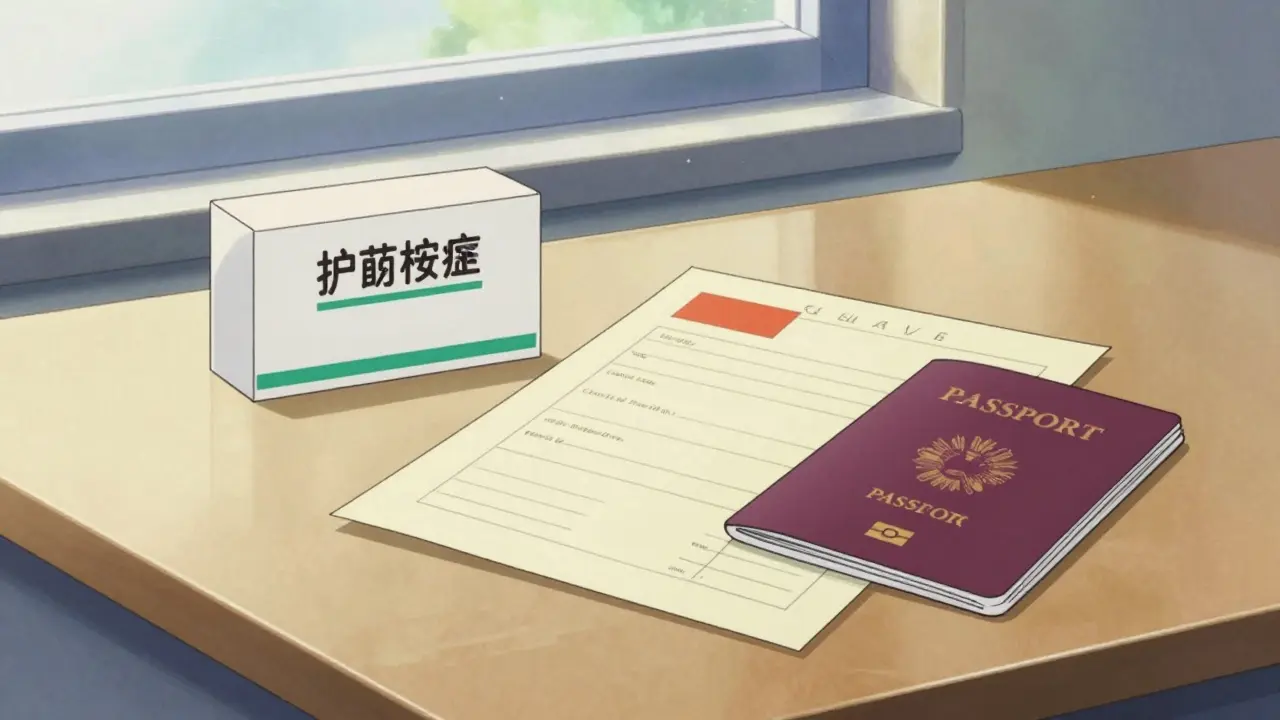
If you are told to get permission, a printed email often fails. Officials want formal proof linking the patient to the drug and the doctor to the condition. Here is what constitutes a valid dossier.
The Golden Standard Documents
- Original Prescription: Not a photo from your phone. You need the physical paper or the official pharmacy bag. The label must match your ID name exactly.
- Doctor's Letter: Written on official letterhead. It must state the diagnosis and explain why the medication is medically necessary. Vague letters get ignored.
- International Certificate for Psychoactive Substances: Available through national health authorities. This is mandatory for travel to Japan and several European nations.
- Translation: If traveling to non-English speaking regions like Italy or Spain, get prescriptions notarized and translated into the local language.
A survey found 63.4% of travelers were unaware of these requirements until they hit customs. Another 28.6% miscalculated quantities. Germany defines "appropriate" quantity as a maximum 30-day supply without special authorization. Carrying six months of meds for a two-week trip raises eyebrows immediately. Align your inventory with your itinerary duration.
Preparing Before You Fly
The timeline matters almost as much as the paperwork. Rushing causes errors. The CDC recommends starting this process 8 to 12 weeks before departure. Why so long? Because government processing is slow. The UAE online portal takes 10 to 14 business days alone. Factor in weekends and holidays.
Step-by-Step Pre-Travel Protocol
- Week 12: Consult your GP or pharmacist about the specific meds. Ask for alternative formulations that might be legal in your destination. Sometimes switching from a combo pill to separate ingredients solves the issue.
- Week 8: Apply for permits and certificates. Contact the embassy of your destination country directly. Their websites sometimes lack clarity, so email inquiries provide paper trails for disputes later.
- Week 4: Gather originals. Place everything in your carry-on luggage. Never put meds in checked bags where temperature control varies and access is lost.
- Day of Flight: Have documents visible near your passport. Declare them if asked. Honesty mitigates suspicion significantly.
Consequences of Getting Caught
Ignoring the rules feels tempting until you see the stats. The World Tourism Organization tracks these incidents closely. Penalties range from simple confiscation to severe legal action. In Thailand, violating the 2023 Pharmaceutical Act Amendment regarding stimulants can result in up to 10 years imprisonment and fines exceeding $28,500 USD. The UAE Federal Law mandates 1 to 3 years for Class A substance violations.
You might hope you can buy the meds locally upon arrival. Do not rely on this. Most restrictive countries do not legally sell these specific brands anyway. Finding Adderall in a Singapore pharmacy is impossible. You arrive unmedicated and stuck. The best insurance is preparation. There are commercial services like DocHQ that offer travel medicine checks used by over 200,000 travelers in 2023. They reduced documentation errors by 73.5%. Using verified tools adds a layer of security beyond personal guesses.
Frequently Asked Questions
Can I carry liquid medications in my hand luggage?
Yes, but you usually need a doctor's note explaining why liquids are necessary. Liquid meds may exceed the standard 100ml limit for toiletries if declared as medical essentials. Security officers typically allow exceptions for insulin or vital syrups if documented.
Does the generic name matter?
Absolutely. Brand names vary by region. If you have Lexapro, know it is Escitalopram. Customs agents search databases by chemical names (INN codes). Having both listed on your medical letter speeds up verification.
Are herbal supplements considered prescription medications?
Sometimes. Ingredients like kratom or certain ginseng variants are controlled in places like Thailand or Japan. Even natural supplements can trigger alarms. Check the ingredient list against the country's narcotics schedule.
What happens if I lose my meds in transit?
Contact your airline immediately. Then, find a local hospital or clinic with a copy of your script. In many cases, local doctors will not refill controlled substances without extensive bureaucracy. Carry backup supplies if allowed by law.
Is there a universal travel permit for medicines?
Not currently. Each country maintains sovereignty over drug imports. While organizations propose global standards, political barriers remain. You must handle permits individually for each nation on your itinerary.





The regulatory frameworks regarding pharmaceutical importation are indeed complex. One must adhere strictly to local statutes when crossing borders. Documentation serves as the primary defense against detention or confiscation.
People think their prescriptions carry universal weight. They do not. You face real prison time if you ignore the laws. Do not gamble with your freedom over a bottle of pills.
Oh wonderful. Another layer of bureaucracy designed to ruin the experience. Who actually expects tourists to research narcotics schedules?
Imagine the drama getting detained in Dubai just for cough syrup. It ruins the entire vibe. You need to plan ahead or suffer the consequences completely.
Incompetence leads to arrest in these scenarios. Most travelers fail because they assume leniency. The authorities enforce penalties without hesitation.
I understand the anxiety surrounding international travel with meds. Many people do not realize how different countries view standard pharmaceuticals. What seems normal here could be classified as contraband elsewhere entirely. For example, simple cold medicines often contain pseudoephedrine which triggers alarms. We should consider the geopolitical implications behind these bans rather than just fear. Safety protocols exist to prevent abuse of controlled substances globally. However, innocent patients get caught in the middle of these sweeping policies. Preparation remains the only viable strategy for those relying on daily medication. Documents must be pristine and clearly linked to the patient identity. Original packaging helps immensely during customs inspections too. I always advise people to check embassy websites weeks before any trip. Relying on memory or assumptions leads to serious consequences quickly. Detention times vary significantly depending on the jurisdiction involved. Even possession limits differ by a wide margin from place to place. Ultimately peace of mind comes from following every single listed requirement strictly.
Get the doctor letter on official letterhead. Include diagnosis and necessity clearly. Generic names matter more than brand names in customs databases.
india has tough rules on stimulants dont pack adderall without permit
Why is everyone so terrified of medicine laws? Just carry the pills nobody checks anything most of the time.
I appreciate the detailed breakdown of regulations.
This is so incredibly useful!!! I cannot believe how many people ignore these warnings!!! Please read every word!!!!
Aussies know this well mate. Customs here are brutal. Always declare it to be safe.
Naturally the uninformed population complains about paperwork. Ignorance is a costly mistake. One simply cannot allow others to jeopardize national security.
Here we go again. Another reason to dread the airport experience. Nobody thinks about this until they are stuck waiting.