Key Takeaways for Managing Your Skin
- Stop all topical steroids immediately; they are the most common trigger.
- Simplify your routine to 2-3 fragrance-free, non-occlusive products.
- Switch to non-fluoridated toothpaste if you notice flare-ups around the lips.
- Expect a "withdrawal" phase where skin looks worse before it gets better.
- Consult a professional for medical-grade treatments like metronidazole or doxycycline.
The Steroid Trap: The Most Common Trigger
If you've been using a steroid cream to treat a "rash" around your mouth, you might actually be fueling the fire. About 85% of cases are linked to the use of topical corticosteroids. It starts innocently: you apply a steroid, the redness vanishes for a few days, and you feel relieved. But once you stop, the inflammation returns with a vengeance, often more severe than before.
This rebound effect happens to nearly 92% of people who use facial steroids for more than two weeks. The skin becomes dependent on the drug, and the underlying inflammation never actually heals. Breaking this cycle requires a process often called "steroid withdrawal." Be warned: about 75% of people experience a significant flare-up for 7 to 14 days after stopping steroids. It is the hardest part of the journey, but it's the only way to let the skin reset.
Hidden Triggers in Your Daily Routine
Beyond steroids, several common household and beauty products can act as triggers. You don't need to throw everything away, but you should look for specific ingredients that might be irritating your skin barrier.
Cosmetics are frequent offenders. Heavy foundations and occlusive moisturizers-those thick creams containing petroleum jelly, beeswax, or dimethicone-can trap heat and moisture, triggering flares in nearly half of all patients. Similarly, physical sunscreens with high concentrations of zinc oxide or titanium dioxide (above 10%) can be too heavy for the sensitive skin around the mouth.
Surprisingly, your toothpaste might be the culprit. Sodium fluoride, commonly found in most tubes, is linked to reactions in 37% of cases. If you notice the rash is most intense right at the edge of your lips, try switching to a non-fluoridated toothpaste with very low sodium lauryl sulfate (below 0.1%).
| Trigger Category | Specific Examples | Estimated Impact/Frequency |
|---|---|---|
| Medical Topicals | Hydrocortisone, Betamethasone | ~85% of cases |
| Cosmetics | Heavy foundations, occlusive creams | ~45-68% of cases |
| Oral Care | Fluoridated toothpaste | ~37% of cases |
| Environment | UV exposure, wind, extreme cold | ~41-63% of cases |
| Hormonal | Oral contraceptives, menstrual cycle | ~55% of female patients |
Building a Gentle Skin Care Protocol
When your skin is in an inflammatory state, less is always more. The goal is to support the skin barrier without suffocating it. This means eliminating all exfoliants, retinoids, and acids-like salicylic or glycolic acid-which can strip the skin and make the rash worse.
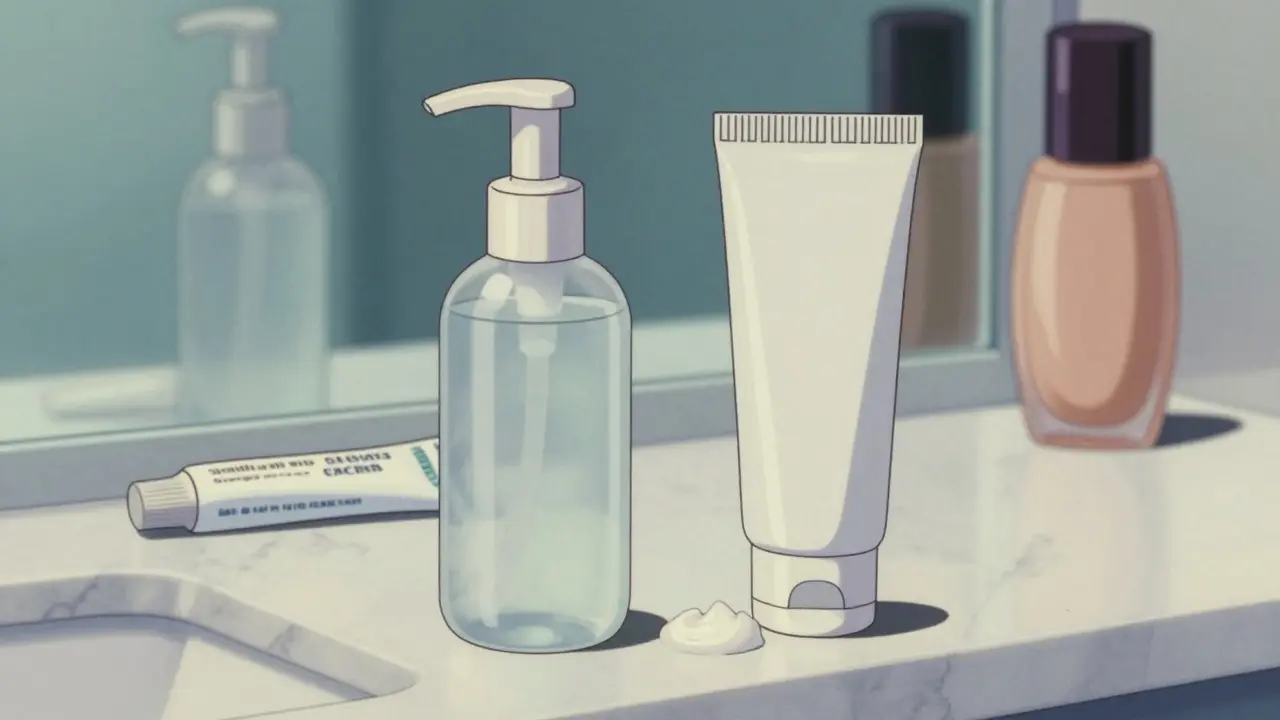
Start with a pH-balanced cleanser is a non-foaming wash designed to keep the skin's acid mantle intact, typically with a pH between 5.5 and 6.5. Wash only once a day. Washing twice can actually irritate the skin further for 88% of people. Use lukewarm water and pat dry gently with a clean towel; never rub.
For moisturizing, avoid the "slugging" trend. Instead, use lightweight formulations. Look for creams with a ceramide content between 0.5-2% and a low concentration of hyaluronic acid (under 1%). These ingredients help repair the skin barrier without using heavy waxes that trigger more bumps. For sun protection, skip the thick creams and opt for liquid, gel, or light milk versions. If your skin is extremely reactive, a wide-brimmed hat is often a safer bet than any sunscreen.
Medical Interventions: When Simplicity Isn't Enough
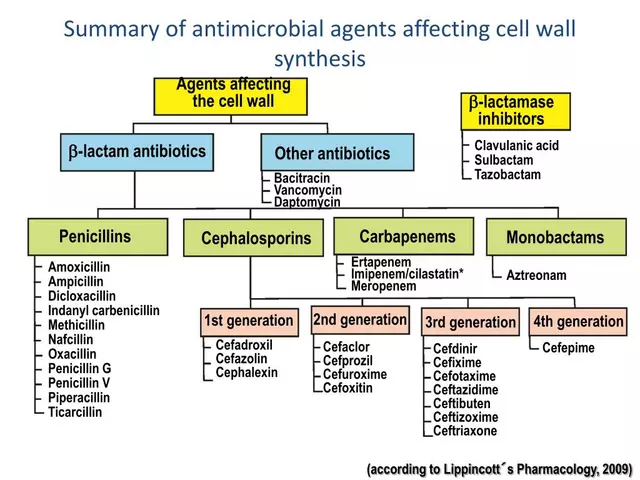
While changing your habits is crucial, some cases require medication to jumpstart the healing process. Dermatologists typically move toward targeted antibiotics if a gentle routine doesn't clear the skin within a few weeks.
Topical options like Metronidazole is a topical antibiotic gel often used to treat inflammatory skin conditions like rosacea and perioral dermatitis. This gel has a 70% clearance rate after about eight weeks of use. For those who can't tolerate antibiotics, pimecrolimus cream is an alternative that reduces inflammation without the risk of antibiotic resistance.
In moderate to severe cases, a doctor might prescribe oral antibiotics. Doxycycline is a tetracycline antibiotic used orally to reduce systemic inflammation in severe skin flares. A modified-release 40mg dose is often preferred because it has a much lower side-effect rate (around 12%) compared to the traditional 100mg dose. Most medical treatments last between 6 and 12 weeks. Cutting the treatment short is a common mistake, as it can lead to a 40% recurrence rate.

Dealing with the Emotional Toll
It is important to acknowledge that this isn't just a "skin problem." Because the rash appears in such a visible area, nearly 78% of people report psychological distress. Feeling the need to hide your face with makeup-which, ironically, often makes the condition worse-creates a stressful loop.
The path to recovery is not a straight line. You will likely have days where you feel you are healing, followed by a sudden flare-up. This is normal. The key is to stay consistent with your gentle routine and avoid the temptation to reach for a "quick fix" steroid cream. Most people who follow a strict trigger-elimination and gentle-care plan see a massive improvement in their quality of life within three months.
How do I tell the difference between acne and perioral dermatitis?
The main giveaway is the lack of comedones (blackheads and whiteheads). Perioral dermatitis usually presents as small, red, itchy, or burning papules that cluster around the mouth, often leaving a thin strip of clear skin immediately around the lip border. Acne is typically more scattered and includes clogged pores, which are absent in perioral dermatitis.
Can I use makeup while my skin is healing?
It is best to avoid makeup during the acute phase. If you must use it, choose non-comedogenic, fragrance-free formulas. Avoid traditional foundations that contain isopropyl myristate. Mineral-based makeup with very low titanium dioxide (under 3%) is generally the safest option, but the gold standard for recovery is keeping the skin bare.
Is it true that a gluten-free diet helps?
For some people, yes. About 43% of patients with a documented gluten sensitivity find that a gluten-free diet helps resolve their symptoms. However, for the general population without a sensitivity, the evidence is limited. Focus on skincare and trigger elimination first before making major dietary changes.
Why did my skin get worse after I stopped using the steroid cream?
This is known as a rebound flare. Steroids constrict blood vessels and mask inflammation. When you stop, the blood vessels dilate rapidly, and the suppressed inflammation rushes back. This "withdrawal" phase usually lasts 1-2 weeks. It is a sign that your skin is reacting to the loss of the drug, not that the treatment is failing.
Which ingredients should I absolutely avoid in my moisturizer?
Avoid heavy occlusives like petroleum jelly, beeswax, and high concentrations of dimethicone. Also, steer clear of fragrances, alcohol, and any active acids (AHAs/BHAs) or retinoids. Stick to lightweight creams with a low percentage of hyaluronic acid and ceramide.
Next Steps for Your Recovery
Depending on where you are in your journey, your focus will shift. If you are currently using a steroid cream, your first step is a gradual or immediate taper (consult your doctor) and preparing for the withdrawal phase. This is the time to buy a very simple, non-foaming cleanser and a lightweight moisturizer.
If you've already cleared the rash but are afraid of it coming back, focus on maintenance. Avoid returning to heavy foundations or fluoridated toothpaste. Keep a "safe list" of products that didn't trigger you. If you notice the first few red bumps appearing, strip your routine back to basics immediately rather than trying a new "treatment" product, which often triggers a full flare.