
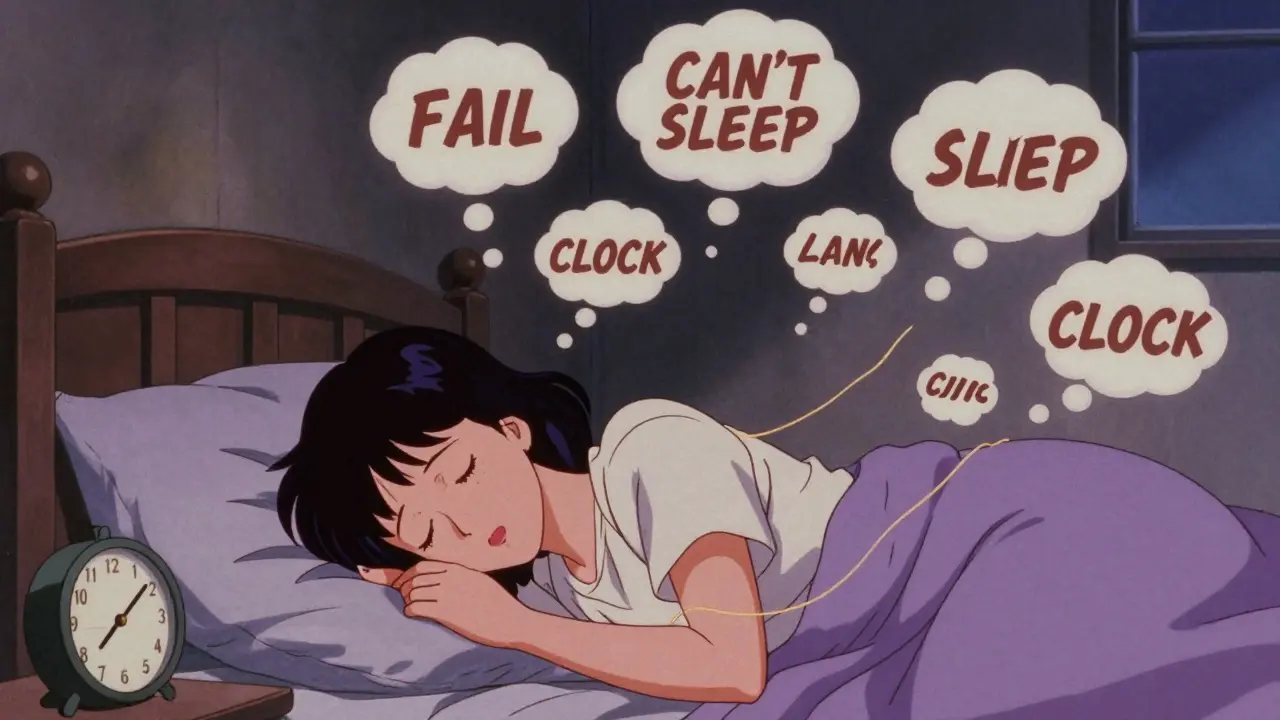
What if you could fix your insomnia without reaching for a pill? For millions of people, the nightly battle with sleep isn’t about not being tired-it’s about the mind and habits that keep you awake. The good news? There’s a proven, science-backed method that doesn’t rely on drugs, doesn’t cause dependency, and actually gets better over time: CBT-I.
Why Pills Don’t Solve Insomnia
Sleeping pills might help you nod off the first night, but they don’t fix the root problem. They mask it. And when you stop taking them? The insomnia usually comes back-often worse. Studies show that while pills can knock off 15 to 20 minutes from the time it takes to fall asleep, those gains vanish within weeks. Worse, they come with side effects: grogginess, memory issues, balance problems, and even a higher risk of falls in older adults. For people with chronic insomnia-defined as trouble sleeping at least three nights a week for three months or more-pills are a band-aid on a broken bone.What Is CBT-I? (And Why Doctors Recommend It First)
Cognitive Behavioral Therapy for Insomnia, or CBT-I, is a structured program designed to retrain your brain and body to sleep naturally. It’s not a single trick. It’s a set of evidence-based techniques that work together. Since 2016, the American College of Physicians has recommended CBT-I as the first-line treatment for chronic insomnia-before any medication. Why? Because it works as well as pills in the short term, but lasts longer. In fact, a 2023 study in JAMA Network Open found that 76% of people using digital CBT-I were still sleeping better six months after treatment ended. That’s not luck. That’s learning.The Five Core Techniques of CBT-I
CBT-I isn’t magic. It’s methodical. Most programs run over six to eight weeks and include five key components:- Stimulus Control Therapy - Your bed is for sleep and sex only. Not scrolling, not worrying, not watching TV. If you’re not asleep after 20 minutes, get up. Go sit in another room. Do something quiet and dimly lit. Only return to bed when you’re sleepy. This rebuilds the mental link between your bed and sleep.
- Sleep Restriction - This sounds counterintuitive, but it’s powerful. You’re told to spend less time in bed-sometimes as little as five or six hours-even if you feel exhausted. Why? To build up sleep pressure. Think of it like fasting before a big meal. Your body gets so tired it can’t ignore sleep. Most people feel worse in the first few days. That’s normal. By week three, sleep efficiency jumps from 70% to over 85%.
- Cognitive Restructuring - Your thoughts about sleep are sabotaging you. “If I don’t get eight hours, I’ll fail at work.” “I’ll never sleep again.” These aren’t facts-they’re fears. CBT-I helps you challenge them. Replace “I must sleep 8 hours” with “My body will rest even if I sleep less.” It’s not about positive thinking. It’s about accurate thinking.
- Sleep Hygiene - This isn’t just “avoid caffeine.” It’s about timing, light, and routine. No screens 90 minutes before bed. Keep your bedroom cool (around 65°F). Avoid large meals or alcohol close to bedtime. Consistency matters more than perfection. Wake up at the same time every day-even on weekends. That’s the anchor.
- Relaxation Training - Your body is stuck in fight-or-flight mode. Breathing exercises, progressive muscle relaxation, and mindfulness techniques help turn it off. You don’t need to meditate for an hour. Even five minutes of slow, deep breathing before bed can lower heart rate and signal your brain: it’s safe to sleep.
What Does CBT-I Look Like in Real Life?
Sarah, 42, from Manchester, had insomnia for five years. She tried melatonin, chamomile tea, weighted blankets-nothing stuck. She started CBT-I through a digital app. Her first week: she cut her time in bed from 9 hours to 6. She was exhausted. She thought it wouldn’t work. But she kept a sleep diary-logging when she got in bed, when she fell asleep, how many times she woke up. By week three, she was sleeping 5.5 hours straight. By week six, she was up to 7 hours, with no pills. Her biggest win? She stopped fearing sleep. “I stopped checking the clock,” she says. “That was the real turning point.”
Digital CBT-I: Accessible, Effective, and Growing
You don’t need to find a specialist to start. Digital CBT-I platforms like Sleepio and CBT-i Coach are FDA-cleared and backed by the same research as in-person therapy. A 2023 study showed digital CBT-I achieved a 77% response rate after one month-just as effective as face-to-face sessions. And it’s getting easier to access. Medicare and 85% of major private insurers now cover it. These apps guide you through each technique, adjust your plan based on your sleep diary, and give feedback in real time. For people in rural areas or with busy schedules, it’s a game-changer.Who Benefits Most From CBT-I?
CBT-I works for almost everyone with chronic insomnia-regardless of age or health condition. It’s especially powerful for:- Adolescents (studies show it’s more effective than medication for teens)
- Pregnant women (many sleep meds are unsafe)
- Cancer survivors (who often develop insomnia due to treatment stress)
- People with PTSD or anxiety (where racing thoughts keep them awake)
What to Expect in the First Week
The first few days are the hardest. You’ll feel tired. Maybe even more tired than before. That’s because sleep restriction intentionally creates mild sleep deprivation to reset your drive to sleep. Don’t panic. Don’t nap. Stick to your wake-up time. The body adapts faster than you think. Most people report their sleep improving by day 7 to 10. The key is consistency. Missing a day or two can slow progress, but it doesn’t ruin it. Just get back on track.
Why CBT-I Lasts When Pills Don’t
Pills work by changing your chemistry. CBT-I works by changing your habits. Once you learn how to manage your thoughts, control your environment, and trust your body’s natural rhythm, you don’t need a pill anymore. The skills stick. In fact, research shows that people who complete CBT-I often keep sleeping better for years. One study found sleep efficiency-the percentage of time in bed actually spent sleeping-improved from 75% to 88% after eight weeks. That’s not a small gain. That’s a life change.Getting Started With CBT-I
Here’s how to begin:- Track your sleep for one week. Write down bedtime, wake time, time to fall asleep, and how many times you woke up. Use a notebook or a free app like Sleep Cycle or Sleepio.
- Set a fixed wake-up time. No exceptions. Even on weekends. This is non-negotiable.
- Calculate your average total sleep time. If you’re sleeping 5 hours a night, start by limiting your time in bed to 5 hours. Go to bed when you’re sleepy, not at a set time.
- Leave your bed if you’re not asleep after 20 minutes. Go to another room. Read under dim light. Return only when sleepy.
- Stop checking the clock. Put your phone out of reach.
The Bottom Line
You don’t need pills to sleep well. You need the right habits. CBT-I isn’t quick, but it’s lasting. It doesn’t promise a miracle-it promises a method. And if you follow it, even just 70% of the way, you’ll sleep better than you have in years. The science is clear. The tools are here. And the only thing standing between you and restful nights is your willingness to try something that feels hard at first… because it works.Can CBT-I work if I’ve been on sleeping pills for years?
Yes. Many people successfully switch from pills to CBT-I. The process often involves gradually reducing medication under medical supervision while starting CBT-I. The goal isn’t to quit pills cold turkey-it’s to replace them with skills. Studies show people who combine both at first (CBT-I + pills) often taper off pills successfully within 3-6 months as their sleep improves.
How long until I see results from CBT-I?
Most people notice small improvements in sleep quality by week 2-3. Sleep latency (time to fall asleep) often drops by 15-20 minutes within a month. The biggest gains come between weeks 4 and 8. Don’t expect overnight results-this is training, not a drug. But the improvements keep growing after treatment ends.
Is CBT-I covered by insurance?
Yes, increasingly so. Medicare and 85% of major private insurers in the U.S. now cover both in-person and digital CBT-I programs, thanks to the 2016 American College of Physicians guideline. Check with your provider for specific approved platforms like Sleepio, CBT-i Coach, or Somryst.
Can I do CBT-I on my own without an app or therapist?
You can start with the core techniques-sleep restriction, stimulus control, and consistent wake times-using free sleep diaries and online guides. But for best results, especially if you’ve struggled for years, structured programs (even digital ones) provide feedback, accountability, and personalized adjustments that self-guided efforts often miss.
What if I can’t stick to the schedule on weekends?
Weekend inconsistency is the #1 reason people fail at CBT-I. If you sleep in past your wake time by more than 30 minutes, you undo the sleep drive you built during the week. It’s okay to relax slightly, but don’t shift your schedule by more than an hour. Your body thrives on rhythm. The more consistent you are, the faster you’ll sleep well.





Been doing CBT-I for 5 months now. No pills. No magic. Just consistency. Woke up at 6:30 every day, no matter what. Cut screen time before bed. Stopped checking the clock. My sleep efficiency went from 68% to 89%. I didn’t believe it at first either. But your brain is a habit machine. Train it right, and it obeys.
Interesting how they call this ‘science-backed’ when it’s just sleep hygiene dressed up like a PhD thesis. I’ve tried all this. The real problem? Modern life is designed to keep you awake. Phones, work stress, blue light, capitalism. CBT-I is just a Band-Aid on a system that’s rotting from the inside.
LMAO at people who think this is revolutionary. My grandma in Mumbai slept 6 hours a night on a concrete floor with no AC, no white noise machine, and zero apps. She didn’t need CBT-I. She needed a life without 14-hour workdays and existential dread. We’ve turned sleep into a productivity metric instead of a biological need. And now we’re selling $30/month apps to fix it. 🤡
Just started CBT-I last week. Day 3: exhausted. Day 5: still awake at 2am. Day 7: fell asleep at 11:45pm WITHOUT checking my phone. 🤯 I’m not crying, you’re crying. Also, I used to think ‘sleep hygiene’ was just a buzzword. Now I know it’s the only thing keeping me from becoming a zombie. 🙏💤
Of course they say it works. Everyone wants to believe they can fix their insomnia with discipline. But what about the people who have trauma? Who have chronic pain? Who are on meds that mess with sleep? This isn’t for everyone. And pretending it is feels… cruel. Like telling someone with a broken leg to just walk it off.
Stacey, you’re not wrong. CBT-I isn’t a cure-all. But it’s the best tool we’ve got for primary insomnia - and it’s non-pharmacological. If you’re dealing with trauma or chronic pain, pair it with therapy or a sleep specialist. It’s not either/or. It’s both. And you deserve rest, no matter your reason for struggling.
Wait - you’re telling me I’m supposed to get out of bed if I can’t sleep? But what if I’m just ‘resting’? What if I’m processing my emotions? What if I’m writing in my journal? Isn’t that ‘productive rest’? And why is the bedroom only for sleep and sex? What about reading? What about cuddling? This feels like a cult. 🙄
I’ve been on sleeping pills for 8 years. Started CBT-I 3 months ago. Cut my dose in half. Still taking them at night - but now I’m falling asleep faster without them. I’m not ‘cured’ - but I’m not terrified of bedtime anymore. That’s huge. Thank you for writing this.
It’s amusing how Western medicine commodifies biological processes into algorithmic solutions. CBT-I is merely a behavioral reconditioning protocol designed to suppress natural circadian variance under the guise of ‘efficiency.’ The real solution? Eliminate artificial lighting, regulate social obligations, and reintroduce natural sleep-wake cycles - not another app to monetize your exhaustion.
CBT-I? More like CBT-Illuminati. They don’t want you to sleep well - they want you to be productive. Wake up at 6:30? No weekends? No naps? That’s not sleep training - that’s corporate control disguised as wellness. Who benefits? Pharma? App developers? The 9-to-5 machine? I’m not buying it.
They say ‘don’t check the clock’ - but what if the clock is the only thing keeping you sane? What if you’re terrified of the dark? What if you’re afraid of dying while you sleep? This advice is for people who’ve never had a panic attack at 3 a.m. You’re not helping. You’re gaslighting.
While I appreciate the empirical rigor of CBT-I, I must emphasize that its efficacy is contingent upon patient adherence, baseline psychological resilience, and socioeconomic access to digital infrastructure. The assertion that it is universally applicable overlooks structural disparities in healthcare delivery, particularly among marginalized populations. Further longitudinal studies are warranted to assess durability beyond twelve months.