
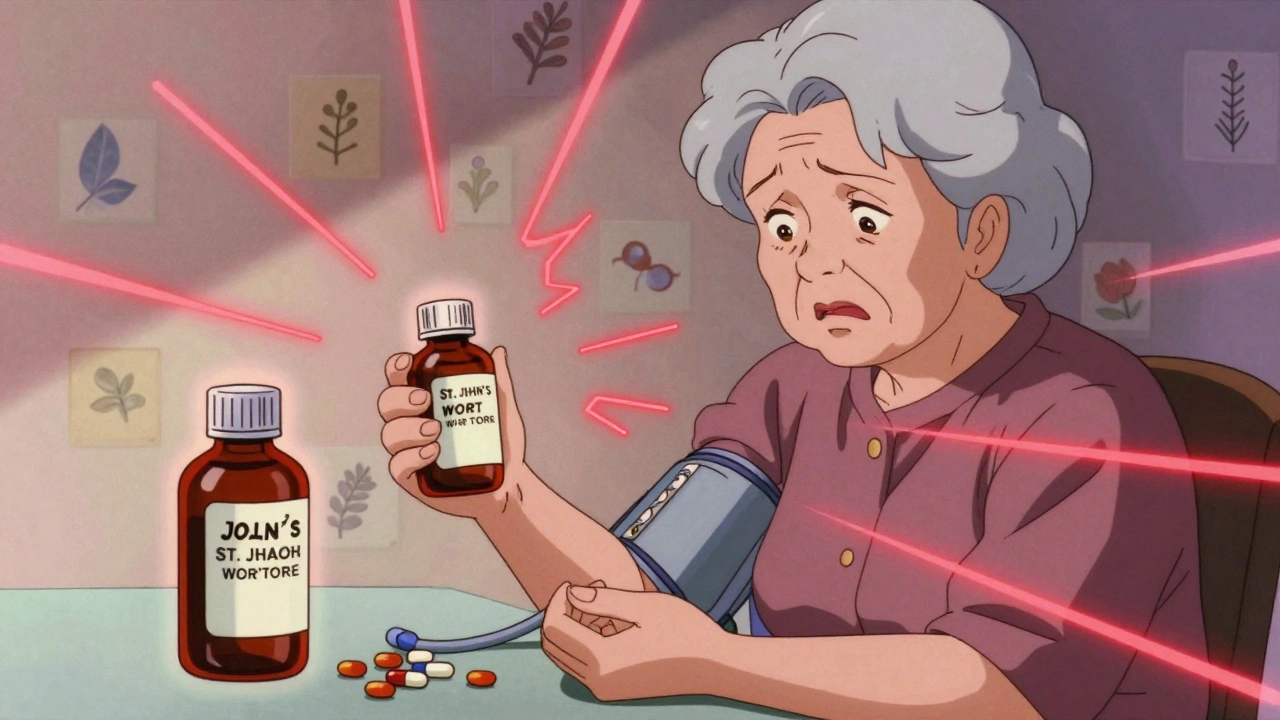
Every year, over 23,000 people in the U.S. end up in the emergency room because of dangerous mix-ups between supplements and medications. And the scary part? Most of them had no idea it could happen. You take a vitamin, a herbal pill, or an omega-3 capsule because you think it’s harmless-natural even. But if you’re on blood pressure meds, antidepressants, or blood thinners, that ‘natural’ supplement could be quietly sabotaging your treatment-or even putting your life at risk.
Why Supplements Aren’t Always Safe with Medications
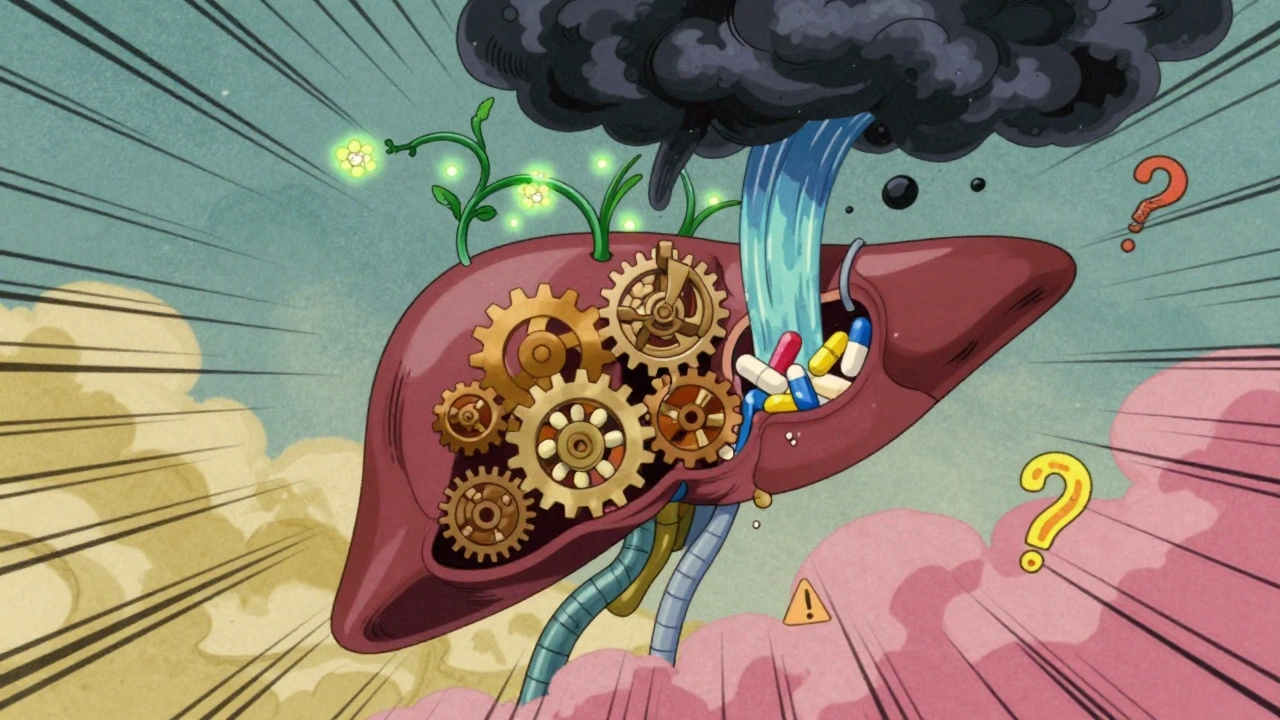
Supplements aren’t tested the same way prescription drugs are. Under U.S. law, companies don’t have to prove their products are safe before selling them. That means a bottle labeled "Turmeric for Joint Pain" might contain anything from pure turmeric to unlisted chemicals that interfere with your heart medication. The body doesn’t care if something is natural or synthetic-it only reacts to the chemicals inside. The biggest problem? Interactions happen in three main ways:- Metabolism interference: Many supplements change how your liver breaks down drugs. St. John’s wort, for example, speeds up the breakdown of over 50 medications, including birth control pills, antidepressants, and even drugs used after organ transplants. One study found it cuts cyclosporine levels by up to 50%-enough to trigger organ rejection.
- Absorption blockage: Calcium, iron, magnesium, and zinc all fight for the same space in your gut. If you take an iron supplement with your thyroid medication, your body might absorb less of both. The result? Your thyroid levels stay low, even though you’re taking your pill daily.
- Additive effects: Some supplements amplify what your drugs do. Vitamin E at 400 IU or higher can thin your blood even more when you’re on warfarin. Ginkgo biloba does the same. Together, they raise your risk of bleeding so much that emergency rooms see cases every month.
The Supplements That Are Most Dangerous with Medications
Not all supplements are created equal. Some are low-risk. Others? They’re ticking time bombs if you’re on certain meds.High-Risk Supplements (Avoid These With Prescription Drugs):
- St. John’s wort: The most dangerous supplement on the market. It interacts with antidepressants (SSRIs), birth control, blood thinners, HIV drugs, and heart medications. Users report reduced birth control effectiveness, serotonin syndrome (a life-threatening reaction), and transplant rejection. Over 1,200 user reports on Drugs.com link it to serious side effects.
- Ginkgo biloba: Often taken for memory, but it’s a strong blood thinner. Combined with warfarin, Eliquis, or aspirin, it increases bleeding risk by more than twice. One Reddit user was hospitalized for a week after mixing ginkgo with Eliquis.
- Vitamin E (400 IU+): Raises INR levels in people on warfarin. That means your blood takes longer to clot. Even a small increase can lead to internal bleeding.
- Garlic, ginger, and fish oil: All thin the blood. Surgeons ask patients to stop these 7-10 days before surgery. Skip them if you’re on anticoagulants.
- Goldenseal: Blocks liver enzymes that break down many drugs, causing dangerous buildup. It’s been linked to toxicity with statins and diabetes meds.
Generally Safer Supplements (But Still Check With Your Doctor):
- Milk thistle
- Black cohosh
- Cranberry
- American ginseng
- Saw palmetto
- Valerian
Even these aren’t 100% risk-free. Milk thistle might interfere with drugs processed by CYP2C9, like some antifungals. Cranberry can slightly increase warfarin’s effect. The rule? Never assume safety. Always ask.
What to Do Before Taking Any Supplement
You don’t need to stop all supplements. You just need to be smarter about them.- Make a complete list. Write down every pill, capsule, powder, or tincture you take-even the ones you only use once a week. Include brand names, dosages, and how often you take them.
- Bring it all to your doctor or pharmacist. This is called the "brown bag method." A 2022 Johns Hopkins study showed it cuts medication errors by 37%. Pharmacists at CVS and Walgreens now screen for interactions during every visit.
- Ask three questions:
- "Could this supplement interfere with my current meds?"
- "Is there a safer alternative?"
- "Should I stop this before surgery or a procedure?"
- Check the label. Look for "Warning" statements about drug interactions. If it doesn’t mention them, that’s a red flag. Legitimate products disclose risks.
- Wait two weeks before starting. If your doctor says it’s okay, start one supplement at a time. That way, if something goes wrong, you know which one caused it.
Who’s at Highest Risk?
People over 50 are the most vulnerable. About 78% of this group take both prescription drugs and supplements, yet only 32% tell their doctor about the supplements. Why? Many believe "natural" means safe. Others think their doctor won’t care. That’s a dangerous myth.Seniors are more likely to be on multiple medications-like warfarin for atrial fibrillation, statins for cholesterol, and metformin for diabetes. Add in a multivitamin, fish oil, and turmeric, and you’ve got a recipe for disaster. The FDA has issued 142 warning letters in 2023 to companies selling supplements that falsely claim to treat or cure diseases. Some even contain hidden drugs like sildenafil (Viagra) or steroids.
How Pharmacists Are Helping (And How You Can Use Them)
Pharmacists are your best defense. Since 2021, Walgreens has required all pharmacists to screen for supplement interactions during every prescription fill. In 2023, they flagged dangerous combinations in 18% of cases.Here’s how to use them:
- Don’t just drop off your prescription. Ask, "Can you check this with my supplements?"
- Ask for a free medication review. Most pharmacies offer it.
- Use the free Drugs.com interaction checker. It’s not perfect, but it’s better than guessing.
- Look for the new FDA Dietary Supplement Ingredient Database app, launching late 2024. It’ll scan supplement labels and warn you about interactions in real time.
What’s Changing in 2025?
The tide is turning. The American Medical Association now requires doctors to ask about supplements during every medication review. Epic Systems, the biggest electronic health record provider, has started adding supplement lists into patient charts in 15% of U.S. hospitals. The NIH is funding a $4.2 million study to build an AI tool that predicts interactions before they happen.But none of this matters if you don’t speak up. The FDA’s message is clear: "Natural does not equal safe." Just because something comes from a plant doesn’t mean it won’t hurt you when mixed with your meds.
Real-Life Consequences
A 68-year-old woman in Ohio took St. John’s wort for low mood and continued her antidepressant. Within weeks, she felt dizzy, nauseated, and had a racing heart. She ended up in the ER with serotonin syndrome. Her doctor found her blood levels of the antidepressant were dangerously high because the supplement blocked its breakdown.A man in Florida took ginkgo for memory and kept his blood thinner. He developed a brain bleed after a minor fall. His neurologist said the ginkgo doubled his bleeding risk.
These aren’t rare cases. They’re predictable. And they’re preventable.
You don’t have to give up supplements. But you do have to treat them like medicine-because that’s what they are, chemically speaking. If you’re on any prescription drug, your supplement is part of your treatment plan. And just like your pills, it needs a doctor’s approval.
Can I take a multivitamin with my blood pressure medicine?
Most basic multivitamins are safe with blood pressure meds, but check the ingredients. If it contains potassium, avoid it if you’re on ACE inhibitors or ARBs-too much potassium can cause dangerous heart rhythms. If it has magnesium or calcium, take it at least 4 hours apart from your blood pressure pill to avoid absorption issues. Always confirm with your pharmacist.
Is it safe to take fish oil with aspirin?
It’s risky. Both fish oil and aspirin thin your blood. Together, they can increase your chance of bleeding, especially if you’re older or have a history of ulcers or easy bruising. If your doctor approved aspirin for heart protection, they may still allow fish oil-but only at low doses (under 1,000 mg EPA/DHA daily) and with regular monitoring. Never combine them without checking first.
Does St. John’s wort really affect birth control?
Yes, and it’s one of the most dangerous interactions. St. John’s wort speeds up how your liver breaks down estrogen and progesterone. This can drop hormone levels enough to cause breakthrough bleeding or even pregnancy. Over 280 users on Drugs.com reported this. If you’re on birth control, avoid St. John’s wort completely. Use other options like talk therapy or exercise for low mood instead.
Why don’t supplement labels warn me better?
Because the FDA doesn’t require it. Supplements aren’t regulated like drugs, so companies often skip warning labels to avoid scaring customers. That’s why you can’t rely on the label alone. Always check with your pharmacist or use the Drugs.com interaction checker. If a product doesn’t mention drug interactions, it’s a red flag-not a green light.
Should I stop all supplements before surgery?
Yes, unless your surgeon says otherwise. Garlic, ginkgo, fish oil, vitamin E, and even high-dose ginger can increase bleeding during surgery. Most surgeons ask patients to stop these 7-10 days before the procedure. Even "safe" supplements like melatonin or probiotics can interfere with anesthesia. Always tell your surgical team about everything you take-even herbal teas.
Can my pharmacist check my supplements for free?
Yes. Most chain pharmacies like CVS, Walgreens, and Rite Aid offer free medication reviews. Bring all your pills, vitamins, and supplements in a bag. They’ll check for interactions, duplicate prescriptions, and dosing errors. This service is often underused-only 1 in 5 patients ask for it. But it’s one of the easiest ways to stay safe.
Next Steps
If you take any prescription meds and any supplement, do this today:- Write down every supplement you take.
- Call your pharmacy and ask for a free interaction check.
- Ask your doctor: "Could any of my supplements be interfering with my meds?"
- Download the Drugs.com app and run a quick check on your top two supplements.
You don’t need to live in fear. But you do need to be informed. The safest supplement is the one you’ve talked through with a professional. Everything else? It’s a gamble-and your health is the stake.



so i took st. john’s wort for 3 months ‘cause my cousin said it ‘fixed her anxiety’ and then i got my period like… every 3 days? turns out my birth control was basically useless. my gyno looked at me like i’d just admitted to feeding my cat cocaine. natural my ass.
the regulatory arbitrage here is staggering. supplements are classified as ‘dietary’ to evade the FDA’s drug approval cascade-meaning companies can market neuroactive compounds without pharmacokinetic data, clinical endpoints, or even consistent batch validation. this isn’t wellness-it’s pharmaceutical wild west with better branding.
i’ve been taking fish oil and lisinopril for years and never thought twice until i read this. i’m gonna bring my whole medicine cabinet to the pharmacy this week. honestly, i’m kinda embarrassed i didn’t do it sooner. thanks for the nudge.
you’re not ‘just taking vitamins’-you’re engaging in polypharmacological risk management. your liver’s CYP450 enzymes aren’t just busy-they’re juggling chainsaws. always audit your regimen with a clinical pharmacist. they’re the unsung heroes of medication safety. and yes, bring the brown bag. they’ve seen everything.
they don’t want you to know this… but the supplement industry is a front for Big Pharma’s shadow supply chain. those ‘natural’ ginkgo pills? half of them contain synthetic anticoagulants. the FDA won’t say it, but they’re in on it. they profit when you bleed out quietly. check the label for ‘proprietary blends’-that’s where the poison hides.
It is, perhaps, an oversight of monumental proportion that the regulatory framework governing dietary supplements remains fundamentally antiquated in relation to the pharmacological complexity of contemporary polypharmacy. One might reasonably posit that the current paradigm constitutes a de facto public health liability.
so my mom takes turmeric for her knees and metformin for diabetes… and she swears she’s fine. but she also thinks ‘detox teas’ are medicine. i’m not even gonna say anything. she’s 72. i just hide the ginkgo capsules when i visit.
omg this is so real 😅 i took vitamin e with warfarin for ‘skin glow’ and ended up with a bruise the size of a grapefruit. my pharmacist laughed but then gave me a handout. now i use the drugs.com app like it’s my bible. also… why does no one talk about melatonin and blood pressure meds??
It is imperative, given the documented interactions, that individuals-particularly those on chronic pharmacotherapy-treat supplements with the same clinical scrutiny as prescribed agents. The presumption of safety based on botanical origin is not merely misplaced-it is perilous. I have shared this with my entire book club. We now bring our supplements to our annual check-ups.