

Living with pets doesn’t have to mean living with sneezes, itchy eyes, and constant congestion. If you’re one of the 1 in 10 people affected by pet allergies, you’re not alone-and you don’t have to give up your furry friend. The real culprit isn’t pet hair. It’s pet dander: microscopic flakes of skin, plus proteins from saliva and urine that stick to fur and spread everywhere. These particles are so tiny and sticky they float in the air for hours and cling to couches, bedding, and even your clothes. And here’s the twist: no breed is truly hypoallergenic. A short-haired cat or a "hypoallergenic" dog still produces the same allergens as any other. The key isn’t avoiding pets-it’s managing exposure.
Why Pet Dander Is So Hard to Beat
Pet dander isn’t like dust or pollen. It’s designed to stick. The main allergens-Fel d 1 in cats and Can f 1 in dogs-are lightweight, oily proteins that cling to surfaces and stay active for months. Even after a pet leaves a home, allergens can linger in carpets and furniture for up to six months. Standard vacuum cleaners? They often just blow these particles back into the air. That’s because most filters can’t catch particles smaller than 2 microns. Pet dander? Many are under 0.5 microns. That’s why HEPA filters aren’t just helpful-they’re essential.Step 1: Make the Bedroom a Pet-Free Zone
This one simple rule changes everything. If you suffer from nighttime symptoms-congestion, coughing, waking up with itchy eyes-your bedroom is the problem. Studies show that keeping pets out of the bedroom reduces airborne allergens by up to 40%. Why? Because you spend a third of your life there. Your bedding traps dander, and your nose is vulnerable while you sleep. Replace your pet’s bed with a washable rug or blanket, and keep the door closed. Use a HEPA air purifier in the bedroom if you can. You’ll notice the difference in just a few days.Step 2: Upgrade Your Vacuum
Not all vacuums are created equal. A regular vacuum might clean your floor, but it won’t stop dander from flying back into your lungs. Look for a vacuum with a true HEPA filter-these trap 99.97% of particles as small as 0.3 microns. Research from Filtrete shows HEPA vacuums remove 30-50% more dander than standard models. Vacuum at least twice a week, focusing on carpets, upholstered furniture, and pet beds. If you have hard floors, use a damp microfiber mop afterward. Dry sweeping just kicks allergens into the air.Step 3: Add an Air Purifier
A good air purifier with a true HEPA filter can cut airborne pet allergens by 40-60% in a standard room. Place it in your main living area or bedroom. Size matters: make sure it’s rated for the square footage of the room. Look for units with a CADR (Clean Air Delivery Rate) of at least 200. Don’t waste money on ionizers or ozone generators-they don’t remove dander and can irritate lungs. Stick to HEPA. One study found that 68% of users felt their symptoms improved noticeably within four weeks of using a HEPA air purifier.Step 4: Swap Carpets for Hard Floors
Carpets are dander traps. They hold onto allergens like a sponge. Hard surfaces-hardwood, tile, linoleum-hold 50-75% less dander. If you can’t replace your carpet everywhere, at least remove it from bedrooms and high-traffic areas. Use washable rugs instead. Wash them weekly in hot water (at least 130°F or 54°C) to kill allergens. Even a small change here can make a big difference in how you feel day to day.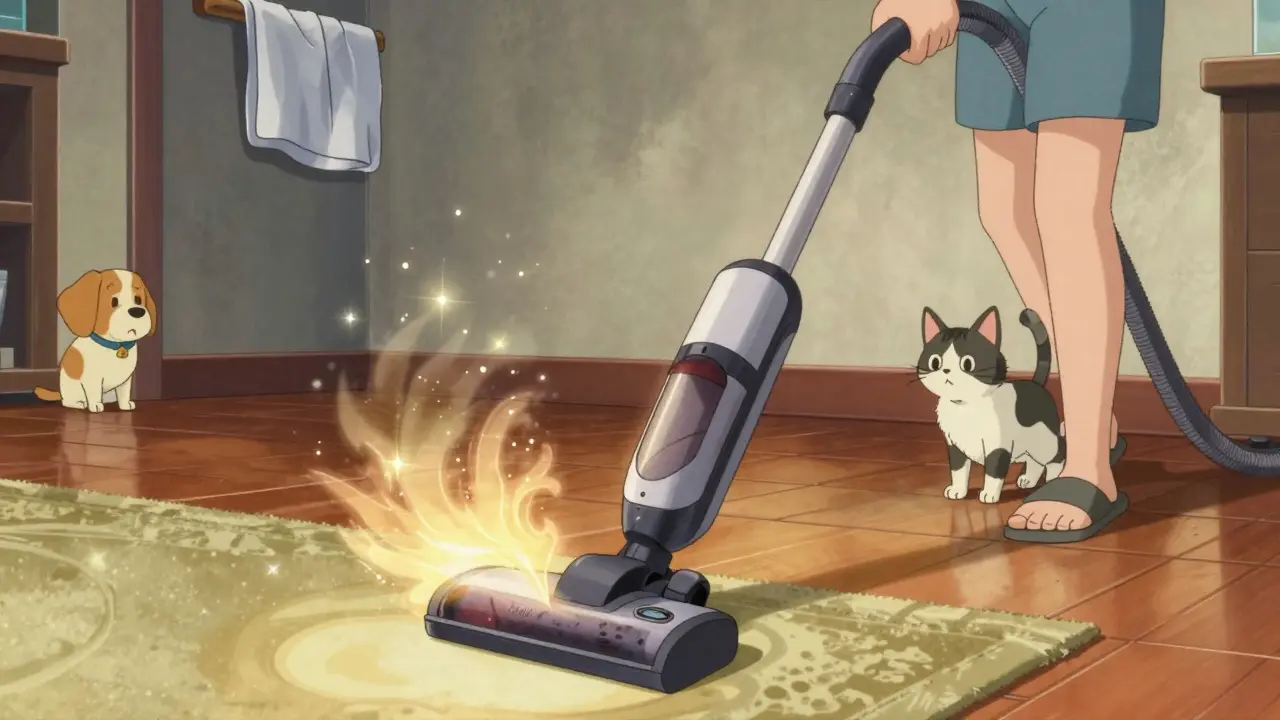
Step 5: Bathe Your Pet Weekly
This is the hardest part for most people. Cats especially hate water. But washing your pet once a week reduces allergens on their skin and fur by up to 80%. Use a gentle, allergen-reducing shampoo-look for ones labeled "dander-reducing" or "hypoallergenic." You don’t need to soak them; a thorough rinse and dry is enough. If your pet resists, try a damp cloth wipe-down daily. Even that helps. Dog owners report a 35% drop in symptoms when they bathe their pets weekly. Cat owners? It’s tougher, but 60% still manage it with patience and treats.Step 6: Wash Pet Bedding and Your Own
Pet bedding should be washed weekly at high heat. Same goes for your bedding. Use hot water (130°F or higher) to kill allergens. Cold washes? They do nothing. Consider allergen-proof covers for your mattress and pillows-they create a barrier between you and dander that’s settled into your bedding. These covers are a one-time cost, usually under $50, and last for years.Step 7: Clean Smarter, Not Harder
Use a lint roller on clothes, sofas, and car seats daily. It removes 70-85% of surface dander. Wash your hands immediately after petting your animal-this cuts allergen transfer to your face by 90%. Keep pet toys in one spot and wash them weekly. Wipe down walls and surfaces with a damp cloth every few days. Avoid feather dusters-they just spread allergens around. Use a microfiber cloth instead.Medical Help: When to See a Doctor
If you’re still struggling, don’t suffer in silence. Over-the-counter antihistamines help about two-thirds of people within an hour. But if symptoms last more than a few weeks, it’s time to see an allergist. Immunotherapy-either allergy shots or the newer sublingual tablets like Odactra for cat allergies-can retrain your immune system. Clinical trials show 80-85% of patients get lasting relief after 3-5 years of treatment. Some even stop needing medication entirely. These aren’t quick fixes, but they’re the closest thing to a cure.
What Doesn’t Work
Stop wasting money on gimmicks. "Hypoallergenic" breeds? A study from the University of California, Davis found that even "low-allergen" cats produce just as much Fel d 1 as others. Air purifiers with UV lights? They kill germs, not dander. Essential oils? They mask smells but don’t reduce allergens. And don’t rely on anti-allergen sprays alone-they reduce allergen activity for 24-72 hours, but they don’t remove the particles. Use them as a backup, not a solution.Cost vs. Benefit: Is It Worth It?
Setting up a full dander-reduction system costs $200-$500 upfront: a HEPA vacuum ($150-$300), an air purifier ($100-$250), allergen-reducing shampoo ($10-$20), and washable bedding covers ($30-$50). Filters need replacing every 6-12 months-another $20-$50. Sounds steep? Compare it to the cost of missed work, sleepless nights, and constant medication. Households that stick with these steps see a 50-70% drop in allergen levels within three months. That’s not just comfort-it’s better health.What’s Next? The Future of Pet Allergy Relief
Science is catching up. Researchers at UC Davis are using CRISPR gene editing to create cats that produce 90% less Fel d 1. That’s still years away, but it’s real. Meanwhile, smart home systems are starting to appear-devices that monitor air quality and auto-adjust air purifiers or HVAC filters. By 2025, these could reduce exposure another 20-30%. But right now, the best tools are simple: HEPA filters, clean surfaces, and consistent routines. No magic, just mechanics.Can I keep my pet if I have allergies?
Yes, most people can keep their pets with proper management. Studies show that 75% of allergy sufferers who use HEPA filters, keep pets out of bedrooms, and bathe pets weekly report major symptom improvement within 4-6 weeks. It’s not about giving up your pet-it’s about changing your home habits.
Is there a truly hypoallergenic dog or cat breed?
No. All cats and dogs produce allergens, regardless of hair length or breed. The idea of a "hypoallergenic" pet is a myth. Some individual animals produce fewer allergens, but you can’t predict this by breed. Testing a specific pet before adoption is more reliable than choosing a breed.
How long does it take to reduce pet allergens in my home?
You’ll start noticing improvements in 2-4 weeks if you begin with pet-free zones and HEPA cleaning. Measurable allergen levels drop by 50-70% within 3 months when you combine vacuuming, air purifiers, and pet bathing. Patience and consistency matter more than speed.
Do air purifiers really work for pet allergies?
Yes, if they have a true HEPA filter. Independent testing shows they reduce airborne pet allergens by 40-60% in standard rooms. Non-HEPA models, ionizers, and ozone generators don’t help. Look for a unit with a CADR rating of 200 or higher for best results.
Should I bathe my cat weekly?
Ideally, yes. Weekly bathing reduces allergens on your cat’s skin and fur by up to 80%. Most cats resist at first, but many adapt with treats and gentle handling. If bathing is impossible, daily wiping with a damp cloth still helps. Skipping this step is the #1 reason people don’t see results.
What’s the cheapest way to start reducing pet dander?
Start with two free or low-cost steps: keep pets out of your bedroom and wash your hands after touching them. Then, buy a HEPA vacuum if you don’t have one-many affordable models are under $150. Use a lint roller daily. These alone can cut symptoms by 30-50% without spending hundreds.






Been living with two cats and severe allergies for 8 years. Started with just keeping them out of the bedroom and washing hands after petting. Didn’t think it’d do much, but within two weeks I was sleeping through the night without Claritin. Now I vacuum twice a week with a HEPA filter, wipe surfaces with a damp microfiber cloth, and use a $40 air purifier. No magic, just consistency. My cats are happier too-they get more lap time now that I’m not sneezing every time they jump up.
Keep pets out of bedroom + HEPA vacuum. That’s 80% of the battle.
Humanity’s relationship with domesticated animals is a paradox of emotional attachment and biological conflict. We domesticate creatures to fulfill psychological needs, yet their very biology-microscopic, persistent, and evolutionarily optimized for dispersal-becomes the enemy of our physiological equilibrium. The dander is not an accident. It is the residue of a symbiosis gone awry. We love them, yet we must sanitize them. We cherish them, yet we must exclude them from the sanctuary of sleep. Is this not the modern human condition? To love what we must sterilize?
HEPA filters? Please. I’ve seen the studies. Half of them are funded by filter companies. And don’t get me started on ‘hypoallergenic’ breeds-that’s just marketing nonsense dressed up as science. The real solution? Get rid of the pet. Or better yet, adopt a reptile. No dander. No mess. No emotional attachment. Just cold, calm logic. You’ll thank me later.
OMG YES. I was ready to give up my dog until I tried the bedroom rule and weekly wipes with that dander-reducing shampoo. I cried the first night I slept through without coughing. It’s not perfect, but it’s DOABLE. You don’t need to go full OCD-just pick one thing and stick with it. Start with the bedroom. It’s like a reset button for your sinuses. And your pet? They’ll love the extra cuddle time. Seriously, it’s not about being perfect-it’s about being present. You got this. 🌟
The most underrated step here is the lint roller. I used to think it was a gimmick, but after a month of daily use on my couch and work jacket, my morning sneezing fit dropped from 10 to 2. It’s absurdly simple, cheap, and doesn’t require buying new gear. Just keep one in your bag. Use it after every pet interaction. It’s like brushing your teeth for allergens.
You people are delusional. You think washing your cat once a week is going to fix anything? Have you even read the science? Fel d 1 is produced in the sebaceous glands and salivary glands-bathing removes surface allergens, but the cat re-secretes within 24 hours. You’re wasting time and money. The only thing that works is removing the animal entirely. Or better yet, stop pretending you can ‘manage’ allergies while keeping your emotional crutch. You’re not ‘living with your pet’-you’re poisoning yourself for comfort. Wake up.
I’ve been allergic since childhood, and I’ve tried everything. I’m not a fan of the ‘just get rid of your pet’ crowd. It’s not that simple. My cat is my emotional anchor. But I did make changes: HEPA purifier in the bedroom, wash bedding every 5 days, and I use a damp cloth to wipe her down every morning before she comes into the living room. It’s not perfect, but my symptoms are 70% better. I still take antihistamines, but I don’t need them daily anymore. You don’t have to choose between love and health. You just have to be consistent. Small steps. Every day. That’s how you win.
What’s interesting is that the allergens are not just physical-they’re psychological. We assign meaning to the presence of our pets. Their absence creates a void. So even if we remove the dander, we still grieve the loss of the ritual-the morning purr, the weight on the bed, the way they wait by the door. The solutions listed here are mechanical. But healing requires more than filters. It requires redefining intimacy. Can we love a pet without touching? Without sleeping beside them? That’s the real question.