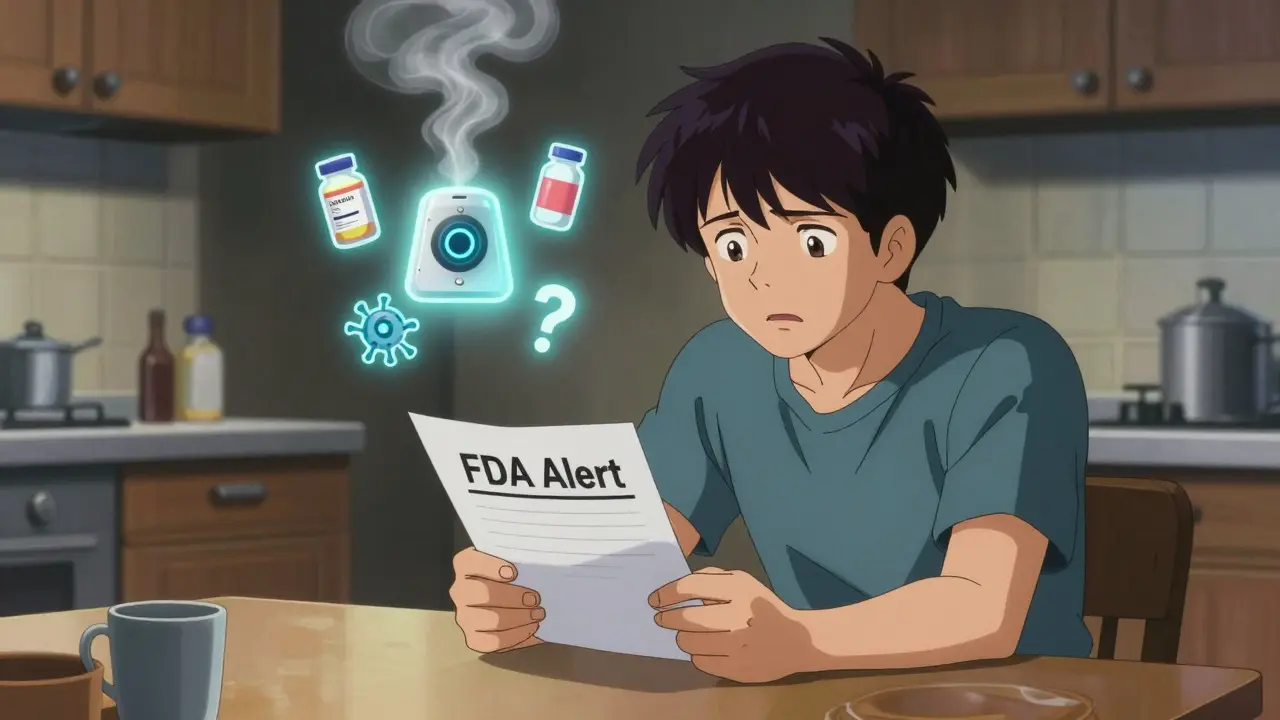
When the FDA issues a safety alert about a medication, it can feel like a red flag-like you should stop taking your drug right away. But that’s not always what’s happening. The truth is, most FDA safety announcements aren’t warnings to quit. They’re signals-early clues that something might be off. And learning how to read them correctly could mean the difference between unnecessary fear and smart, informed care.
What the FDA Actually Means by "Potential Signal"
The FDA doesn’t wait for proof before acting. It watches for patterns. Every quarter, it publishes a list of "Potential Signals of Serious Risks or New Safety Information" from its Adverse Event Reporting System (FAERS). These are not confirmed dangers. They’re red flags raised because a certain number of reports are piling up around a drug and a specific side effect. For example, if 200 people report a rare type of kidney injury after taking a certain blood pressure pill, and that’s 10 times more than expected, the FDA flags it. But here’s the key: the FDA explicitly says these signals do not mean the drug caused the problem. The reports might be incomplete, inaccurate, or even unrelated. A patient might have taken another medication, had an underlying condition, or reported symptoms that weren’t even linked to the drug. That’s why the FDA’s language is careful: "potential signal," not "confirmed risk." Think of it like a smoke alarm. It goes off when it senses heat or particles-not because there’s definitely a fire, but because something unusual is happening. You don’t run out of the house. You check. The same applies here.Understanding the Difference Between Adverse Event and Adverse Reaction
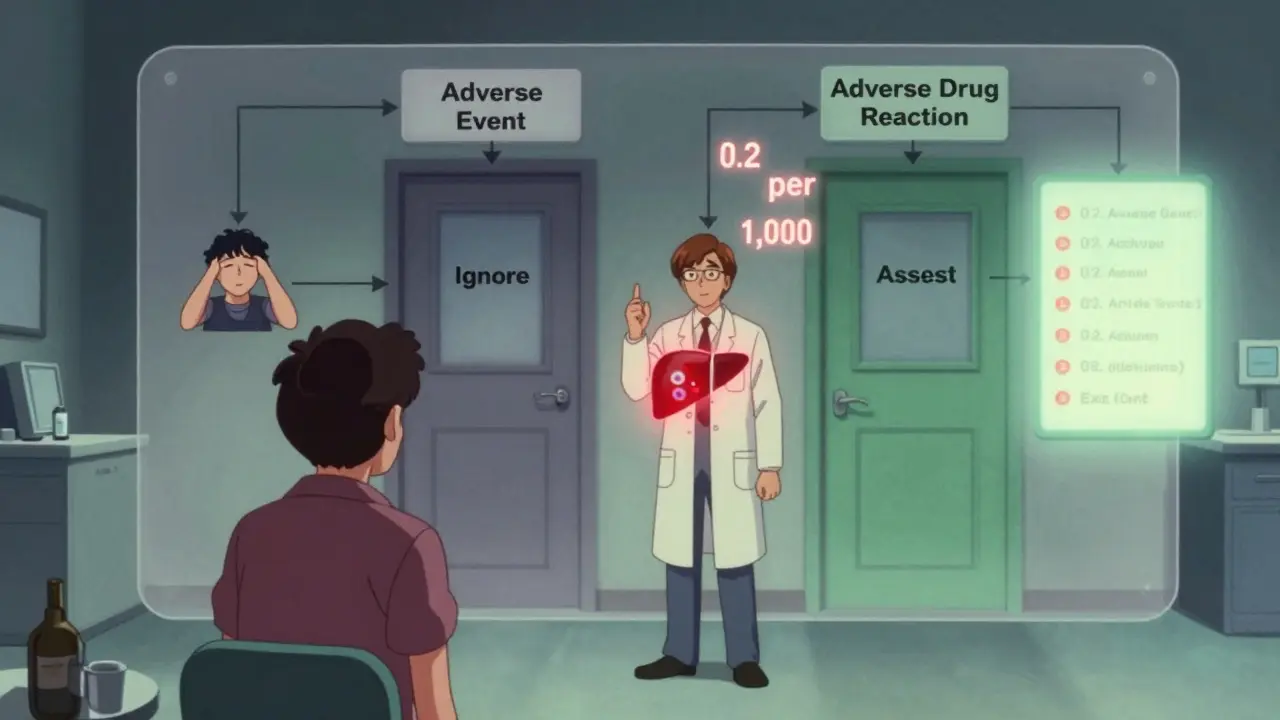
Not every bad thing that happens after taking a drug is the drug’s fault. The FDA draws a clear line:- Adverse Event (AE): Any unwanted medical occurrence after taking a drug-whether or not it’s related. A headache, a rash, dizziness, even a car accident after taking a pill. Just because it happened after the drug doesn’t mean the drug caused it.
- Adverse Drug Reaction (ADR): A harmful reaction that’s reasonably linked to the drug’s pharmacological action. This is what the FDA investigates. It’s not just timing. It’s science. Did the drug affect the body in a way that could cause this? Is there a biological mechanism? Are other cases showing the same pattern?
When you read an FDA alert, ask: "Is this an event or a reaction?" If it’s just an event, the risk might be negligible. If it’s a confirmed reaction, then you need to weigh it.
How the FDA Weighs Risk Against Benefit
The FDA doesn’t just look at danger. It looks at need. A drug’s benefit isn’t just "it works." It’s "how much does it help, and what are the alternatives?"Take cancer drugs. A 1 in 50 chance of severe liver damage might be acceptable if the drug gives someone a 60% chance of surviving a disease that’s otherwise fatal. But for a mild acne medication? That same risk might be unacceptable. The FDA uses six key elements to make this call:
- Severity of the condition: Is it life-threatening? Chronic? Mild?
- Available alternatives: Are there other drugs with better safety profiles?
- Magnitude of benefit: How much does it improve quality of life or survival?
- Frequency and severity of the risk: Is the side effect rare and mild? Or common and deadly?
- Feasibility of risk management: Can doctors monitor for it? Can patients avoid it?
- Patient perspective: What do patients say? Are they willing to accept the risk?
These aren’t just checkboxes. They’re a framework. The FDA’s 2024 guidance now requires this structure for all major decisions. That means if you’re reading a safety update, you can ask: "Did they consider all six?" If not, the alert might be incomplete.
What to Look for in a Real FDA Drug Safety Communication
Not all FDA alerts are created equal. Some are vague. Some are detailed. The best ones give you numbers.For example, in August 2022, the FDA warned about Fournier’s gangrene-a rare but deadly infection-linked to SGLT2 inhibitors (diabetes drugs). The alert didn’t just say "risk exists." It said: "The estimated incidence is 0.2 cases per 1,000 patient-years compared to 0.06 in non-users." That’s specific. You can now calculate: for every 5,000 people on this drug, maybe one case might happen per year. That’s rare. But it’s real. And it’s actionable: doctors can now look for early symptoms in high-risk patients.
Compare that to an alert that says: "Cases of liver injury have been reported." No numbers. No context. No comparison. That’s not helpful. It’s fear-mongering.
When you see a new alert, ask:
- Is this a "potential signal" or a "confirmed risk"? (The FDA usually says this outright.)
- Is there a quantitative estimate? (Numbers > words.)
- Does it compare the risk to baseline or other drugs?
- Does it say whether you should stop the drug? (If it doesn’t, you probably shouldn’t.)
Why Patients Get Confused-and How to Avoid It
A 2022 survey found that 75% of patients who read FDA alerts felt confused about whether to keep taking their medication. Why? Because the language is technical, and the tone is alarming.One patient told her doctor: "I read the FDA said this drug causes brain bleeding. I’m stopping it." The doctor checked. The alert was about a potential signal in a small group of elderly patients with a rare genetic condition. The patient didn’t have that condition. The risk to her? Effectively zero.
Doctors aren’t immune either. A 2022 AMA survey showed 42% of physicians changed prescribing habits based on FDA alerts-only to later learn the risk was minimal. The fix? Don’t act on headlines. Wait for:
- Labeling changes (the FDA updates the drug’s official prescribing information)
- REMS updates (Risk Evaluation and Mitigation Strategies-like mandatory monitoring)
- Published studies that confirm the signal
Most alerts never lead to these. That’s important. It means the signal was a false alarm-or the benefit still outweighed the risk.
What Happens After an Alert? The Real Timeline
An FDA alert isn’t the end. It’s the start of a process:- Signal detected: FAERS data shows a pattern. FDA reviews.
- Communication issued: Public alert. "Potential signal" noted. No action required.
- Further analysis: FDA digs deeper. Uses real-world data from the Sentinel Initiative (300 million patient records). Looks for patterns across different populations.
- Decision: If confirmed, the FDA may require labeling changes (within 30 days of notice), add a REMS, or request new studies.
- Update: If the signal fades, the FDA may retract or clarify.
This whole process can take 6 to 18 months. That’s slow-but it’s deliberate. Rushing to conclusions has caused harm before. In 2021, an alert about menstrual changes after the COVID-19 vaccine caused panic. Later, the FDA clarified: the changes were temporary and not linked to fertility. The lesson? Wait for the full picture.
How to Use This Information
You don’t need to be a doctor to read an FDA alert wisely. Here’s your simple checklist:- Don’t panic. If the alert doesn’t say "stop taking," you probably shouldn’t.
- Find the numbers. Look for phrases like "incidence is X per 1,000 patients" or "compared to Y." If they’re missing, the alert is weak.
- Check the condition. Is this risk relevant to you? A risk in pregnant women doesn’t matter if you’re a 60-year-old man.
- Ask your provider. Bring the alert. Ask: "Is this confirmed? Is it relevant? Should I change anything?"
- Wait for labeling updates. If the drug’s prescribing information changes, that’s the real signal.
The FDA’s system isn’t perfect. It’s slow. Sometimes it’s unclear. But it’s designed to protect you-not scare you. Your job isn’t to interpret every signal. Your job is to recognize the difference between a warning and a warning sign.
Are FDA safety alerts the same as drug recalls?
No. A recall removes a drug from the market because it’s proven dangerous or defective. FDA safety alerts are early warnings about possible risks that are still being studied. Most alerts never lead to recalls. In fact, over 80% of alerts result in no change to the drug’s availability.
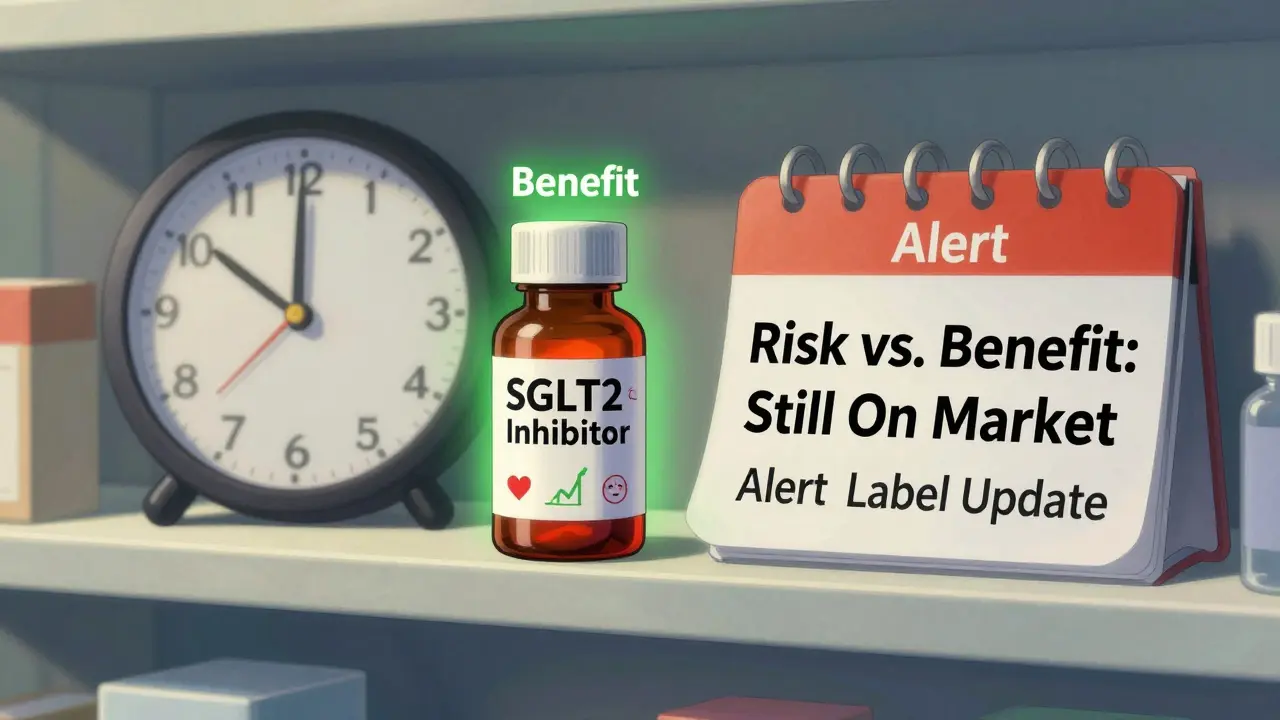
Why do some drugs have warnings even if they’re still on the market?
Because the benefit still outweighs the risk. For example, a diabetes drug might carry a small risk of pancreatitis, but it also lowers the chance of heart attack and death. The FDA allows the drug to stay on the market because for most people, the trade-off is worth it. The warning helps doctors and patients make informed choices.
Can I report an adverse event myself?
Yes. The FDA’s MedWatch program allows patients, caregivers, and healthcare providers to report side effects directly. You can do it online at fda.gov/medwatch. Even a single report can help if it’s part of a larger pattern. Your report adds to the data the FDA uses to spot signals.
Do FDA alerts apply to everyone taking the drug?
Not always. Many risks only affect certain groups-like people with kidney disease, older adults, or those taking other medications. The best alerts specify who’s at risk. If the alert doesn’t say, ask your doctor whether your situation makes you more vulnerable.
How often does the FDA update its safety information?
The FDA reviews its data continuously. It publishes new potential signals every quarter, and issues Drug Safety Communications about 4-5 times per month. Labeling changes happen when evidence becomes strong enough. You can sign up for email alerts at fda.gov/drugs/drug-safety-and-availability.