
If you're a patient, caregiver, or healthcare provider, you know how stressful it can be when a prescribed medication suddenly isn't available. A simple refill turns into a scramble - and sometimes, a health risk. The FDA drug shortage database is the most reliable public tool to find out if your medication is in short supply, why, and when it might come back. This isn't just for pharmacists. It's for anyone who needs to know if their treatment is at risk.
What the FDA Drug Shortage Database Actually Shows
The FDA’s Drug Shortage Database isn’t a guess or a rumor feed. It’s an official, government-maintained list of drugs where national supply can’t meet demand. As of mid-2024, there were about 300 active shortages on the list, mostly generic injectables like insulin, antibiotics, and pain medications. Each entry includes the exact drug name, the manufacturer’s name, the National Drug Code (NDC) number - which tells you the specific strength and form - and the reason for the shortage.
Over two-thirds of these shortages are caused by manufacturing problems: equipment failures, contamination, or quality control issues. A smaller portion comes from raw material shortages or production halts. The database doesn’t list every local or temporary stockout. It only includes shortages that affect the entire U.S. market. That’s important. If your pharmacy is out of a drug but it’s not on the FDA list, it’s likely just a local issue - not a nationwide shortage.
Each listing also shows the status: current, resolved, or discontinued. Resolved means supply has met demand - but that doesn’t always mean shelves are fully stocked again. Sometimes, it just means the worst of the shortage is over.
How to Access the FDA Drug Shortage Database
You don’t need special access or a login. The database is free and open to everyone. Here are the three ways to use it:
- Website: Go to www.accessdata.fda.gov/scripts/drugshortages/default.cfm. This is the most detailed version. You can search by generic drug name, active ingredient, or manufacturer.
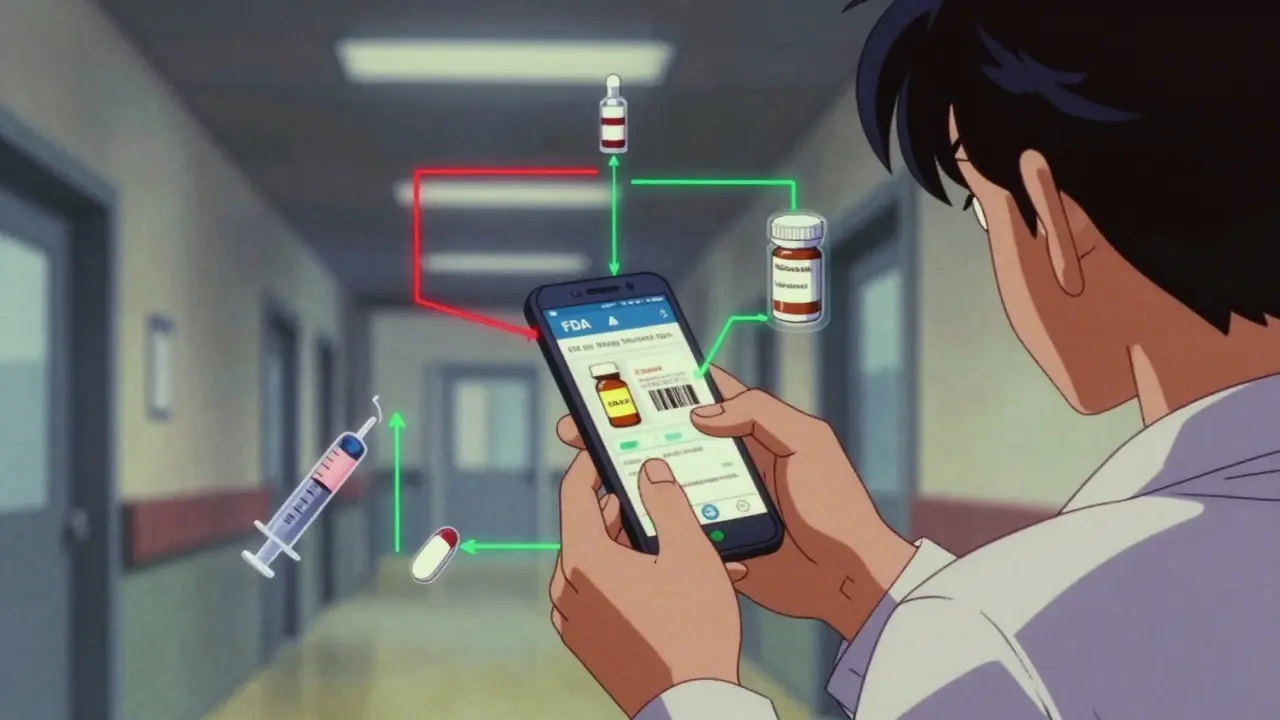
- Mobile App: Download the free FDA Drug Shortages app from the Apple App Store or Google Play. It launched in 2022 and has been downloaded over 150,000 times. It’s faster for quick checks and sends push alerts if a drug you’re tracking goes into shortage.
- Data Feed: For tech-savvy users or institutions, the FDA posts a weekly updated dataset on data.gov. This is used by hospitals and pharmacy systems to automate alerts.
The app is especially useful if you’re on the go. You can search by typing in the drug name or scanning an NDC barcode on the pill bottle. It’s the fastest way to confirm whether your prescription is affected.
How to Search Effectively
Just typing in "insulin" won’t cut it. There are over a dozen types of insulin, each with different strengths, delivery methods, and manufacturers. The FDA database lists them separately. You need to know the exact formulation.
Here’s how to search right:
- Start with the generic name - for example, "metformin" or "levothyroxine".
- Check the results for your specific NDC. That’s the 11-digit number on the label. If your bottle says NDC 0002-8745-01, search for that exact code.
- Look at the manufacturer. Two brands of the same drug can have different shortage statuses.
- Don’t assume all forms are affected. A shortage might only hit the 500mg tablet, while the 250mg capsule is still available.
In April 2024, a shortage of insulin NDC 0002-8745-01 was identified through the database. Hospitals used that info to switch patients to other NDCs before any delays occurred. That’s the power of specificity.
FDA vs. ASHP: Which One Should You Trust?
You might also hear about the American Society of Health-System Pharmacists (ASHP) Drug Shortages page. It’s popular, but it’s not the same as the FDA’s.
The FDA database only lists nationwide shortages that meet strict federal criteria. ASHP includes local, temporary, or partial shortages - so they list about 15-20% more drugs. That means ASHP might show a drug as short even if the FDA says it’s fine.
Here’s the practical difference:
- Use FDA to verify if a shortage is real, official, and nationwide. It’s the legal record. Manufacturers are required to report to the FDA, and failure to do so can cost them up to $10,000 per day.
- Use ASHP to find out what to do next - alternative drugs, dosing adjustments, or how to manage a shortage clinically.
Most healthcare providers use both. They check the FDA first to confirm the shortage exists, then turn to ASHP for guidance on what to prescribe instead.
What the Database Doesn’t Tell You
The FDA database is authoritative, but it’s not perfect. Here are its biggest limitations:
- 7-10 day lag: Manufacturers report shortages, but it takes time for the FDA to verify and post them. Often, a shortage appears on ASHP or in your pharmacy before it shows up on the FDA site.
- Poor predictions: The "estimated duration" field is only about 79% accurate. A drug marked as "resolved in 2 weeks" might take 3 months.
- No regional data: If you’re in rural Montana and the drug is out everywhere, the database won’t tell you that. It only shows national status.
- No alternatives listed: The FDA doesn’t suggest substitutions. You need to talk to your doctor or pharmacist for that.
- Compounded drugs missing: Only 22% of compounding pharmacies report shortages to the FDA, even though they’re often the last resort when branded drugs run out.
That’s why checking the database is just step one. You still need to call your pharmacy, talk to your provider, and stay alert.
What to Do If You Find a Shortage
If you see your medication listed:
- Don’t panic. Many shortages are temporary.
- Check if your specific NDC is affected. Sometimes, another version of the same drug is still available.
- Call your pharmacy. Ask if they have any stock or know when it’s coming in.
- Contact your doctor. They can switch you to a different drug, adjust the dose, or request an exception.
- Sign up for FDA email alerts. They send updates every Tuesday and Friday.
If you notice a shortage that’s not listed - say, your pharmacy is out of a drug and you can’t find it anywhere - report it. Email [email protected] with the drug name, NDC, manufacturer, and how long it’s been unavailable. The FDA uses these reports to trigger investigations.
What’s Changing in 2025
The FDA is working to fix the gaps. In July 2024, they added new filters to the website: you can now search by dosage form (tablet, injection, etc.) and manufacturer. That’s a direct response to user feedback.
In early 2025, they’re integrating with the National Association of Boards of Pharmacy’s wholesale distributor database. That means they’ll be able to track where drugs are actually being shipped - not just whether they’re in short supply.
The big goal? Predict shortages before they happen. The FDA is testing AI models to spot early warning signs - like supply chain delays or manufacturing shutdowns - before they turn into shortages. Commissioner Califf said they want to reduce the reporting lag from days to hours.
Right now, the database is reactive. In the next few years, it could become proactive.
Final Tips for Using the Database
- Bookmark the website or install the app. Make it part of your routine if you take chronic medications.
- Keep your NDC numbers handy. Write them down or save them in your phone.
- Don’t rely on Google. Search results are often outdated or misleading.
- Use the FDA database to confirm, not to decide. Always talk to your provider before switching drugs.
- Check the database before your refill is due. Don’t wait until the last minute.
Drug shortages aren’t going away. But with the right tool and the right approach, you can stay ahead of them - and keep your treatment on track.
Is the FDA drug shortage database free to use?
Yes, the FDA Drug Shortage Database is completely free. You don’t need to register, pay, or subscribe. The website and mobile app are both available to the public at no cost.
How often is the FDA drug shortage database updated?
The database is updated daily. New shortages are added as soon as the FDA verifies them, and resolved shortages are marked accordingly. The mobile app syncs these updates in real time.
Why is my drug not on the FDA shortage list even though my pharmacy is out of stock?
The FDA only lists shortages that affect the entire U.S. market. If your pharmacy is out of stock but other locations still have it, it’s likely a local inventory issue - not a national shortage. Check with other pharmacies or call the manufacturer.
Can I trust the estimated resolution date on the FDA database?
The estimated resolution date is based on manufacturer reports, but it’s only about 79% accurate. Many shortages last longer than predicted. Treat the date as a rough guideline, not a guarantee. Keep checking back.
What should I do if I can’t find my medication anywhere?
If your drug isn’t available and isn’t listed on the FDA database, contact your doctor immediately. They may be able to prescribe an alternative, request a special order, or help you access a patient assistance program. Also, report the shortage to the FDA at [email protected].
Does the FDA database include brand-name drugs or only generics?
The database includes both brand-name and generic drugs. However, most shortages involve generics because they have lower profit margins and fewer manufacturers. Brand-name drugs rarely go into shortage unless there’s a major manufacturing issue or supply chain disruption.




so the fda has a database for this... cool. guess i'll start checking it before i panic when my pharmacy says 'sorry, no insulin today' again. like wow. who knew the government had a spreadsheet we could actually use?
As a clinical pharmacist, I've relied on this database for over five years. The NDC-level granularity is critical for formulary substitutions and avoiding therapeutic failures. What's often missed is that the FDA's definition of 'national shortage' excludes regional distribution anomalies-hence the discrepancy with ASHP's broader scope. Always cross-reference with institutional inventory data before initiating clinical interventions.
Stop pretending this is useful. The FDA's database is a glorified afterthought. Manufacturers report late, estimates are garbage, and half the time the NDCs are wrong. I've seen patients go without meds for weeks while the FDA 'verifies' a shortage that was obvious on day one. This isn't transparency-it's bureaucratic theater.
Wow, this is so helpful! In India, we don’t have anything like this. When medicines run out, it’s just... silence. People wait days or switch to unsafe alternatives. I hope one day our government builds something this clear. Thank you for sharing this with the world.
Oh, wonderful. Another government tool that requires you to already know exactly what you're looking for, and then gives you a 7-day lag while people die. Truly, the pinnacle of American innovation. I'm sure the FDA prioritized this over, say, fixing the supply chain instead of just documenting its collapse.
Why are we even talking about this? The database is useless without automation. If your hospital isn't ingesting the FDA feed via API, you're doing it wrong. And if you're manually checking NDCs on a phone? That's not healthcare, that's a spreadsheet hobbyist with a prescription pad.
Hey, I just used the app to check my dad's metformin before his refill. Turns out the 500mg was flagged. Called the pharmacy-they had the 750mg. We switched and saved a trip. Small win. But seriously, why isn't this app linked to our EHRs? This should be automatic, not something you have to remember to open like a meditation app.
Just tried the app! 😊 Scanned my levothyroxine bottle and it showed 'current shortage'-but only for one NDC. My bottle had a different code. Phew! 😅 I saved this page. Will check every month now. Thanks for the clear guide!
Look, I’ve been through this. You think you know your meds, but then you realize you’ve been taking the wrong NDC for two years because your pharmacy switched suppliers and never told you. The FDA database doesn’t fix that. It just tells you after the fact. And if you’re elderly or don’t have a smartphone? Good luck. This isn’t a tool for the public-it’s a tool for people who already know how to use tools. Meanwhile, grandma’s out of her blood pressure med and the pharmacy says 'we’ll call you.' No, you won’t. You’re too busy.
Why are we still using a website? Why isn't this built into the pharmacy app? Why does it take seven days to update? Why does the FDA even exist if they're just documenting failures instead of preventing them? This is lazy. This is the bare minimum. This is what happens when bureaucracy replaces problem solving.
Let’s be honest-this database is a monument to our broken healthcare system. We’ve got AI that can predict stock market crashes and cat memes going viral in milliseconds, but when it comes to life-saving drugs, we rely on a manually updated .cfm page from 2007? The FDA isn’t just reactive-they’re nostalgic. They’re preserving the past while patients suffer in the present. The real tragedy? This is the best we’ve got. And that’s not progress. That’s surrender dressed up as a public service.
Good info. Simple. I live in Nigeria and we have no system like this. When drugs run out, people suffer. Maybe someone can use this idea to build something for us too. Thank you for explaining it so clearly.