Imagine you're a company with a safe, effective version of a popular medication. You've done the science, but you're staring at a massive backlog of paperwork at the federal government level that could take years to clear. For a long time, this was the reality for generic drug makers. The solution arrived in the form of the Generic Drug User Fee Amendments is a legislative framework that allows the FDA to collect fees from industry players to fund the hiring of more reviewers and inspectors. Also known as GDUFA, this system essentially lets the industry pay for a faster, more predictable path to market. If you're trying to navigate the legal hurdles of getting a generic drug approved, understanding these amendments is non-negotiable because they dictate not only the cost of entry but the speed of your approval.
The Core Purpose of GDUFA
At its heart, GDUFA was created to solve a specific problem: the Food and Drug Administration (FDA) simply didn't have enough staff to keep up with the volume of applications. Before the first set of amendments in 2012, the backlog of pending applications was staggering. By authorizing the FDA to collect user fees, the government shifted some of the financial burden from taxpayers to the companies that actually benefit from the reviews.
The goal isn't just to make money; it's about efficiency. These funds are legally earmarked for specific activities, such as reviewing Abbreviated New Drug Applications (known as ANDAs) and conducting facility inspections. By putting the agency on a firmer financial footing, the laws aim to lower the cost of healthcare for everyone by getting affordable generic alternatives onto pharmacy shelves faster.
How the Fee Structure Actually Works
It isn't a single flat fee. The cost of doing business under GDUFA is a mix of one-time application costs and recurring annual charges. For a company, this means budgeting for several different types of payments depending on their operational setup.
- ANDA Application Fees: A one-time fee paid when you first submit your drug application.
- Prior Approval Supplement (PAS) Fees: Paid when you need to make a significant change to a drug that has already been approved.
- Drug Master File (DMF) Fees: Due when a DMF is first referenced in an application.
- Annual Facility Fees: This is where things get interesting. You pay every year for each facility you operate.
There is a distinct difference between domestic and foreign costs. For example, under the early iterations of the law, foreign facilities were charged significantly more-often around $15,000 extra-compared to U.S.-based sites. The reasoning is simple: it costs the FDA more money to send inspectors across the globe to a plant in India or China than it does to send them to a site in New Jersey.
| Iteration | Period | Primary Focus | Key Outcome |
|---|---|---|---|
| GDUFA I | 2013-2017 | Foundational Framework | Reduced application backlog |
| GDUFA II | 2018-2022 | Competitive Balance | Reduced barriers for small firms |
| GDUFA III | 2023-2027 | Complex Generics & Transparency | Pre-ANDA programs and public reports |

The Evolution from GDUFA I to GDUFA III
The law hasn't remained static. Every five years, Congress must reauthorize the program, which allows for tweaks based on how the market is reacting. GDUFA I was a bit of a blunt instrument; while it cleared the backlog, some economists found it actually helped the "big players." Because the annual facility fees were so high, small companies with only one or two products struggled, while giants with dozens of products could absorb the cost easily.
GDUFA II tried to fix this by adjusting the fee structure to be fairer to smaller entrants. Then came GDUFA III, which we are operating under today (running through September 30, 2027). This current version is all about Complex Generic Products. These are drugs that are harder to copy-like inhalers or long-acting injectables-and require more sophisticated review processes.
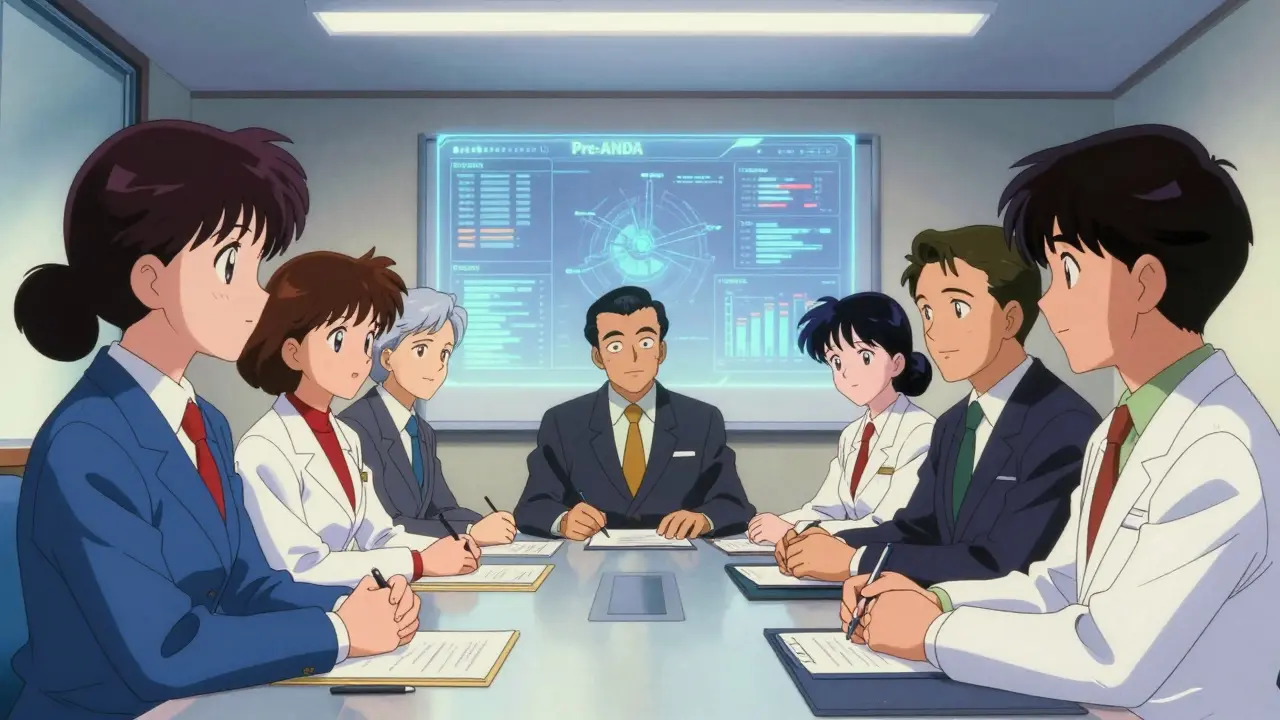
GDUFA III also introduced the Pre-ANDA Program. This is a huge win for manufacturers because it allows them to talk to the FDA before they formally submit their application. It's like getting a practice test before the final exam, reducing the risk of a costly rejection.
Real-World Impact and Industry Friction
From a high level, the results are impressive. Generic drugs now make up about 90% of all prescriptions filled in the U.S. The predictability of the review timeline has allowed companies to plan their launches with much higher accuracy. However, it hasn't been without controversy.
Many foreign manufacturers, particularly from Asia, have argued that the higher fees for overseas inspections are unfair and don't always reflect the actual cost of the trip. Meanwhile, smaller labs still feel the pinch of annual fees. There's also the issue of market concentration. Because the regulatory barrier (both financial and procedural) is so high, we've seen the top 10 generic manufacturers gain a massive grip on the market, controlling over 50% of its value.
Despite these gripes, the legal framework has created a virtuous cycle: industry pays fees → FDA hires more specialists → reviews happen faster → cheaper drugs hit the market sooner.
Practical Steps for Compliance
If you are managing regulatory affairs for a pharmaceutical firm, navigating GDUFA is about more than just writing a check. It requires a strategic approach to documentation and timing.
- Audit Your Facilities: Ensure every domestic and foreign site is accurately reported. The FDA uses this data to plan their risk-based inspection schedules.
- Time Your Payments: Don't let a payment delay hold up your application. The FDA is strict about fee deadlines relative to submission dates.
- Utilize Pre-ANDA Meetings: If you're working on a complex generic, don't go in blind. Use the GDUFA III pathways to seek scientific exchange early.
- Monitor Performance Reports: The FDA now publishes quarterly activity reports. Use these to gauge where the agency is focusing its resources and where bottlenecks might be forming.
Most companies find that they need dedicated regulatory staff to handle this. Trying to DIY a GDUFA-compliant submission often leads to "Refuse to File" letters, which can set a product launch back by months or years.
What happens if GDUFA expires in 2027?
If Congress does not pass new legislation by September 30, 2027, the FDA would lose its legal authority to collect user fees. This would likely result in a significant funding gap, potentially leading to longer review times and a return to the application backlogs seen before 2012. Negotiations for "GDUFA IV" typically begin about 18 months before the expiration date.
Why do foreign facilities pay higher fees?
The FDA charges a premium for foreign facilities to cover the increased costs of international travel, logistics, and the extended time required for inspectors to conduct overseas audits. This ensures that the cost of inspecting a plant in another country is borne by the industry rather than the U.S. taxpayer.
Is the GDUFA fee mandatory for all generics?
Yes, any company submitting an Abbreviated New Drug Application (ANDA) or maintaining a facility that produces generic drugs for the U.S. market must comply with the fee schedule. Failure to pay can result in the FDA refusing to review the application.
How has GDUFA III changed the process for complex drugs?
GDUFA III focuses heavily on "complex generics," providing specific programs like the Pre-ANDA Program to allow for early scientific dialogue. It also emphasizes transparency through more frequent reporting of review metrics, helping companies predict their approval timelines more accurately.
Do these fees go directly to the reviewers' salaries?
The funds are used by the FDA to support the overall generic drug program. This includes hiring new review officers and contractors, as well as funding the travel and equipment necessary for facility inspections, as mandated by the Federal Food, Drug, and Cosmetic Act.