| Variant | Approximate Origin | Evolutionary Benefit | Modern Health Risk |
|---|---|---|---|
| G1 | 5,000 years ago | Protection against African sleeping sickness | Increased risk of kidney cell toxicity |
| G2 | 10,000 years ago | Protection against African sleeping sickness | Increased risk of kidney cell toxicity |
Why the Risk Exists: The Evolutionary Trade-off
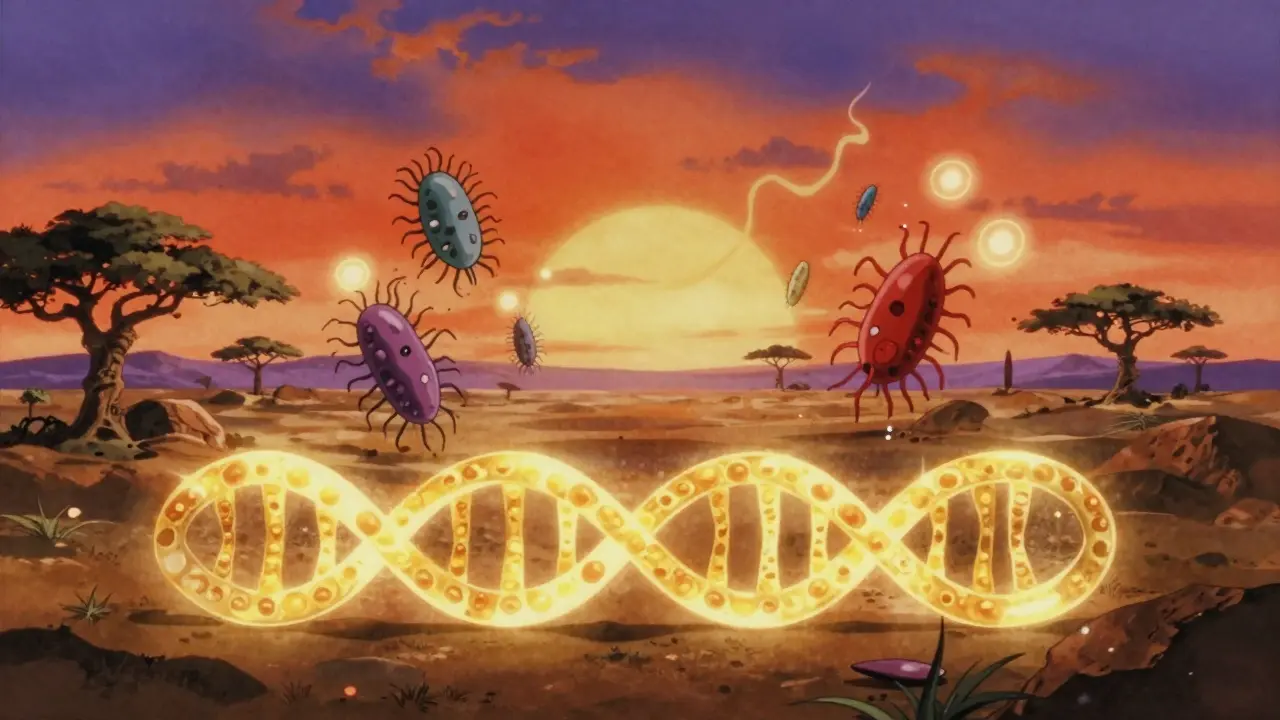
These genetic variants didn't appear by accident. Thousands of years ago in sub-Saharan Africa, specifically in Western and Central regions, a parasite called Trypanosoma brucei rhodesiense the parasite responsible for African sleeping sickness was a major threat. The G1 and G2 variants of APOL1 evolved to form pores in the membranes of these parasites, essentially popping them and saving the host's life. Because this was such a survival advantage, these variants became common in those populations. Fast forward to today, and the environment has changed. While we aren't all fighting sleeping sickness in the same way, those same proteins that attack parasites can also cause toxicity in the cells of the kidney. It is a classic case of "natural selection" providing a short-term win that creates a long-term health challenge.Understanding Your Risk: Genetics 101
Not everyone with an APOL1 variant is destined for kidney failure. In fact, the risk follows what doctors call a recessive inheritance pattern. This means you need two "hits" to be considered high-risk. You might be homozygous for G1 (two copies of G1), homozygous for G2, or a compound heterozygote (one G1 and one G2). Here is the surprising part: about 13% of African Americans carry these high-risk genotypes, but only about 15-20% of those people actually develop kidney disease in their lifetime. This is known as incomplete penetrance. For the other 80-85%, the gene stays quiet. So, why do some people get sick while others don't? Researchers believe a "second hit" is required. This could be:- Viral infections, most notably HIV a virus that attacks the immune system and can trigger rapid kidney decline in APOL1 carriers .
- Chronic hypertension (high blood pressure).
- Environmental toxins or other genetic modifiers.

How APOL1 Affects the Kidneys
When the "second hit" occurs, the APOL1 protein begins to damage the kidney's filtration system. This often manifests as Focal Segmental Glomerulosclerosis a condition known as FSGS where scars form in the kidney's filtering units, leading to protein leaking into the urine (FSGS). Other forms include collapsing glomerulopathies or arterionephrosclerosis. In the UK, the GEN-AFRICA study found that nearly 49% of end-stage kidney disease cases in people of African ancestry with HIV were directly linked to these high-risk genotypes. This shows that the gene isn't just a background risk; it can actively accelerate the path toward dialysis or transplantation.
The Reality of Testing and Diagnosis
If you are concerned, genetic testing is available through labs like Invitae or Fulgent Genetics. These tests typically cost between $250 and $450 if you don't have insurance. However, getting a result can be a psychological rollercoaster. Many patients report feeling an overwhelming sense of uncertainty-knowing they have the risk, but not knowing if or when they will actually get sick. There is also a frustrating gap in care. An American Society of Nephrology survey revealed that 68% of patients with APOL1-mediated disease felt they faced discrimination or inadequate care before their genetic status was confirmed. Some providers dismissed early symptoms as "just high blood pressure," ignoring the genetic predisposition that makes that blood pressure far more dangerous for the kidneys.
Managing the Risk: Proactive Steps
While you can't change your DNA, you can change how the gene behaves. The goal is to prevent the "second hit" or minimize its impact. The 2023 clinical guidelines suggest a strict approach for those with high-risk genotypes:- Aggressive Blood Pressure Control: Aim for a target of less than 130/80 mmHg. High pressure puts extra strain on already vulnerable filters.
- Regular Monitoring: Annual urine albumin-to-creatinine ratio tests to catch protein leakage early.
- Lifestyle Adjustments: Reducing salt intake and managing weight to lower the workload on the kidneys.
The Future of Treatment
We are moving away from the era of "one size fits all" medicine toward precision medicine. Pharmaceutical companies are now targeting the protein itself. Vertex Pharmaceuticals, for instance, is developing an APOL1 inhibitor (VX-147). In Phase 2 trials, this drug showed a 37% reduction in proteinuria-meaning it helped stop the kidneys from leaking protein. Furthermore, the medical community is shifting how it views race. Experts like Dr. Olugbenga Gbadegesin emphasize that we should talk about African ancestry rather than race. Race is a social category; ancestry is a genetic reality. This distinction is vital because it ensures that people with the actual genetic risk are identified, regardless of how they are categorized socially.Does having the APOL1 risk gene mean I will definitely get kidney disease?
No. Only about 15-20% of people with high-risk APOL1 genotypes develop kidney disease. The majority of carriers maintain normal kidney function throughout their lives unless they encounter a "second hit" like HIV or chronic hypertension.
Who should get tested for APOL1 variants?
Testing is strongly recommended for living kidney donors of African ancestry to ensure they aren't putting their own health at risk. It is also useful for individuals of African descent with unexplained kidney decline or those with a strong family history of renal failure.
What is the difference between G1 and G2 variants?
Both are risk variants that evolved in sub-Saharan Africa. G2 is older (approx. 10,000 years) while G1 appeared later (approx. 5,000 years). Both increase the risk of kidney disease when you have two copies (either G1/G1, G2/G2, or G1/G2).
How can I lower my risk if I have a high-risk genotype?
The most effective way is to control your blood pressure (keep it under 130/80), get annual urine tests to check for albumin, and avoid stressors that could trigger kidney inflammation, such as uncontrolled infections.
Are there any drugs that specifically target APOL1?
Currently, there are no FDA-approved APOL1-specific drugs, but inhibitors like VX-147 are in clinical trials and have shown promising results in reducing kidney protein leakage.