May 11, 2023
Betamethasone and its potential impact on blood sugar levels
When you finish cancer treatment, it’s natural to think the hardest part is over. But for many, the real challenge begins later. late effects of cancer treatment, delayed health problems that appear months or years after cancer therapy ends. Also known as long-term side effects, these issues can affect your heart, lungs, nerves, hormones, and even raise your risk of new cancers. They don’t show up during chemo or radiation—they creep in quietly, often when you’re finally feeling like yourself again.
This isn’t rare. Studies show over 60% of adult cancer survivors face at least one late effect. chemotherapy side effects, damage to healthy cells that lingers after drugs are cleared from the body can lead to nerve pain, memory trouble, or early menopause. radiation late effects, tissue scarring and organ damage from targeted beams might cause thyroid problems, lung stiffness, or heart disease decades later. And cancer survivorship, the ongoing health journey after treatment ends isn’t just about staying cancer-free—it’s about managing these hidden costs.
Some effects are physical: fatigue that won’t quit, joint pain from steroids, or infertility from high-dose chemo. Others are mental—depression, anxiety, or "chemo brain" that makes focus feel impossible. You might not connect these to your past treatment, but they’re linked. That’s why regular checkups after cancer matter more than ever. Blood tests, heart scans, bone density checks, and thyroid monitoring aren’t optional—they’re part of your new normal.
The good news? Many late effects can be caught early and managed. If you had radiation to your chest, you need heart screenings. If you took certain chemo drugs, your kidneys and hearing should be tracked. Hormone changes? There are treatments. Nerve damage? Physical therapy helps. You don’t have to live with these problems silently. The key is knowing what to watch for—and when to ask for help.
Below, you’ll find real-world guides on how to spot and handle these hidden consequences. From how diabetes can pop up after treatment, to how certain meds affect your bones, sleep, or skin, these articles give you the tools to protect your health long after the last round of chemo. This isn’t about fear—it’s about power. You survived cancer. Now, learn how to outlast its leftovers.
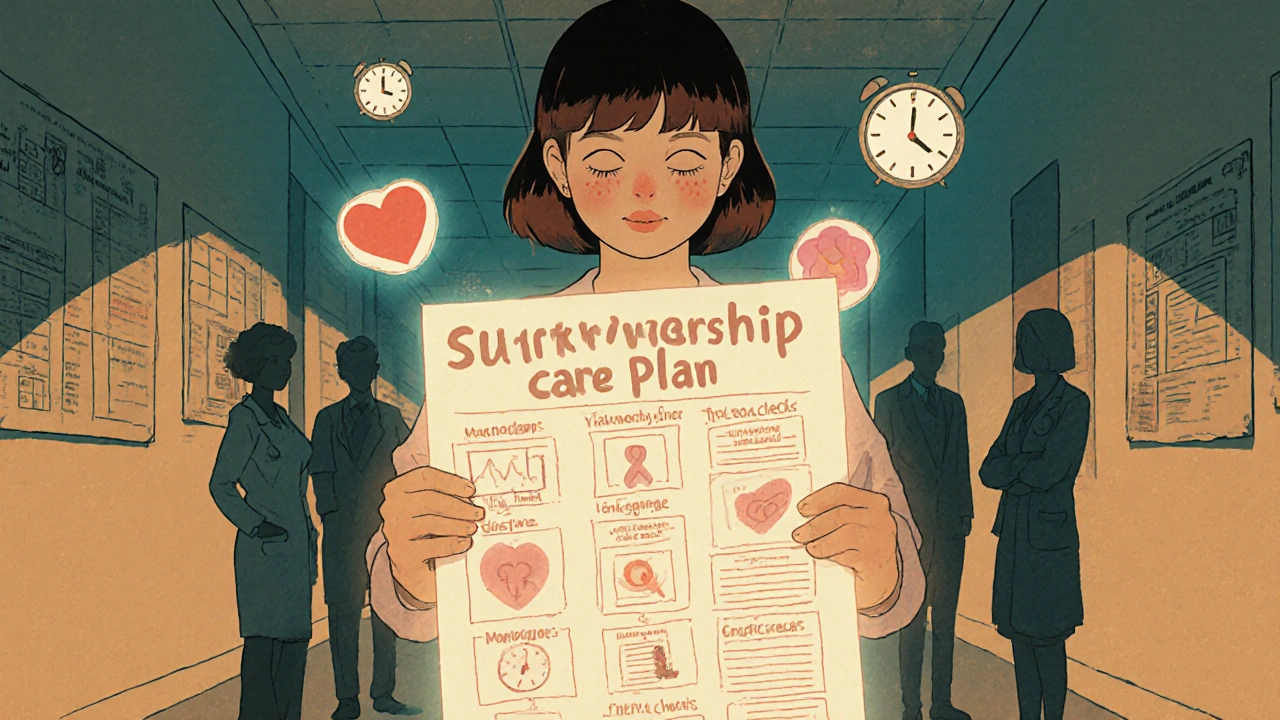
Survivorship care plans guide cancer survivors through post-treatment follow-up, screening for late effects, and healthy living. Learn what’s included, why it matters, and how to get one-even if your hospital doesn’t offer it.