
Home Medication Safety Auditor
Check all that apply to your current storage setup to see your risk level and receive targeted safety recommendations.
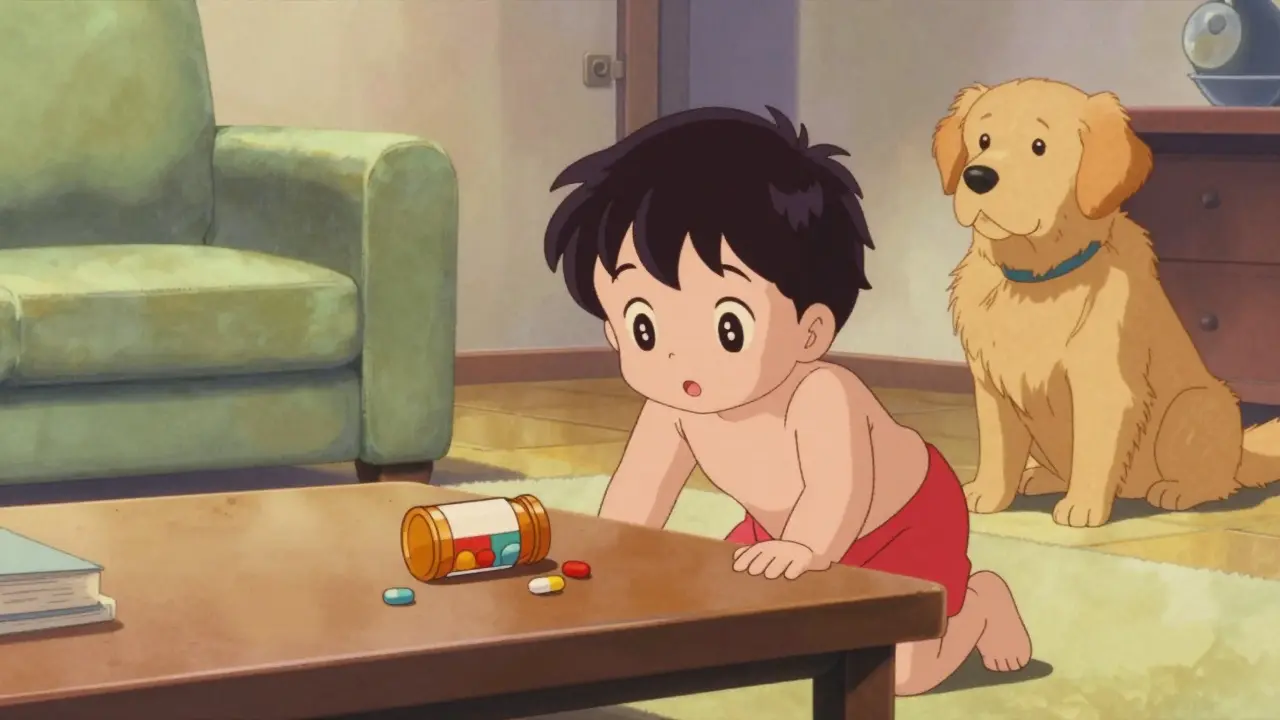
Imagine your living room: a toddler exploring every nook and cranny, or a curious golden retriever who thinks everything on the counter is a snack. It only takes a few seconds of distraction for a tragedy to happen. According to data from Nationwide Children's Hospital, about 60,000 children under five end up in the emergency room every year because they got into medications. The scariest part? 80% of these cases happen because the meds were left out in plain sight-on a nightstand, a kitchen counter, or inside a handbag.
Many of us trust those "child-resistant" caps, but here is the reality check: they aren't child-proof. The Consumer Product Safety Commission found that these caps only prevent 50-80% of poisonings. Kids are surprisingly good at figuring them out, and pets are even more relentless. If you have little ones or furry friends, relying on a plastic lid isn't enough. You need a real safety plan.
Why Standard Cabinets Aren't Enough
Most of us grew up with the "high shelf" rule. But if you've ever seen an 18-month-old climb, you know that a three-foot-high dresser is just a ladder to them. Research shows that children this age can easily scale furniture to reach countertops. To truly keep them safe, safe medication storage is the practice of using physical and procedural barriers, such as locked containers and specific height requirements, to prevent unauthorized access to pharmaceuticals.
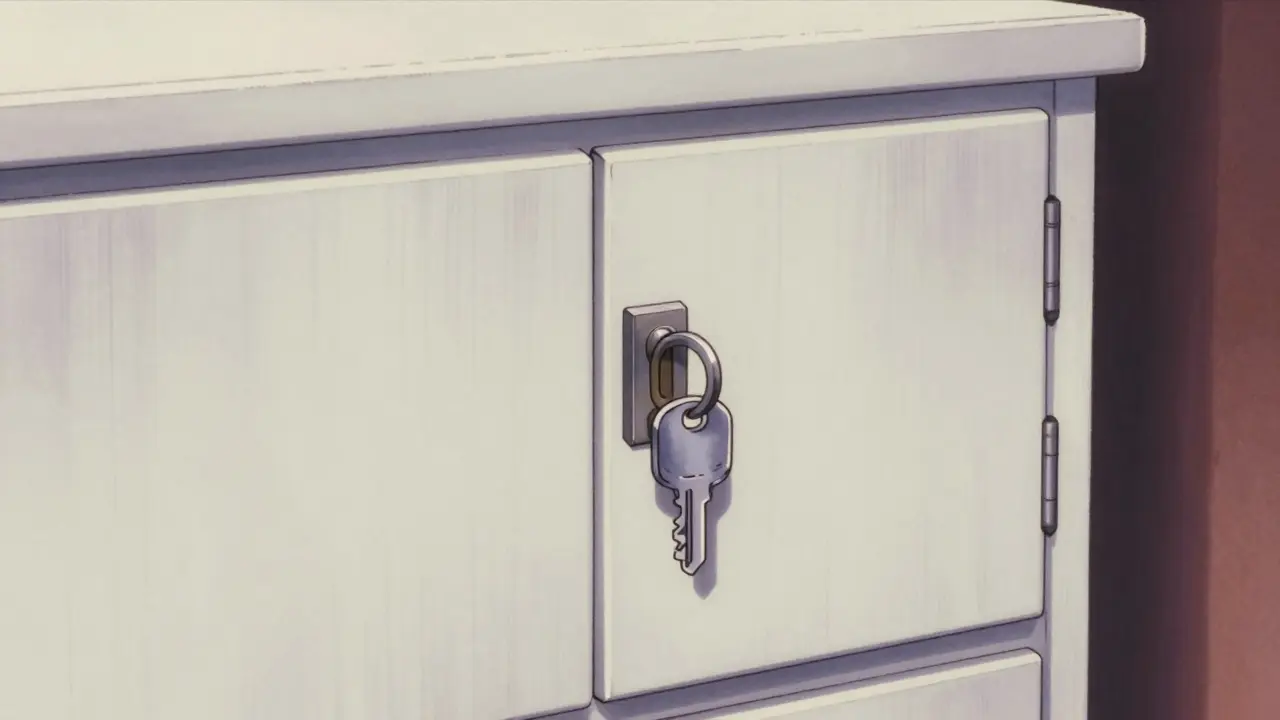
The gold standard is a locked cabinet installed at least 4 feet above the floor. While a latch might stop a baby, Dr. Gary Smith from the Nationwide Children's Center for Injury Research and Policy notes that locked storage is the single most effective move you can make, cutting pediatric medication exposures by 92%. For high-risk items like Opioids which are powerful pain medications with a high risk of overdose, the DEA even suggests containers with UL TRTL-30x6 certification to ensure they stay out of the wrong hands.
The Danger of Mixing Human and Pet Meds
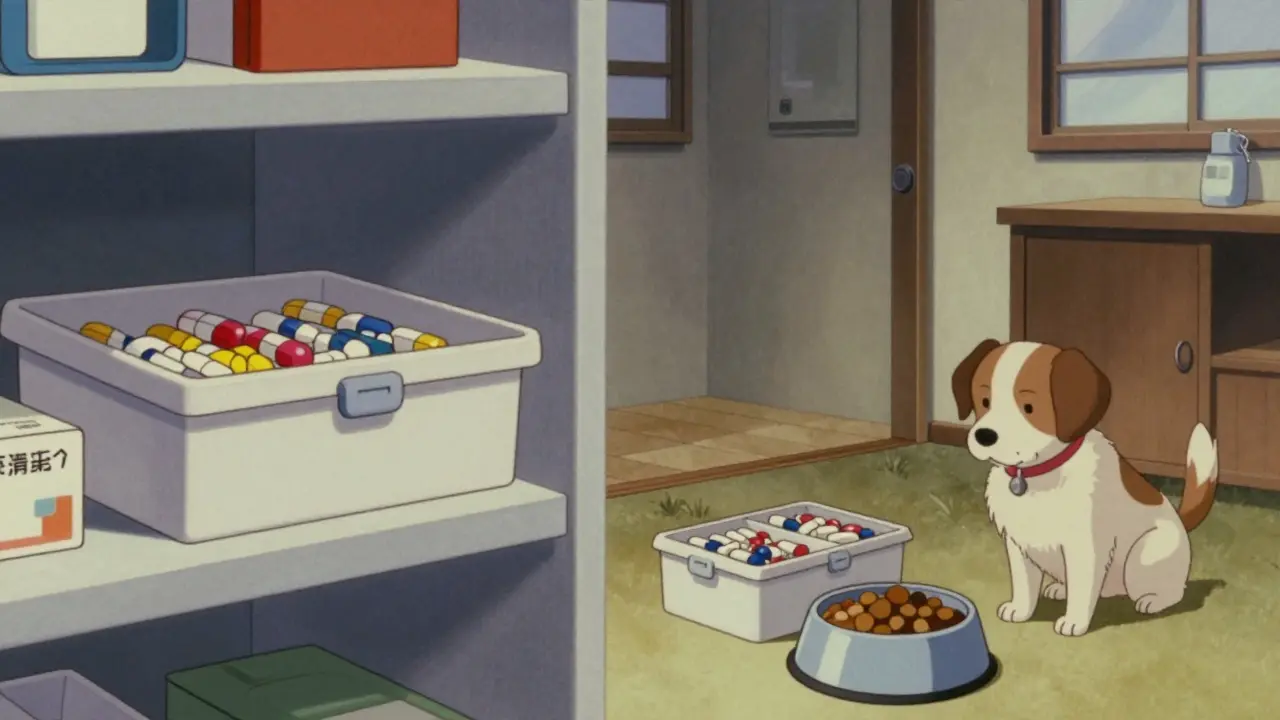
One of the biggest mistakes people make is keeping all their pharmacy bags in one spot. This is a recipe for disaster. Many Veterinary Medications pharmaceuticals specifically formulated for animals are flavored with banana or strawberry to make them palatable for pets. This makes them look and smell like candy to a child, increasing the risk of attraction by 300% compared to unflavored human drugs.
Then there is the toxicity gap. Some human medications are lethal to pets in tiny amounts. For example, 5-fluorouracil cream, used by humans, has a 100% fatality rate in cats with even a 0.5mg exposure. On the flip side, some pet meds, like heartworm preventatives containing Ivermectin a medication used to treat parasitic worms in animals and humans, are frequently confused with human antiparasitics. The CDC reports that storing human and pet medications in separate locations reduces these mix-up errors by 89%. The current advice from the American Academy of Pediatrics is to keep these two storage areas at least 15 feet apart.
| Feature | Human Medications | Pet Medications |
|---|---|---|
| Ideal Temperature | 68-77°F (20-25°C) | 50-85°F (Wider tolerance) |
| Primary Risk | Accidental ingestion by children | Ingestion by pets/Mix-ups with human meds |
| Attractiveness | Often bitter or neutral | High (often flavored like fruit) |
| Recommended Spot | Locked, high cabinet | Separate, secure area away from food |
Environmental Factors: Heat and Humidity
Where you put your meds matters as much as how you lock them. Many people use the bathroom as their primary pharmacy, but that's actually a bad idea. The steam from your shower creates high humidity, which can degrade 40% of common medications within just 30 days. Humidity studies show that kitchen pantries are over three times safer than bathrooms for maintaining drug stability.
Temperature is another invisible enemy. About 70% of medications need to stay between 68-77°F. If you store your pills in a sunny window or near a heater, you might be compromising their effectiveness. Meanwhile, about 25% of all medications require refrigeration (between 36-46°F). If you're storing refrigerated meds, make sure they aren't in the refrigerator door, where the temperature fluctuates every time you grab the milk.
Practical Steps for a Safer Home
Setting up a safety system doesn't have to be expensive. You don't need a professional vault; a simple wall-mounted lockbox can do the trick. Some parents have even used small gun safes to completely eliminate access incidents. The key is consistency. The CDC's "Up and Away" program found that it takes about 21 to 30 days of deliberate practice to make locked storage a habit.
Here is a checklist to get your home secure:
- Keep it Original: Never move pills into unmarked containers. 35% of medication errors happen because labels were lost or transferred.
- Audit Weekly: Do a quick sweep every Sunday. Check for expired meds and make sure nothing has migrated to a nightstand or counter.
- Double-Check Labels: Before administering any dose, verify the name and dosage twice, especially if you are managing both human and pet prescriptions.
- Separate the Zones: Move your pet's medications away from their food bowls and far away from the human medicine cabinet.
- Dispose Properly: Don't flush old meds. Use community collection sites or pharmacy take-back programs to avoid accidental poisoning or environmental damage.
Common Pitfalls to Avoid
Even well-meaning people fall into traps. One common issue is the "just for a few days" mentality-leaving a bottle of antibiotics on the counter because you're taking them twice a day. This is exactly how most exposures happen. Another gap is the assumption that pets can't open bottles. In controlled tests, 65% of dogs were able to open standard pill vials in under two minutes. If it's not locked, it's not safe.
For those struggling with the physical act of opening child-resistant caps-which affects about 40% of elderly users-the solution isn't to leave the caps off. Instead, install a lower lockbox with an emergency release mechanism that provides security without sacrificing accessibility for the person who actually needs the medicine.
Do child-proof caps really work?
They help, but they aren't a complete solution. They only prevent 50-80% of pediatric poisonings because many children can eventually figure out how to open them. They should be seen as a secondary layer of defense, not your primary strategy.
Where is the best place to store medications?
A locked cabinet or box at least 4 feet (and ideally 5 feet) above the floor is best. Avoid bathrooms due to high humidity and avoid areas near heat sources or direct sunlight. A cool, dry pantry is often a better choice than a bathroom medicine cabinet.
Should I store pet and human medications together?
No. Storing them together increases the risk of mix-ups by 4.7 times. Because pet medications are often flavored to be tasty, they are particularly attractive to children. Keep them in separate locations, preferably at least 15 feet apart.
How do I safely dispose of expired medications?
Avoid flushing medications down the toilet. The best method is to take them to a designated pharmacy take-back program or a community collection site during events like the DEA's National Take Back Day.
What should I do if I think a child or pet has ingested medicine?
Immediately contact your local poison control center or take the patient to the emergency room. Bring the original medication container with you so doctors know exactly what was ingested and can determine the correct treatment.
Next Steps for Your Safety Plan
If you currently store your meds in an unlocked cabinet, make today the day you change that. Start by auditing every room in your house-check bedside tables, purses, and car glove boxes. If you can't afford a high-end safe, a simple $25 wall-mounted lockbox is a massive upgrade over an open shelf.
For those managing complex regimens for both humans and pets, set up a "medication station" with a timed lock. This helps with compliance while ensuring that the drugs are only accessible during dosing windows. By combining a secure physical barrier with a consistent behavioral routine, you can virtually eliminate the risk of a devastating accidental poisoning.




i actually work in pharmacy and the bathroom thing is so true. the moisture totally ruins the pill coatings and makes them degrade way faster than they should. definitely move your stuff to a kitchen cabinet or a dedicated dry area if you can
Oh wow, so we're just pretending that everyone has the luxury of a 15-foot gap between their cat meds and their own? Some of us live in apartments, not mansions. Thanks for the totally unrealistic advice!
Locks are a crutch. Teach your kids boundaries instead.
THIS IS SO IMPORTANT! I literally just moved my dog's heartworm pills to a completely different room after reading this! We need to be more proactive about this stuff because kids are basically little ninjas who can climb anything! Let's all commit to auditing our homes this weekend and getting those lockboxes installed right now!
good tip on the lockboxes. keeps everyone safe
It is quite amusing that the author assumes a simple wall-mounted box is accessible to all. The logistical burden of installing such hardware in a rental property is completely ignored here, which renders the advice rather superficial.
The statistics provided are barely sufficient!!! Why is there no mention of the specific brands of lockboxes that are actually tested for toddlers??? This is a dangerous oversight... absolutely negligent!!!
In my home, we often use traditional wooden chests with locks for such things. It is a wonderful way to blend safety with our home's aesthetic while keeping the children secure. It is always helpful to consider how different cultures handle home organization to find the best fit for one's family.
Why are we following US standards? India has its own ways and we do just fine! 🇮🇳 This post is just trying to push American products like UL certified boxes. Totally unnecessary! 🙄
The obsession with safety is just a symptom of a society that has forgotten how to actually live. We've traded autonomy for a series of plastic locks and checklists. It's basically a sterile existence at this point.
There is a certain irony in the fact that we create these barriers to protect the very creatures who possess the most innate curiosity. By locking away the world, we are perhaps delaying the inevitable realization that the world is full of dangers, but we are doing so to preserve the sanctity of childhood.
Ugh, only an American would think a $25 lockbox is a "massive upgrade" 🙄. In a real high-end home, we have integrated medical cabinetry that actually matches the decor. This advice is so basic it's almost insulting 💅✨
I strongly urge everyone to implement these safety measures immediately! It is your absolute duty as a guardian to ensure no child or animal suffers due to negligence! You must act with urgency and precision to secure your household today without any further delay!