
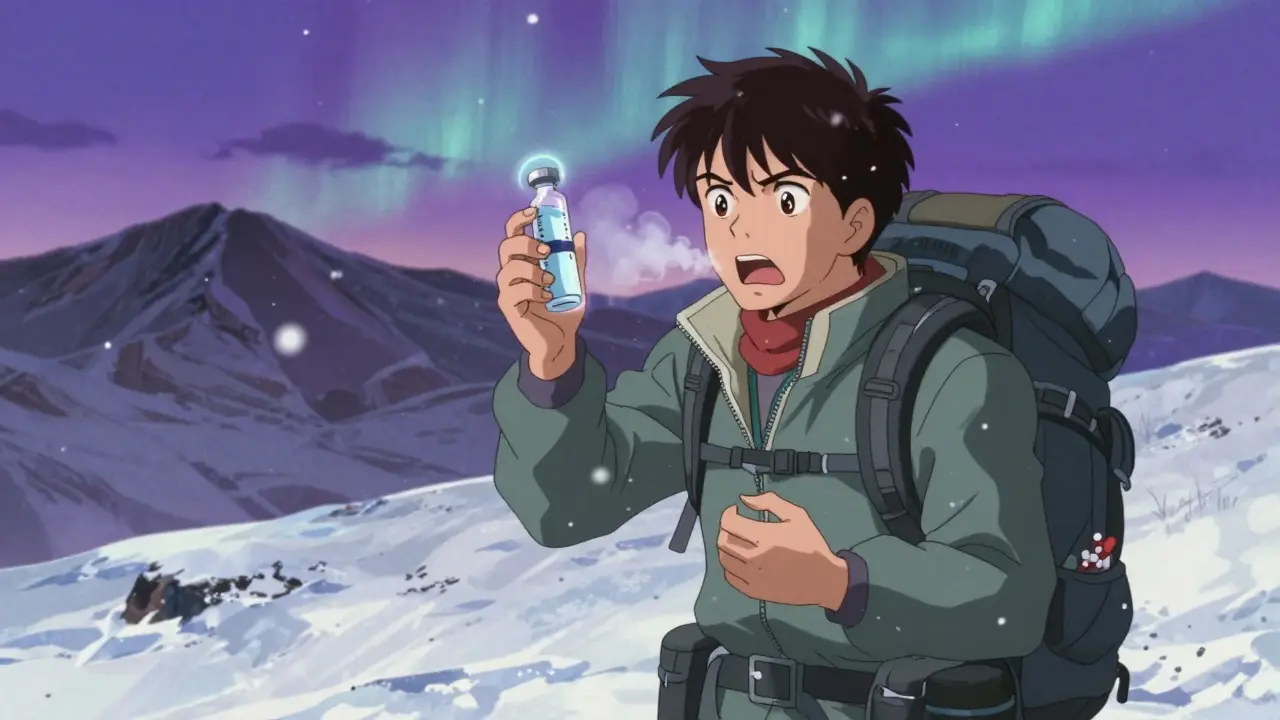
Imagine standing at 16,000 feet, breathless, head pounding, and your insulin has gone bad because it froze overnight. Or worse - you ran out of your altitude pills three days in, and the nearest clinic is a 12-hour walk away. This isn’t fiction. It’s what happens when people skip proper medication prep for high-altitude pilgrimages and treks. Every year, thousands of pilgrims and trekkers head to places like Mount Kailash, Everest Base Camp, or the Andes without realizing how dangerous it is to wing it with their meds. The good news? Almost all of these emergencies are preventable.
Know Your Medication Needs Before You Leave
You can’t just grab your regular pills and hope for the best. High altitudes change how your body works - and how your meds work too. At elevations above 8,000 feet, your body struggles to get enough oxygen. That’s when altitude sickness kicks in. About 43% of people climbing to Everest Base Camp (17,500 feet) get symptoms like headaches, nausea, dizziness, or trouble breathing. For pilgrims heading to Lhasa at 12,000 feet, it’s even more common.Don’t wait until you’re on the plane. See your doctor at least 4 to 6 weeks before departure. Tell them exactly where you’re going, how high you’ll climb, and how long you’ll be there. They’ll check for hidden risks - like heart or lung conditions - that could turn a tough hike into a life-threatening situation. According to the Himalayan Rescue Association, 83% of serious altitude complications could’ve been avoided with a simple pre-trip checkup.
Bring a list of all your medications - including over-the-counter stuff. If you’re on blood pressure pills, diabetes meds, or antidepressants, your doctor might need to adjust your dosage. Cold weather slows how your body absorbs drugs. At 14,000 feet, your insulin can lose 25% of its strength in just 24 hours if it’s not stored right. Glucometers can give wrong readings below freezing. These aren’t minor issues. They’re real risks that have sent people to emergency evacuations costing thousands.
Essential Medications for High Altitude
There are three key drugs every trekker or pilgrim should consider carrying - and knowing how to use them:- Acetazolamide (Diamox): This is the gold standard for preventing altitude sickness. The standard dose is 125 mg twice a day, starting one day before you begin climbing and continuing for at least three days after reaching your highest point. It helps your body adjust faster by making you breathe deeper. Side effects? You’ll pee more often - about 67% of users report this - and may feel tingling in fingers or toes. It’s not for everyone. If you’re allergic to sulfa drugs (3-6% of people), skip this one.
- Dexamethasone: This steroid is for emergencies. If someone develops severe headaches, confusion, or trouble walking - signs of High Altitude Cerebral Edema (HACE) - give them 8 mg right away, then 4 mg every 6 hours. This isn’t a prevention drug. It’s a life-saver until you can get them down. Don’t use it casually.
- Nifedipine (extended-release): Used for High Altitude Pulmonary Edema (HAPE), a deadly condition where fluid builds up in the lungs. The dose is 20 mg every 12 hours. It opens up blood vessels in the lungs, making breathing easier. Like dexamethasone, it’s for treatment, not prevention.
These aren’t optional. In 2013, a study found that 89% of health camps along popular pilgrimage routes in Nepal didn’t have even one of these three drugs. You can’t rely on local clinics. You need to carry your own.
Pack for the Worst-Case Scenario
Your first aid kit should be more than bandages and painkillers. Here’s what you actually need:- Antibiotics: Azithromycin (500 mg daily for 3 days) for traveler’s diarrhea - which affects 60% of trekkers at 9,000-14,000 feet due to dirty water.
- Anti-inflammatories: Ibuprofen (400 mg) for headaches and muscle pain. Avoid aspirin at altitude - it can worsen bleeding risks.
- Antihistamines: Diphenhydramine (25-50 mg) for allergic reactions or sleep aid if you’re struggling to rest.
- Topicals: Antibiotic ointment, hydrocortisone cream for rashes or insect bites, and blister care pads. Blisters are the #1 reason people quit treks.
- Supplemental oxygen: Portable canisters (like those from Oxylite or OxySure) are worth the weight if you’re going above 15,000 feet. They don’t cure altitude sickness, but they buy you time to descend.
- Hyperbaric bag: Also called a Gamow bag. It’s a portable pressure chamber that simulates lower altitude. Not common, but life-saving when descent isn’t possible. Fewer than 5% of health camps have one.
And don’t forget your personal meds. If you take thyroid pills, asthma inhalers, or heart medication - bring extra. A 2022 survey of 1,250 trekkers found that 47% of medication problems came from running out. That’s not bad luck. That’s poor planning.
Storage Matters More Than You Think
Temperature swings at altitude can ruin your meds fast. Insulin, epinephrine auto-injectors, and even some antibiotics degrade when frozen or overheated. The ideal storage range is 59-77°F (15-25°C). Outside that, things go wrong:- Insulin loses potency below 32°F (0°C).
- Glucometers give 18% more errors at 14°F (-10°C).
- Antibiotics like azithromycin can break down in heat above 86°F (30°C).
Use insulated, waterproof containers. A small cooler bag with a reusable ice pack works better than a ziplock in your backpack. Some people wrap meds in wool socks or use specialized pouches like the MediCool or MediSafe packs designed for travel. Don’t leave pills in your jacket pocket overnight - that’s how people end up in hospitals.
Also, keep everything in original bottles with pharmacy labels. Customs agents and local authorities ask for proof. If you’re carrying controlled substances - like strong painkillers or ADHD meds - you might need a doctor’s letter or even an international permit. In 2021, 17% of trekking groups ran into issues at borders because they didn’t have paperwork.
Acclimatization Is Your Best Medicine
No pill replaces slow ascent. The gold standard is gaining no more than 1,000 feet (305 meters) per day above 10,000 feet. That means if you fly into Lhasa at 12,000 feet, don’t climb higher for at least two full days. Rest. Drink water. Avoid alcohol. Sleep at lower elevations when possible.But pilgrims often don’t have time. Many arrive by plane or bus to high-altitude sacred sites with no buffer. That’s where acetazolamide becomes critical. It’s not a cheat code - it’s a safety net. Combine it with hydration: drink 4 to 5 liters of water daily. Dehydration makes altitude sickness worse. And never sleep during ascent. If you’re tired, rest sitting up - don’t lie down.
Listen to your body. If you feel worse after a day’s hike, don’t push forward. Stop. Rest. If symptoms get worse, descend. Even 1,000 feet can make a big difference. Most people think they’re being brave by pushing through. They’re just risking their lives.

What to Do If Something Goes Wrong
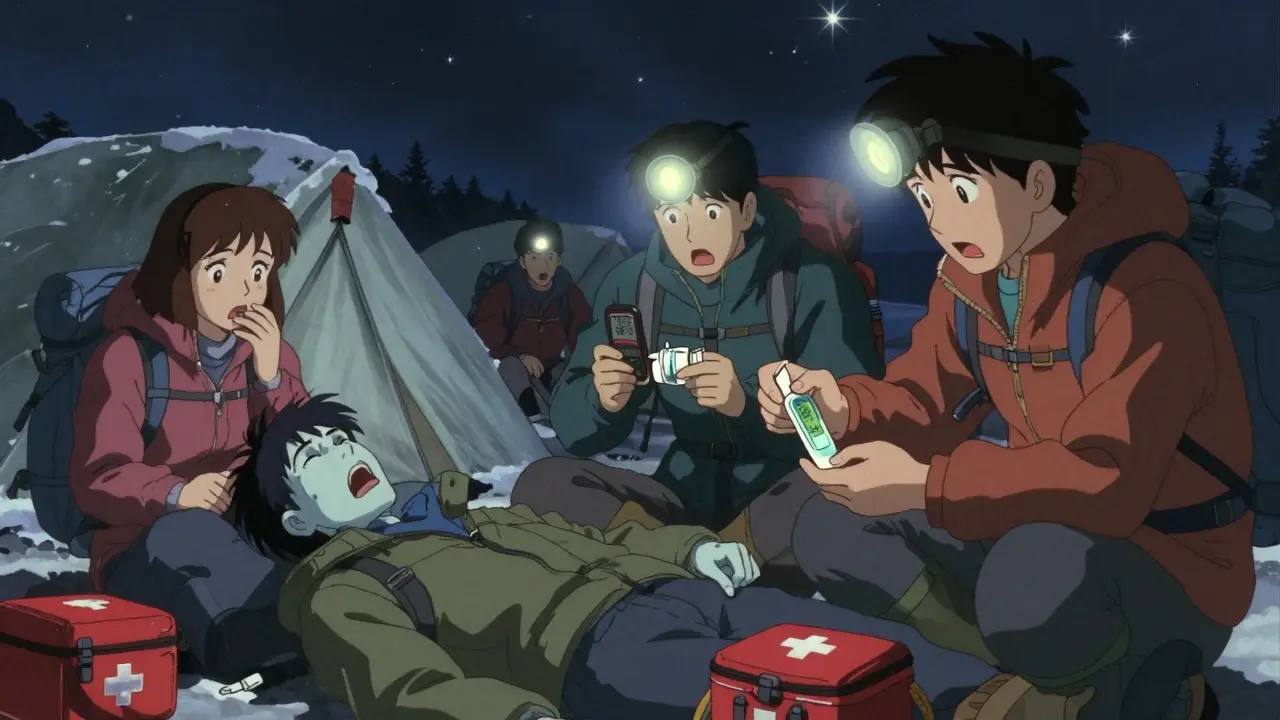
If you or someone in your group shows signs of severe altitude sickness - confusion, coughing up frothy sputum, inability to walk straight - act immediately:- Stop ascending.
- Give dexamethasone (8 mg) or nifedipine (20 mg) if symptoms match HACE or HAPE.
- Start descending - even if it’s just 1,000 feet.
- Use supplemental oxygen if available.
- Call for help. Many trekking routes now have satellite communicators like Garmin inReach or SPOT. Carry one.
Don’t wait. Don’t hope it gets better. A delay of 12 hours can turn a treatable case into a fatality. In 2023, a Reddit user shared how their insulin failed at 14,000 feet. They were evacuated - and it cost $4,200. That’s the price of not preparing.
Final Checklist Before You Go
Use this before you pack your bag:- ✅ See your doctor 4-6 weeks ahead
- ✅ Get prescriptions for acetazolamide, dexamethasone, nifedipine
- ✅ Bring 20% extra of all medications
- ✅ Store meds in insulated, waterproof containers
- ✅ Keep all meds in original bottles with labels
- ✅ Carry a doctor’s letter for controlled substances
- ✅ Pack antibiotics, ibuprofen, antihistamines, topicals
- ✅ Bring a portable oxygen canister or hyperbaric bag if going above 15,000 feet
- ✅ Know your symptoms and when to descend
- ✅ Tell someone your itinerary and check in daily
This isn’t about being paranoid. It’s about being smart. Every year, 22% of medical evacuations from high-altitude treks happen because someone didn’t plan for their meds. You don’t need to be a doctor. You just need to be prepared.
Can I buy altitude sickness pills at local pharmacies on the trail?
Don’t count on it. In 2013, 89% of health camps along major pilgrimage routes in Nepal didn’t stock acetazolamide, dexamethasone, or nifedipine. Even if you find them, you won’t know if they’re expired or counterfeit. Always bring your own supply.
Is Diamox safe for everyone?
No. If you’re allergic to sulfa drugs - which affects 3-6% of people - avoid acetazolamide. Symptoms of an allergic reaction include rash, swelling, or trouble breathing. Talk to your doctor before taking it. Alternatives like dexamethasone can help prevent symptoms, but they’re not ideal for long-term use.
How much water should I drink at high altitude?
Drink 4 to 5 liters daily. At altitude, you lose more fluids through breathing and sweating, even if you don’t feel hot. Dehydration worsens altitude sickness. Don’t wait until you’re thirsty - sip constantly. Avoid alcohol and caffeine - they dehydrate you more.
What should I do if my insulin stops working?
First, check if it’s frozen or overheated. If it looks cloudy or has particles, don’t use it. Switch to backup insulin if you have it. If you’re diabetic and have no working insulin, descend immediately. High altitude can also raise blood sugar levels due to stress. Carry glucose tablets and a backup glucometer. Test your levels more often.
Do I need a doctor’s note for my medications?
If you’re carrying controlled substances - like opioids, stimulants, or strong sedatives - yes. Some countries require official documentation. Even for non-controlled meds, a letter from your doctor listing your prescriptions and conditions helps avoid delays at borders or checkpoints. Keep it in your passport wallet.
Are pre-packaged medical kits worth it?
Yes, if they’re customized. In 2023, 76% of trekkers bought pre-packaged kits, but many were generic. The best ones include altitude-specific meds (like Diamox), antibiotics, and storage solutions. If you buy one, check what’s inside. Don’t rely on a kit unless it matches your personal needs.



i legit forgot my insulin cooler on my last hike and nearly passed out at 13k ft. never again. just wrap it in wool socks and keep it in your sleeping bag at night. it’s dumb but it works.
also, dexamethasone saved my cousin’s life in nepal. don’t underestimate it.
bro this is the most practical thing i’ve read all year. i did kailash last year and thought i was tough until my glucometer started showing 500 and i was sweating in -5c. turns out the machine was frozen. brought a backup this time. also, stop drinking chai at base camp. it’s just sugar water with dirt in it.
why are we letting people go on these hikes without training? america is soft. you want to climb a mountain? train for 6 months. don’t just pop a pill and think you’re ready. this isn’t a vacation. it’s a survival test. if you can’t handle your meds, don’t go. simple.
also, why do we even let tourists into the himalayas? they break everything. just close it to foreigners.
as someone who has guided pilgrims through the kailash circuit for over two decades, i can say with certainty that the biggest danger is not altitude-it is arrogance. many come with the belief that modern medicine can replace wisdom. it cannot. the mountains do not care if you have a prescription. they care if you listen. carry your meds, yes-but carry humility more.
also, the local pharmacies in lhaze do stock diamox, but rarely in correct doses. always bring your own. i have seen too many die because they trusted a stranger’s bottle.
yo i’m a med student from bangalore and i’ve seen this play out too many times. people think they’re invincible because they ‘work out’ or ‘hike on weekends.’ nah. altitude doesn’t care about your gains. here’s the real tea: if you’re on antidepressants, your body metabolizes them slower up high-so you might feel zonked even if you’re on the same dose. ask your doc to tweak it. also, dexamethasone? it’s not a party trick. if you give it to someone who’s just got a headache, you’re playing russian roulette with their brain.
and for the love of god, don’t store your insulin in your boot. i saw a guy do that. his pen looked like melted plastic. he cried. we had to carry him down.
bring extra. always. 20% isn’t enough. bring 30%. you’ll thank me when your glucometer dies and you’ve got backup insulin that still works.
the fact that you need to carry a hyperbaric bag to go on a pilgrimage suggests that these locations should be off-limits to the general public. it’s not a spiritual journey if you need a pressure chamber. this reads like a survival manual for overprivileged tourists who think their instagram aesthetic justifies risking their lives-and others’. why not just stay home and meditate? the mountain doesn’t need your presence. it’s been here longer than your ancestors.
just wondering-what about people with asthma? i know inhalers can freeze too. any tips on keeping them warm? also, do you recommend carrying a pulse oximeter? mine broke at 12k and i had no idea how bad i was doing until i started seeing stars.
...and yet... we still go. because the mountains don’t just test your body-they reveal your soul. every frozen pill, every trembling hand, every silent prayer at 14,000 feet... it’s not about medicine. it’s about surrender. you can carry all the diamox in the world, but if your heart isn’t ready, the altitude will break you anyway. and maybe... that’s the point. not to conquer-but to be conquered. the real pilgrimage isn’t to kailash. it’s to your own limits. and if you’re lucky... you’ll come back with more than just meds in your pack.
...but yeah. bring the hyperbaric bag. just in case your soul isn’t ready.
:-)