
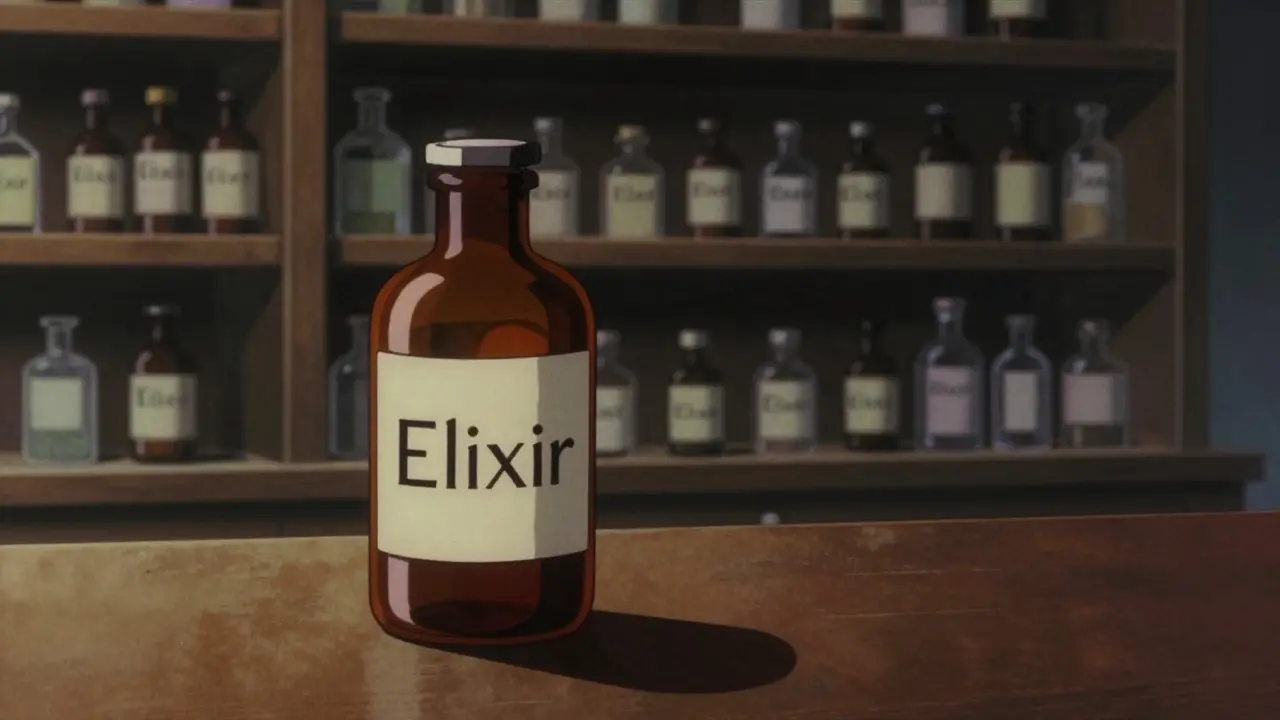
To understand how generics work today, we have to look at why the law was created in the first place. Back in 1937, a tragedy involving an untested antibiotic solvent called elixir sulfanilamide killed over 100 people. It was a wake-up call. Before 1938, drug companies could basically sell whatever they wanted without proving it was safe. The FD&C Act was signed by President Franklin D. Roosevelt to stop this. It gave the Food and Drug Administration (FDA) the power to oversee the safety of everything from the food we eat to the creams we put on our skin. But while the 1938 law focused on safety, it didn't actually make it easier to produce generic drugs. In fact, for decades, it made it nearly impossible.
The Barrier to Entry: Why Generics Were Rare
For years, if a company wanted to create a generic version of a drug, they had to jump through the same hoops as the original inventor. They had to submit a full New Drug Application (NDA), which meant conducting massive, expensive clinical trials to prove the drug was safe and effective. This was redundant. If a brand-name drug had already proven it worked, why should a generic maker spend millions to prove the exact same thing?
This duplication created a massive financial barrier. According to a 2024 FDA report, this process was so time-consuming and costly that generic competition remained minimal. It wasn't until 1962 that the Kefauver-Harris Amendments even required drugs to be effective, not just safe. The system was skewed heavily toward the original patent holders, leaving patients with very few affordable options.
The Hatch-Waxman Game Changer
Everything changed in 1984 with the Drug Price Competition and Patent Term Restoration Act, better known as the Hatch-Waxman Amendments. This wasn't just a minor tweak; it was a complete restructuring of how the U.S. handles drug patents and competition. The goal was to find a middle ground: give original inventors enough time to make their money back (incentivizing innovation) while giving generics a faster path to market (lowering prices).
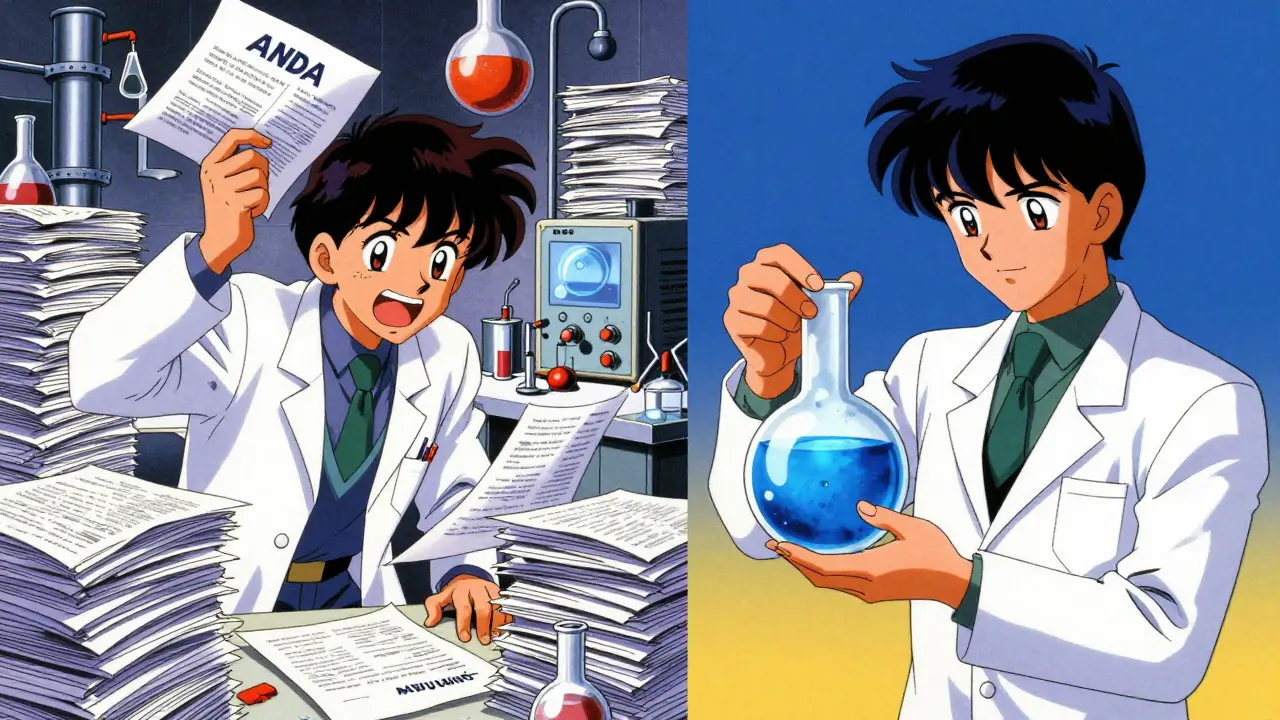
The most critical part of this legislation was the creation of the Abbreviated New Drug Application (ANDA) pathway under section 505(j) of the FD&C Act. Instead of repeating clinical trials, generic makers only had to prove bioequivalence. This means they just have to show the drug delivers the same amount of active ingredient into the bloodstream at the same rate as the brand-name version. Specifically, they use pharmacokinetic studies to ensure the drug's peak concentration (Cmax) and total exposure (AUC) fall within a tight window of 80-125% of the reference product.
| Feature | Full NDA (Brand Name) | ANDA (Generic) |
|---|---|---|
| Clinical Trial Requirement | Full safety and efficacy trials | Bioequivalence studies only |
| Cost of Development | Extremely High (Billions) | Significantly Lower |
| Primary Goal | Prove a new drug works | Prove it is the same as the brand |
| FDA Review Focus | Safety, Efficacy, Quality | Pharmaceutical Equivalence |
The Balancing Act: Patents and Exclusivity
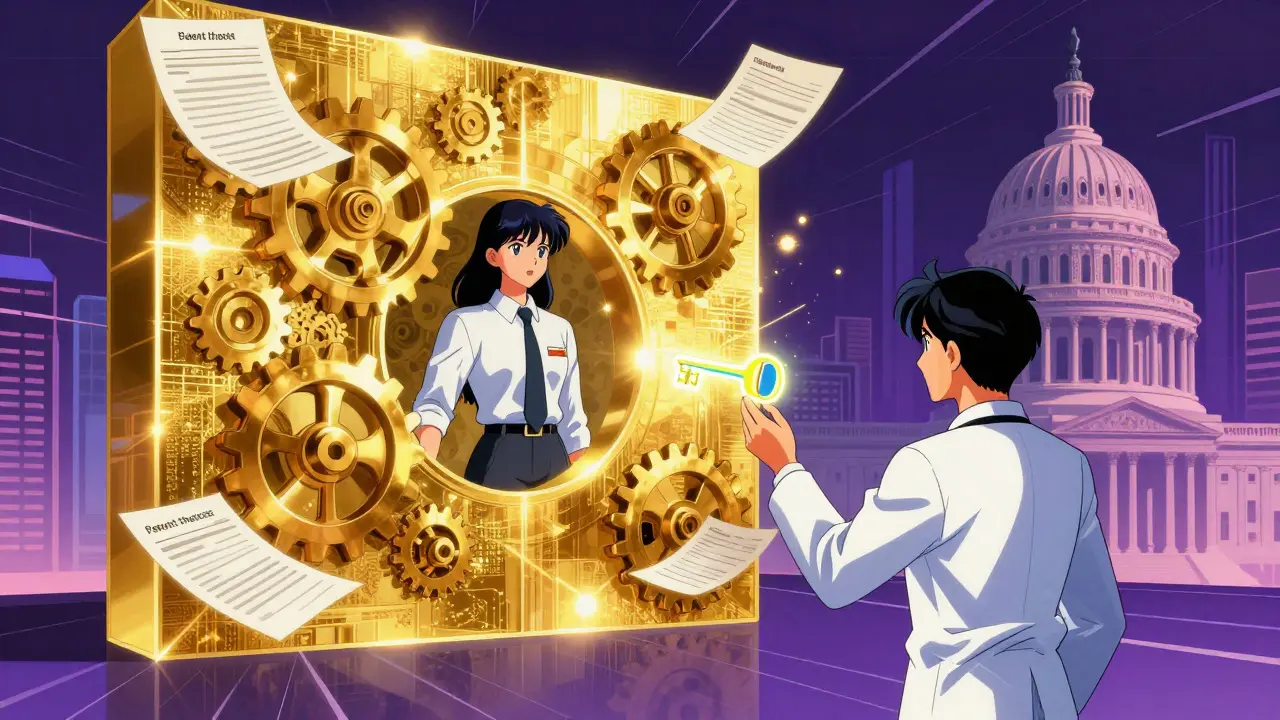
You might wonder why brand-name companies didn't just sue every generic maker out of existence. Hatch-Waxman solved this by creating a clear set of rules. Brand companies list their patents in the Orange Book (the official list of approved drug products). Generic applicants must then certify that the brand's patent has expired or is invalid.
To encourage generics to challenge weak patents, the law offers a huge prize: 180-day marketing exclusivity. The first generic company to successfully challenge a patent gets six months where they are the only generic version on the market. This window is incredibly lucrative and drives the competition that eventually lowers prices for everyone. On the flip side, brand companies can sometimes get a patent term restoration of up to 5 years to make up for the time the drug spent in the FDA approval pipeline.
The impact of this system is staggering. Before these amendments, generics made up only 19% of prescriptions. Today, they account for 90% of prescriptions but only a small fraction of the total spending. The Federal Trade Commission estimated that this framework has saved consumers roughly $2.2 trillion over the last decade.
The Dark Side: Evergreening and Patent Thickets
It sounds perfect on paper, but the legal battle doesn't end with the ANDA. Many brand-name companies use a tactic called "evergreening." This is where they make a tiny, clinically insignificant change to a drug-like changing it from a tablet to a capsule-and file a new patent to extend their monopoly. Some create "patent thickets," where dozens of overlapping patents surround a single drug, making it a nightmare for generics to enter the market.
This is especially true for complex generics, like inhalers or injectable biologics. The Generic Pharmaceutical Association noted that patent thickets have reduced generic entry for these complex products by about 42% compared to simple pills. To fight this, the government passed the CREATES Act in 2019, which makes it harder for brand companies to refuse to sell samples of their drug to generic makers for testing.
Maintaining Quality and Compliance
Just because a drug is generic doesn't mean the FDA lets the manufacturer slide on quality. Every company must follow current Good Manufacturing Practice (cGMP). If a plant is dirty or the data is faked, the FDA doesn't hesitate. Violations of the FD&C Act regarding adulterated or misbranded drugs can lead to civil penalties exceeding $1.1 million per violation.
In recent years, the FDA has used the Generic Drug User Fee Amendments (GDUFA) to speed up the process. By collecting fees from companies, the FDA can hire more reviewers. This has dropped average approval times from over 30 months in the 90s to around 10 months for most priority applications today. It means that as soon as a patent expires, the affordable version hits the market much faster than it used to.
What exactly is an ANDA?
An Abbreviated New Drug Application (ANDA) is the application a generic manufacturer submits to the FDA. It is "abbreviated" because the company doesn't have to provide the full clinical trial data that the original brand-name manufacturer provided. Instead, they only need to prove that their version of the drug is bioequivalent-meaning it works the same way in the body-as the original reference drug.
Is a generic drug as safe as a brand-name drug?
Yes. Under the FD&C Act and Hatch-Waxman rules, generic drugs must have the same active ingredient, strength, dosage form, and route of administration as the brand-name drug. They must also meet the same stringent cGMP (current Good Manufacturing Practice) standards. The FDA ensures that the generic delivers the same amount of medication to the bloodstream in the same amount of time.
What is the "Orange Book"?
The Orange Book, officially called "Approved Drug Products with Therapeutic Equivalence Evaluations," is the FDA's master list of approved drugs. It lists which patents cover a brand-name drug, allowing generic companies to see which patents they need to challenge or wait for to expire before they can launch their own version.
Why do some generics take so long to arrive after a patent expires?
This is often due to "evergreening" or "patent thickets," where brand companies file secondary patents on minor changes to the drug to extend their exclusivity. Additionally, complex generics (like inhalers) are harder to manufacture and test, which can lead to longer approval timelines despite the ANDA pathway.
What happens if a generic company is the first to challenge a patent?
If the first generic applicant successfully challenges a brand-name drug's patent, they are granted 180 days of marketing exclusivity. During this period, no other generic versions of that drug can enter the market, giving the first mover a significant financial advantage.
Next Steps for Navigating the Generic Market
If you are a patient looking to save money, the first step is always to ask your doctor if a generic equivalent exists for your prescription. You can even check the FDA's Orange Book online to see if a drug has therapeutic equivalents.
For those interested in the industry or regulatory compliance, staying updated on GDUFA (Generic Drug User Fee Amendments) is key. These updates dictate how fast drugs get approved and what the current quality standards are. If you're dealing with a complex drug that doesn't have a generic yet, look into the 21st Century Cures Act, which is slowly making it easier for these harder-to-make medications to reach the market.


it is worth noting that the bioequivalence window of 80-125% is generally very safe for most medications though some patients with extremely narrow therapeutic index drugs might feel a difference between brands
Oh, look at us, celebrating the bureaucratic majesty of the FDA. Truly a triumph of the American spirit to create a system so convoluted that companies have to invent "patent thickets" just to keep the money flowing into the right pockets. It's practically a metaphysical study in greed wrapped in a flag. Only in the land of the free can we have a legal framework that treats basic health like a high-stakes game of Monopoly played by people who think they're gods because they have a PhD in chemistry.
Right, because the 180-day exclusivity is totally for the benefit of the patient and not just a way for the first generic company to gouge people before the others arrive. Hilarious.
The "Orange Book" is just a glorified shopping list for Big Pharma to keep us in chains. You think these "bioequivalence" studies are actually transparent? Please. They're probably just massaging the numbers in a basement somewhere to make sure the chemical sludge they're selling is just "close enough" to the original. It's a shell game designed to keep the masses sedated while the elites play with our genetic codes. Absolute madness if you actually open your eyes for once.
Overestimating the FDA's efficacy is a classic mistake. They're just rubber-stamping corporate interests.
The prose in this piece is dreadfully optimistic about the Hatch-Waxman Act. It ignores the systemic failure of the regulatory body to actually curb the evergreening process, which renders the entire ANDA pathway a mere suggestion rather than a guarantee of affordability.
just focus on checking the orange book for equivalents
Listen up! We need to push for even more transparency on these patent thickets right now! If we don't demand a complete overhaul of how biologics are handled, we're just letting the corporations win! We've got the tools, we've got the law, now we just need the guts to force the FDA to actually enforce the CREATES Act and stop the sample-blocking games! Let's get after it and make sure no one is priced out of their life-saving meds because of some corporate loophole! We can literally save millions of people if we just stop playing nice with the industry giants!